
Ecommerce for NDIS providers is no longer just a digital trend; it’s becoming an operational necessity. As participant expectations evolve, accessibility now includes how people shop, compare, and access assistive products online. For NDIS providers, this shift isn’t about trend; it’s about staying relevant in a digital-first care economy.
The Australian Digital Inclusion Index reports that digital participation among people with disabilities continues to improve nationwide. This is a sign that accessibility now extends beyond physical ramps to include online experiences.
An effective ecommerce solution for NDIS providers does more than sell products online. It simplifies compliance, provides transparent pricing, and gives participants the independence to purchase essential supports with confidence.
This article breaks down how NDIS businesses can tap into this opportunity; from building an accessible online store to managing compliance, plan budgets, and logistics, all while enhancing participant trust.
Why ecommerce matters for NDIS providers
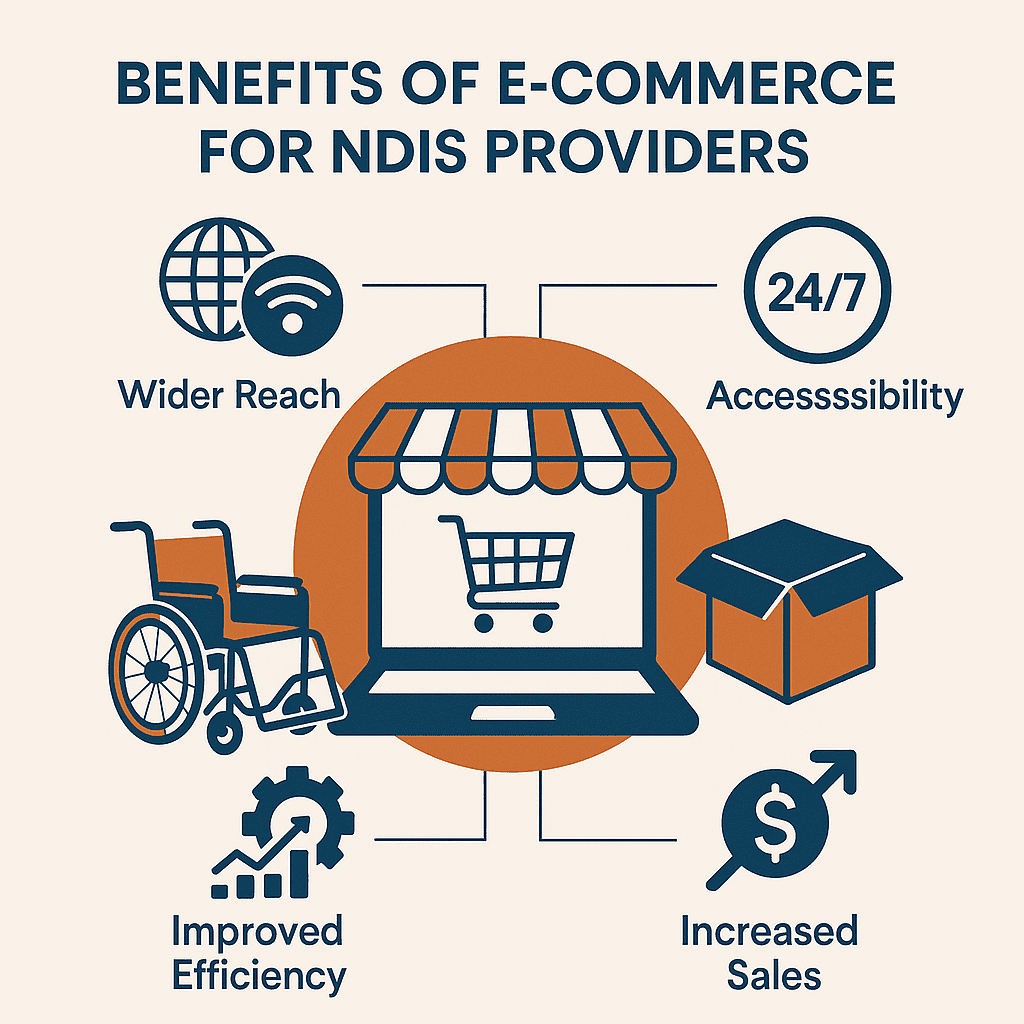
E-commerce isn’t just about selling online, it’s about accessibility, efficiency, and trust. For NDIS providers, it represents a smarter way to connect with participants, manage compliance, and improve service delivery.
1. It Makes access easier for participants
Participants and carers want convenience. Many live in regional or remote areas where physical access to suppliers is limited. A digital store removes those barriers, allowing them to browse, compare, and order verified assistive products without long calls or travel delays.
2. It builds transparency and trust
Pricing clarity and product details matter under the NDIS framework. A well-built ecommerce platform shows approved prices, delivery timelines, and plan eligibility upfront. This helps to reduce confusion and plan disputes. Participants can see exactly what they’re getting and what’s claimable.
3. It simplifies record-keeping and compliance
Manual invoices and paper trails often cause administrative bottlenecks. An e-commerce system automates invoicing, links payments to participant plans, and stores digital records securely.
4. It increases efficiency for providers
Automated order tracking, integrated stock management, and digital payments free up time for what matters most supporting participants. Teams spend less time on paperwork and more on quality service delivery.
5. It Expands reach beyond local networks
Many providers rely on word-of-mouth or local listings. An online store expands visibility across Australia, reaching self-managed and plan-managed participants searching for NDIS-approved products online. With SEO optimisation, your products appear where participants are already looking.
In summary, ecommerce turns accessibility into a growth strategy. It meets participants where they already are and help you connect with more people online.
Core features every NDIS ecommerce platform should have
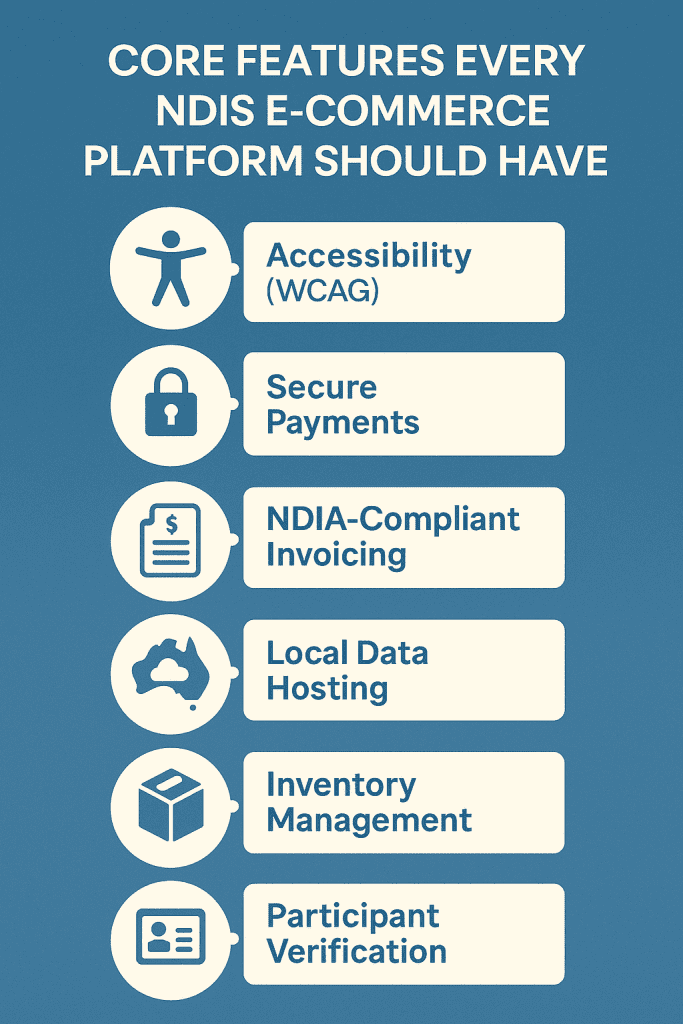
Not every online store is built for the NDIS ecosystem. Selling assistive technology requires more than a shopping cart; it demands accessibility, compliance, and systems that fit seamlessly with participant plans and billing workflows.
Below are the core features every NDIS-ready ecommerce platform should include:
1. NDIS pricing and claim integration
Your platform should allow for NDIS price limits and GST exemptions where applicable. It must generate invoices that meet NDIA standards — showing provider registration number, line item codes, and clear cost breakdowns. This makes plan-managed and self-managed purchases smoother and reduces claim rejections.
2. Accessibility compliance (WCAG 2.1 standards)
A compliant e-commerce platform must be designed for everyone, including users with visual, auditory, or cognitive impairments.
That means:
- Alt text on all images
- Screen reader compatibility
- High-contrast text options
- Keyboard navigation support
Accessibility isn’t a checkbox, it’s an expectation.
3. Secure payment and participant verification
Security builds confidence. Every transaction should use encrypted payment gateways and support NDIA-aligned verification, especially for plan-managed transactions. Integrating multi-factor authentication and SSL certificates helps protect both participants and providers.
4. Easy product management and stock control
Assistive products often come with variations (sizes, funding codes, or categories). A good platform should let you manage stock levels, update details in real time, and automatically flag when items are out of stock or discontinued. This helps to keep your listings accurate and compliant.
5. Automated invoicing and record keeping
E-commerce automation reduces admin stress. Systems like Shopify Plus, WooCommerce, or custom ERP integrations can automatically:
- Send compliant invoices
- Sync order data with accounting tools (Xero, QuickBooks)
- Generate monthly sales and plan report
This improves transparency for audits and internal reporting.
6. Australian hosting and local support
For NDIS businesses, local data storage isn’t just good practice, it supports compliance with Australian privacy standards (Privacy Act 1988). Choose a platform with Australian servers or partners offering local support when issues arise.
At Velacore, we build NDIS-ready e-commerce solutions tailored for compliance, automation, and participant experience. Our approach integrates accessibility, billing accuracy, and digital marketing; helping providers grow confidently online.
Compliance and security: selling NDIS-approved products online
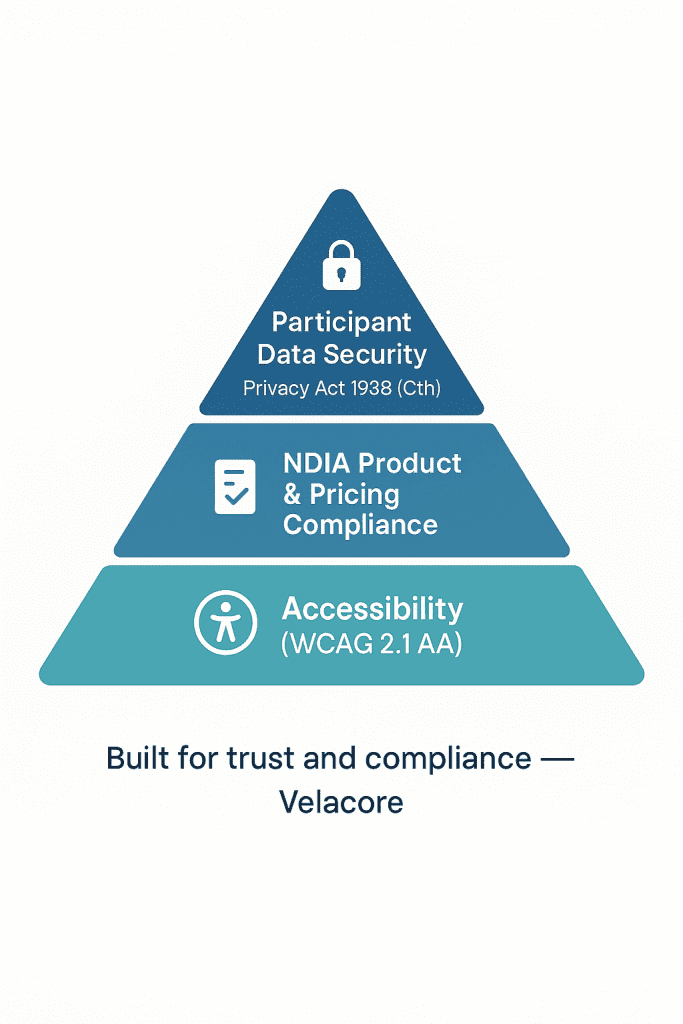
When selling NDIS-approved products online, compliance and data protection aren’t optional, they’re the foundation of participant trust. The NDIA expects providers to uphold strict standards around pricing, record-keeping, and information security. A single compliance lapse can lead to suspended claims or registration issues.
Below are the essential areas every NDIS e-commerce business must address.
1. Verify every product and supplier
Only sell assistive technology that meets NDIA’s criteria for safety and reliability. Each product should include:
- Clear descriptions and technical specifications
- Supplier details and warranties
- Evidence of certification or quality assurance
When possible, link your listings to manufacturer compliance documents or supplier verification IDs. This builds confidence for both participants and plan managers.
2. Ensure NDIA-compliant documentation
Every transaction should automatically generate compliant records including invoices with NDIS registration numbers, plan line items, and GST details. These documents must be stored securely and retrievable for at least seven years to meet audit standards.
3. Protect participant data
Under the Privacy Act, providers must take “reasonable steps” to safeguard personal and health information. That means:
- Hosting data on Australian servers
- Using SSL certificates and HTTPS encryption
- Limiting access to sensitive information within your organisation
- Regularly updating software to patch vulnerabilities
If your store integrates with plan management systems or third-party apps, ensure each one complies with the Australian Privacy Principles (APPs).
4. Use trusted payment gateways
Integrate secure, recognised payment processors such as Stripe, PayPal, or eWAY (Australia-based). These gateways automatically encrypt transaction data and support NDIA-aligned billing formats.
5. Conduct regular compliance reviews
Set a quarterly routine for reviewing your online store’s accessibility, data protection, and content accuracy. A short internal audit can help identify potential gaps before NDIA inspections or participant feedback highlight them.
At Velacore, we help NDIS providers implement e-commerce systems built around privacy-by-design principles; integrating compliance, participant security, and automation from day one.
Steps to launch an ecommerce store for your ndis business
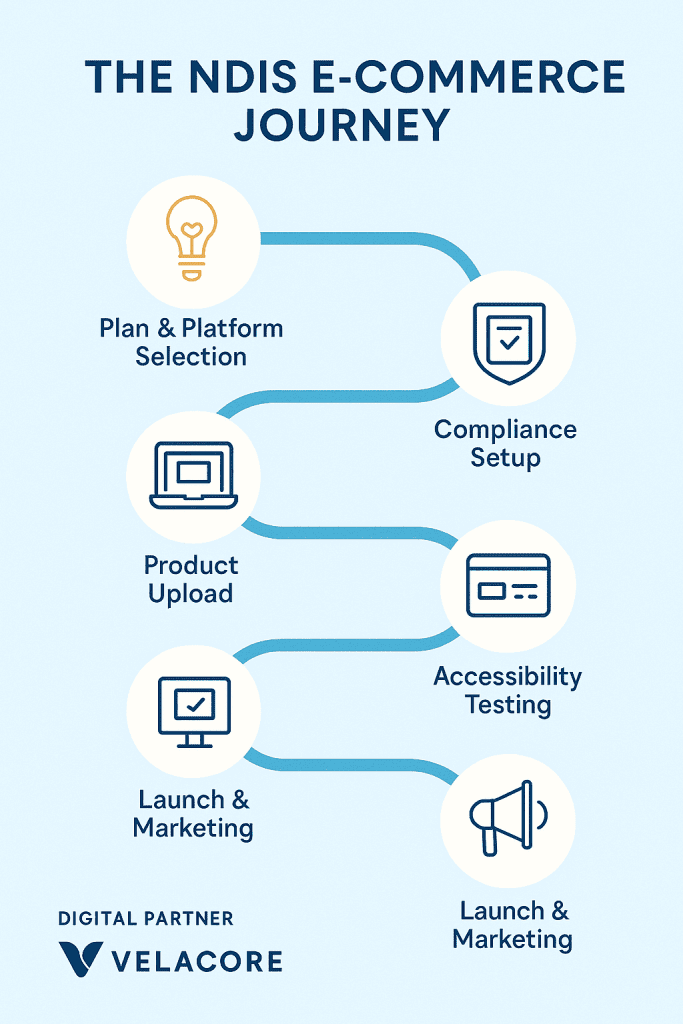
Building an online store for assistive products doesn’t have to be overwhelming, but it does need to be strategic. Every choice, from your platform to your payment gateway, should serve two goals: accessibility and NDIS compliance.
Here’s a step-by-step roadmap for getting it right.
Step 1: Choose the right platform
Start with a reliable, flexible platform that can support custom integrations and compliance requirements.
Popular options include:
- Shopify: Great for smaller stores that need simplicity and speed.
- WooCommerce (WordPress): Perfect for providers who want full control over product data, pricing, and invoicing.
- Velacore custom ecommerce solution: Designed specifically for NDIS providers, Velacore offers unmatched flexibility, whether you’re a small startup or a multi-branch provider. It’s fully customisable to meet your distinct operational workflows, compliance standards, and participant experience goals, from automated plan management invoicing to Australian data hosting and WCAG-compliant design.
Unlike generic platforms, Velacore doesn’t force you into a template. We build your store around how your NDIS business actually runs, ensuring it grows with you.
Step 2: Configure NDIS-friendly product listings
Each product should have:
- A clear title and description in plain English
- Funding category or NDIS support item code (if applicable)
- Price displayed inclusive of GST (or clearly noted if GST-free)
- Accessibility features and usage details
Remember: your goal is not just to sell, but to help participants make informed decisions.
Step 3: Set up secure payment and billing
Use trusted payment gateways like Stripe, PayPal, or eWAY that support automatic invoicing aligned with NDIA requirements. For plan-managed participants, include a “Pay via Plan Manager” option that generates compliant invoices instantly.
Step 4: Integrate compliance and data protection
Before launch, ensure your Privacy Policy, Terms of Use, and Accessibility Statement are visible and up-to-date.
Your store should:
- Use HTTPS and SSL encryption
- Host data within Australia
- Encrypt participant and payment details
- Limit staff access to sensitive information
Step 5: Test accessibility and functionality
Run your store through accessibility tools like WAVE or Google Lighthouse, and have a few participants test real purchase flows. Gather feedback on clarity, readability, and checkout ease.
Step 6: Launch and promote
Once ready, launch quietly to a few trusted participants or plan managers first. Refine based on feedback before promoting publicly.
Then, use:
- Your Google Business Profile for local SEO
- NDIS-focused Facebook groups and forums
- Strategic email campaigns to support coordinators and carers
Velacore advantage: Whether you’re selling 10 products or 1,000, Velacore builds e-commerce systems that scale with your NDIS business. Every feature from accessibility design to invoicing automation is custom-fitted to your participants, your workflow, and NDIA’s latest compliance requirements.
Common challenges and how to overcome them
Moving your NDIS business online isn’t always smooth. Between compliance, technology choices, and participant expectations, many providers hit the same roadblocks, but each one can be solved with the right planning and tools.
Here are the most common challenges and how to overcome them.
1. Building participant trust online
The challenge: Participants want to know your store is legitimate, safe, and truly NDIS-aligned. Many are cautious about where they share personal or funding details.
The fix:
- Display your NDIS provider registration number and ABN clearly.
- Include genuine participant reviews and testimonials.
- Add a short “About Us” or “Our Promise” page that explains your mission and compliance standards.
- Use trust badges like “Australian-owned,” “SSL Secure,” and “NDIS Registered Provider.”
2. Managing logistics and fulfilment
The challenge: Delivering assistive products across Australia, especially to remote or regional areas can be complex and expensive.
The fix:
- Integrate your store with courier APIs like Sendle, Australia Post, or Shippit to automate tracking.
- Offer tiered shipping options (standard, express, or click-and-collect if applicable).
- Communicate expected delivery times transparently at checkout.
3. Overcoming technical overwhelm
The challenge: Not every provider has an in-house IT team. Setting up and maintaining an online store can feel daunting especially when compliance, accessibility, and accounting tools are involved.
The fix:
- Start with a manageable platform and scale gradually.
- Choose a partner who understands both tech and NDIS operations.
- Document your workflow: from listing products to processing invoices, so anyone on your team can manage it.
4. Maintaining accessibility and compliance
The challenge: Websites can lose accessibility or fall out of compliance as they grow or update content.
The fix:
- Schedule quarterly accessibility audits.
- Keep your platform updated with the latest security patches.
- Use plain English in all copy and product descriptions.
5. Standing out in a competitive market
The challenge: As more providers go digital, visibility becomes harder.
The fix:
- Use SEO to target specific NDIS product categories and local regions.
- Publish educational content about assistive technology and care tips.
- Optimise your Google Business Profile to attract nearby participants.
Conclusion: Turning accessibility into growth
E-commerce isn’t just a digital convenience, it’s the next stage of participant care and operational efficiency for NDIS providers. From automated compliance and accessible design to faster billing and broader reach, the advantages are clear: participants gain freedom, while providers gain trust and scalability.
What makes the difference is how you build it. A one-size-fits-all store won’t meet the needs of every NDIS business or every participant. That’s where Velacore comes in. Our e-commerce systems are built around your processes, your compliance requirements, and your participant experience goals, ensuring you can grow with confidence and remain NDIA-ready at every step.If you’re ready to simplify your operations, boost participant trust, and start selling assistive products online the right way Velacore can help you get there. Get in touch