Every click, message, or shared document within an NDIS organisation carries something deeper than data, it carries human trust. Participant information isn’t just another dataset; it holds details about medical histories, disabilities, care needs, and personal circumstances. That’s why, when a breach happens in the disability support sector, it’s not only a technical failure, it’s a human one.
According to the Australian Cyber Security Centre’s 2024 Threat Report, cybercrime in Australia now occurs every six minutes. Healthcare and social services are among the top five most targeted sectors, largely because they handle highly sensitive data but often operate with limited cybersecurity resources.
In early 2024, health service providers accounted for 19% of all reported data breaches, more than any other industry.
For NDIS providers, the message is clear: cybersecurity isn’t optional, it’s essential.
Protecting participant data is now a compliance, ethical, and reputational priority.
This Velacore guide shows how to build that protection while preparing your organisation for the next era of digital care.
Understanding cybersecurity in the NDIS context
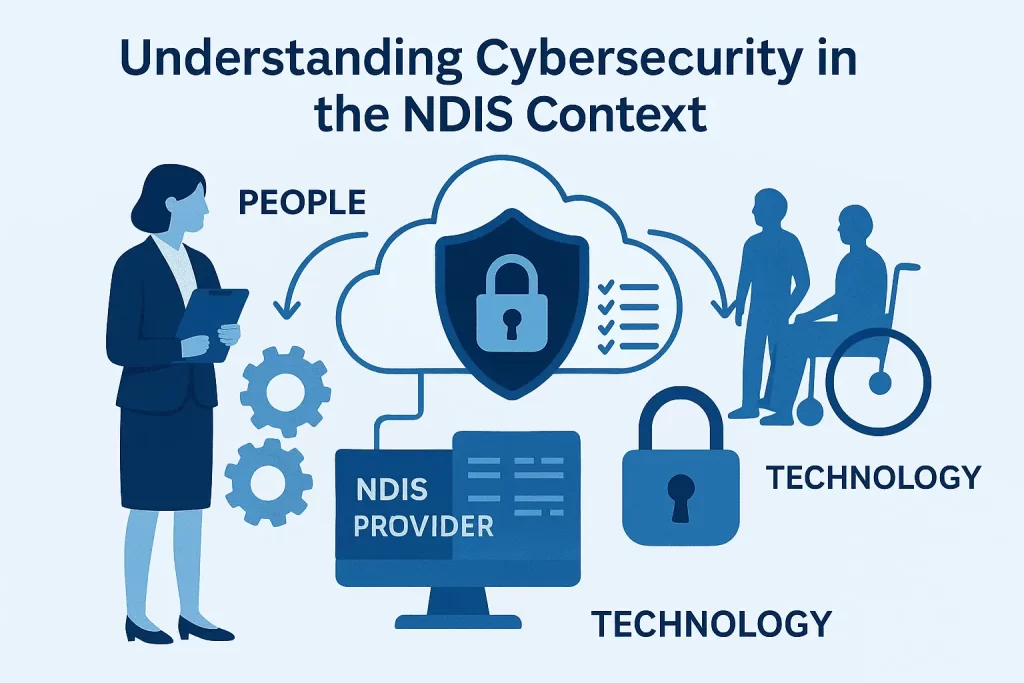
Cybersecurity in the NDIS context isn’t just about firewalls and passwords, it’s about protecting people. Every file, form, or message shared between providers, support coordinators, and participants contains information that defines how care is delivered. That’s what makes NDIS cybersecurity fundamentally different from corporate IT security: here, a data breach can directly harm someone’s wellbeing.
However, cybersecurity and NDIS data protection go hand in hand; ensuring participants’ sensitive details remain secure.”
The human layer behind the data
NDIS providers hold more than just contact details or payment records. They manage sensitive health information, participant plans, behavioral notes, disability types, and support needs, all classified as sensitive information under Australian Privacy Principle (APP) 12 of the Privacy Act 1988.
This level of sensitivity means that any unauthorised access, disclosure, or data loss can lead not only to regulatory fines but also to emotional distress and the erosion of participant trust.
Participants trust that their service providers will protect their personal details with the same care as their physical safety. That trust is what drives the entire NDIS framework.
Remember, Cybersecurity is not just a compliance requirement; it’s a duty of care.
The growing digital footprint of NDIS providers
When providers rely on multiple third-party platforms for scheduling, payroll, telehealth, or communication, participant data moves across several systems, each with its own security posture. Without proper governance and vendor vetting, a single weak link can expose the entire chain.
Cybersecurity as a pillar of quality and safeguards
The NDIS Quality and Safeguards Commission emphasises confidentiality, integrity, and secure data handling under the NDIS Code of Conduct. Failing to meet these obligations can lead to sanctions, investigations, or even loss of registration.
For providers, this means cybersecurity must be built into the organisation’s core operation; not treated as an IT afterthought.
A robust cybersecurity posture ensures:
- Compliance: Alignment with the Privacy Act, APPs, and NDIS guidelines.
- Continuity: Minimal disruption during incidents.
- Credibility: Strong participant confidence and brand reputation.
As digital service delivery grows, cybersecurity isn’t just a back-office function; it’s a frontline commitment to ethical, participant-centred care.
Legal and compliance frameworks governing NDIS cybersecurity
Several cybersecurity laws for NDIS providers define how participant data must be handled. For NDIS providers, cybersecurity isn’t just best practice, it’s the law. Australia’s data protection landscape has evolved rapidly in response to rising cyber incidents, and NDIS organisations are expected to comply with multiple overlapping frameworks that safeguard participant data, system integrity, and operational accountability.
Let’s break down the key ones.
Privacy Act 1988 and the Australian Privacy Principles (APPs)
The Privacy Act 1988 is the backbone of Australia’s privacy regime, regulating how organisations collect, use, and protect personal information. It applies to all NDIS providers that handle participant data, regardless of size or structure.
The Act includes 13 Australian Privacy Principles (APPs) that guide the entire data lifecycle from collection to disposal.
Key principles relevant to NDIS providers include:
- APP 1: Open and transparent management of personal information.
- APP 6: Use and disclosure of personal information only for its intended purpose.
- APP 11: Security of personal information — requiring reasonable steps to protect data from misuse, interference, or loss.
- APP 12: Access to personal information — ensuring participants can request and review their data.
Understanding your NDIS provider obligations under the Privacy Act is key to compliance.
Failure to comply can result in investigations, public reprimands, and financial penalties from the Office of the Australian Information Commissioner (OAIC).
The Notifiable Data Breaches (NDB) Scheme
Under the Notifiable Data Breaches Scheme, NDIS providers must notify both the OAIC and affected individuals if a data breach is likely to result in serious harm.
A breach is not limited to hacking, it also includes:
- Lost or stolen participant records.
- Accidental email disclosures.
- System misconfigurations that expose data online.
The notification must include:
- The type of data involved.
- Recommended actions for affected individuals.
- Steps taken to mitigate harm.
Failing to report a notifiable breach can attract regulatory action and erode participant trust.
Tip: Establish a written Data Breach Response Plan; it’s the fastest way to stay compliant and minimise downtime when an incident occurs.
NDIS code of conduct and quality and safeguards framework
The NDIS Quality and Safeguards Commission holds providers accountable for maintaining confidentiality and protecting participant information under the NDIS Code of Conduct.
Providers must:
- Respect the privacy of participants.
- Use information only for authorised purposes.
- Take reasonable steps to prevent unauthorised disclosure.
These requirements tie cybersecurity directly to the ethical and professional standards of service delivery, not just administrative compliance.
Australia’s Cyber Security Strategy 2023–2030
The Australian Government’s Cyber Security Strategy 2023–2030 aims to make Australia the world’s most cyber-secure nation by 2030.
For NDIS and healthcare providers, the framework emphasizes:
- Resilience: Building secure digital infrastructure.
- Preparedness: Regular risk assessments and incident simulations.
- Partnership: Sharing threat intelligence with the ACSC and sector peers.
This national strategy signals a clear expectation; cybersecurity is a shared responsibility.
Penalties and reputational consequences
Non-compliance isn’t theoretical. The Privacy Legislation Amendment (Enforcement and Other Measures) Act 2022 significantly increased penalties for serious privacy breaches. Up to $50 million, 30% of adjusted turnover, or three times the value of any benefit obtained.
Beyond fines, the reputational cost can be devastating. Once participants lose confidence that their data is safe, rebuilding trust can take years
Velacore Insight: Compliance is not the end goal; it’s the baseline. At Velacore, we help NDIS providers move beyond checklists, embedding privacy and cybersecurity into daily operations so compliance becomes second nature.
Key cybersecurity risks for NDIS providers
Even the most well-intentioned NDIS provider can become a target. Cybercriminals don’t just go after big hospitals or government systems anymore, they attack where defences are weakest and data is most valuable. Unfortunately, that often means small and medium-sized disability service providers.
According to the ACSC / ASD small business survey, 62% of Australian small-to-medium businesses reported having experienced a cyber incident. Unfortunately, the health and community services sector among the top five targets.
Transform Your Online Presence
Stand out with a custom website that drives results. Our expert team delivers stunning designs that convert visitors into customers.
Start Your ProjectBelow are the most common and damaging cybersecurity risks facing NDIS organisations today, and why they matter.
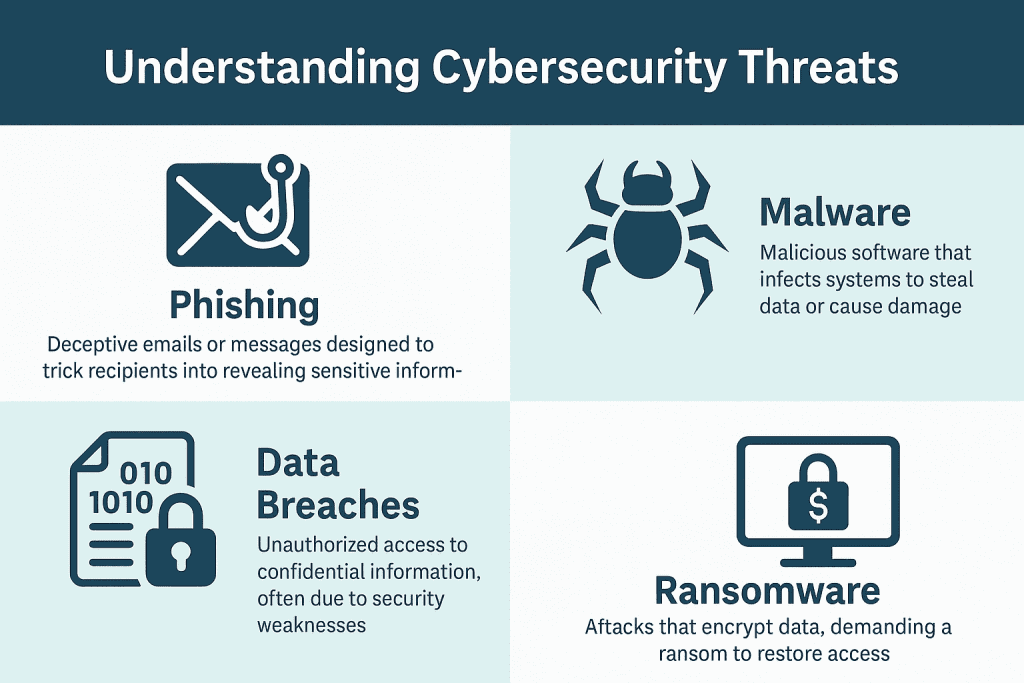
Phishing and social engineering
Phishing remains the number one threat to NDIS providers. Fraudsters send realistic-looking emails pretending to be from the NDIS Commission, NDIA, or even internal staff, tricking employees into sharing login credentials or clicking malicious links.
For smaller providers who rely on shared inboxes or free email systems, one wrong click can compromise multiple participant files and systems.
Ransomware attacks
Ransomware attacks; where hackers encrypt data and demand payment, continue to devastate the healthcare and community sectors. The Australian Signals Directorate (ASD) warns that ransomware remains the most disruptive cybercrime threat, often crippling essential services for weeks.
A single incident can freeze case management systems, payroll software, or care records, directly affecting service continuity for participants. Many organisations that pay the ransom still don’t recover all their data.
Tip: Always maintain encrypted, offline backups. Cloud backups alone aren’t enough; if your cloud account is compromised, so is your data.
Insider threats and human error
Not every breach comes from hackers. In the NDIS space, human error is one of the leading causes of data incidents — from accidentally emailing participant data to the wrong person, to using weak passwords or unsecured personal devices.
The OAIC’s 2024 Notifiable Data Breach Report found that over one-third (34%) of breaches were caused by human error.
Given that many NDIS providers rely on casual staff, volunteers, or distributed teams, continuous cyber awareness training and access control are crucial.
Third-party and vendor vulnerabilities
NDIS providers often use third-party platforms for rostering, billing, communication, and participant management. While these tools increase efficiency, they also multiply risk.
If one of your vendors suffers a breach, even if your own systems are secure, your participant data may still be exposed. This is known as a supply chain attack.
In 2023-24, the Australian Signals Directorate (ASD) logged 107 cyber supply chain incidents, representing about 9% of all incidents, underscoring vendor security as a growing threat vector.
Globally, supply chain attacks surged significantly in 2025, and the ACSC has urged all Australian businesses to vet vendor security more closely.
Tip: Always include cybersecurity clauses in vendor agreements and ensure your partners comply with Australian data residency laws.
Outdated systems and weak authentication
Many providers still use outdated software, unsupported operating systems, or shared login credentials. These gaps make it easy for attackers to exploit vulnerabilities.
Implementing Multi-Factor Authentication (MFA) alone can stop over 90% of account compromise attempts, according to Microsoft Security Research (2024).
Regular patching, software updates, and access controls are not optional; they are the backbone of digital trust.
Physical device risks
Laptops, tablets, and smartphones are now essential tools for NDIS staff, but they’re also easy targets. Lost or stolen devices without encryption can expose participant data in seconds.
Providers should enforce remote wipe capability, device encryption, and screen lock policies as part of their mobile management framework.
Insight: Cybersecurity risks don’t disappear they evolve. The real question is whether your organisation evolves faster. Velacore helps NDIS providers design resilient digital ecosystems that combine training, secure infrastructure, and rapid response capability.
Building a strong cybersecurity framework for your organisation
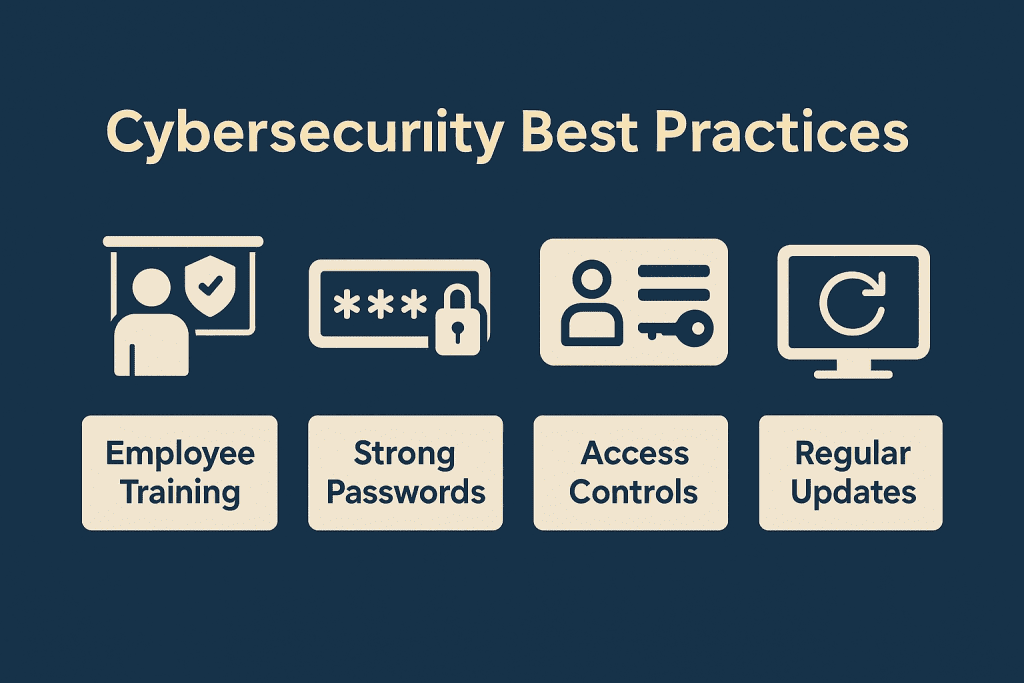
A secure NDIS organisation doesn’t happen by accident, it’s built deliberately, layer by layer. The goal isn’t to eliminate risk entirely (that’s impossible) but to create a resilient structure where prevention, detection, and response work hand in hand.
At Velacore, we recommend thinking about cybersecurity through four interconnected pillars: Governance, People, Process, and Technology.
Governance: leadership sets the tone
Cybersecurity starts at the top. NDIS leaders including directors, managers, and coordinators — must treat data protection as a core governance responsibility, not an IT project.
That means:
- Setting clear data security policies.
- Defining who is responsible for what during an incident.
- Conducting regular board-level reviews of cyber readiness.
Strong governance ensures accountability, and builds confidence with regulators, partners, and participants.
People: your strongest (and weakest) link
Even the best security systems fail without informed staff. Human error remains a leading cause of data breaches in the NDIS sector, which is why staff awareness training should be ongoing, practical, and role-based.
Simple habits like spotting phishing attempts, using strong passwords, and securing devices make a measurable difference.
Always remember; technology can automate processes, but culture sustains security.
Process: Risk management and response
A robust cybersecurity framework includes risk assessment and incident response planning. Start by identifying where sensitive data lives, from cloud systems to personal laptops; and assess what could go wrong if it’s exposed.
Then, document exactly what happens when something goes wrong. Who’s notified? How fast? What evidence is preserved? This is where an NDIS Data Breach Response Plan becomes critical.
Technology: Secure by design
Every system that touches participant data must meet Australian standards for privacy and data security. At a baseline, NDIS providers should:
- Enable Multi-Factor Authentication (MFA).
- Encrypt all stored and transmitted data.
- Keep operating systems and apps updated.
- Use Australian-based or compliant cloud providers.
The right technology stack, from secure case management software to endpoint protection — acts as your digital immune system.
Conclusion: building a safer digital future for the NDIS
Cybersecurity is no longer just a compliance task, it’s a care standard. For NDIS providers, protecting participant data means protecting dignity, trust, and wellbeing. Each secure login, encrypted file, and trained staff member contributes to a stronger, safer system that participants can rely on.
The Australian regulatory landscape from the Privacy Act 1988 to the NDIS Code of Conduct makes it clear: data protection isn’t optional, and the penalties for neglect are steep. But beyond compliance, there’s a deeper opportunity to build a culture of digital confidence.
Providers who take cybersecurity seriously don’t just avoid breaches; they earn lasting trust, attract partners, and deliver more seamless participant experiences.
Is Your Website Working for You?
Most websites don't generate leads. We fix that with custom designs that look great and deliver measurable results for your business.
Get Started With Velacore