Social media SEO is transforming the way people discover products and brands. In the past, launching an online store or small business used to mean one thing: climbing Google’s search rankings. But the way people search has changed dramatically. Today, younger audiences are bypassing Google and heading straight to TikTok, Instagram, and Pinterest to discover products, brands, and ideas.
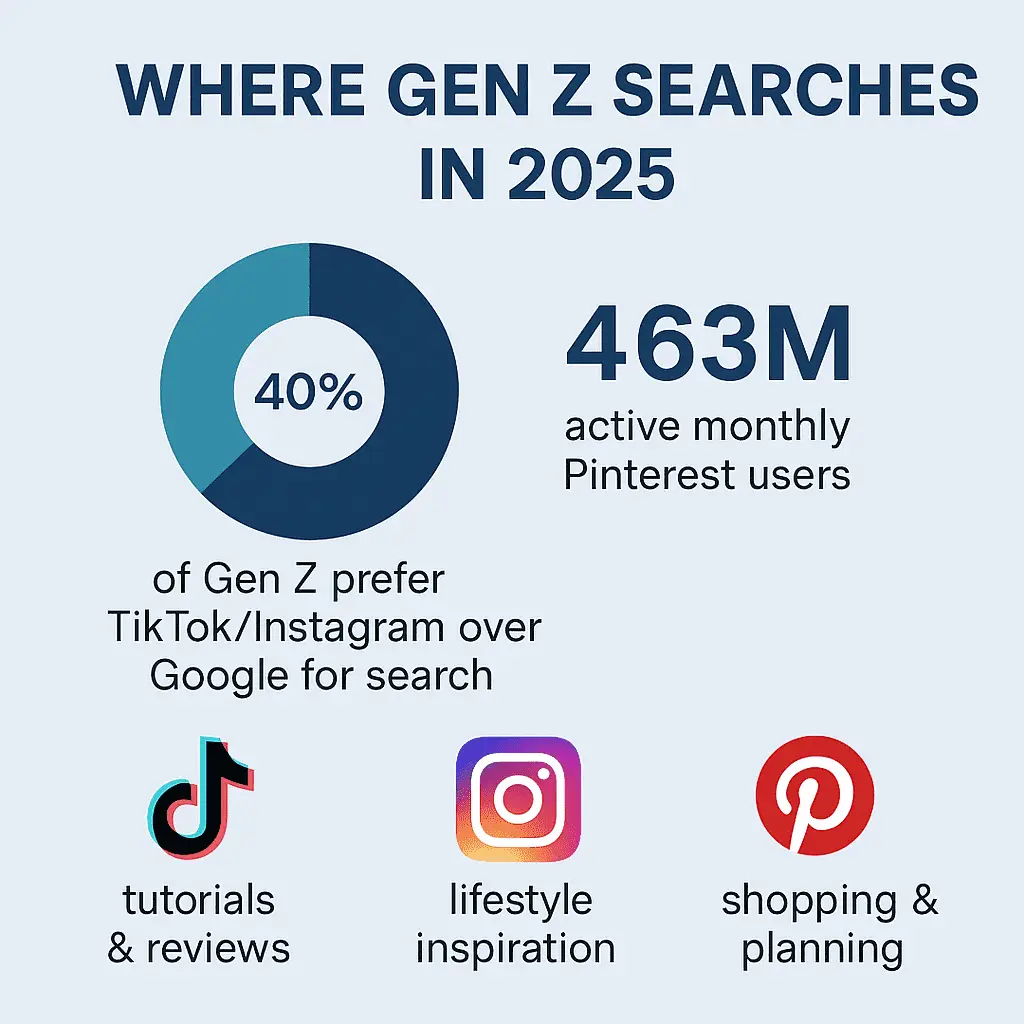
In fact, a senior executive at Google admitted that nearly 40% of Gen Z prefer TikTok or Instagram over Google when searching for places to eat or things to do. And Pinterest reports that over 463 million people use its platform monthly, with 70% saying it’s their go-to place for discovering new products.
For small and medium-sized businesses (SMEs), this shift opens a new frontier: social media search optimisation. It’s not just about ranking on Google anymore; it’s about showing up where your customers are actually searching.
Why social media SEO matters
Over 5.04 billion people use social media worldwide, and the average user spends nearly 2 hours and 23 minutes on it daily. For many, these platforms are now their first stop for discovery.
Search is no longer a one-platform activity. People now use different platforms for different intent:
- TikTok: For quick, authentic, visual answers. Users search for tutorials, product demos, “best of” lists, and authentic reviews.
- Instagram: For lifestyle inspiration, brand discovery, and local business searches through hashtags and location tags.
- Pinterest: For planning purchases, from home décor to fashion to events. 85% of weekly Pinners say they’ve made a purchase based on Pins they saw from brands (Pinterest, 2023).
As a business owner, you shouldn’t treat these platforms as just social media but also search engines. Ignoring these search engines means missing out on audiences who might never Google your business.
How to optimise for social media search (TikTok, Instagram & Pinterest)
Optimising for social search isn’t a one-size-fits-all approach. Each platform has its own search behaviour, algorithm, and audience expectations. Here’s how SMEs can adapt strategies for TikTok, Instagram, and Pinterest.
TikTok SEO: Winning attention in the fast lane
TikTok isn’t just for entertainment anymore; it’s becoming a discovery engine. In fact, TikTok’s internal data shows that users are 1.5x more likely to immediately buy something they discovered on the platform compared to other social media channels.
Younger audiences increasingly use it to find tutorials, reviews, and “best of” recommendations. For SMEs, mastering TikTok SEO means aligning content with how people actively search inside the app.
How to optimise for TikTok search
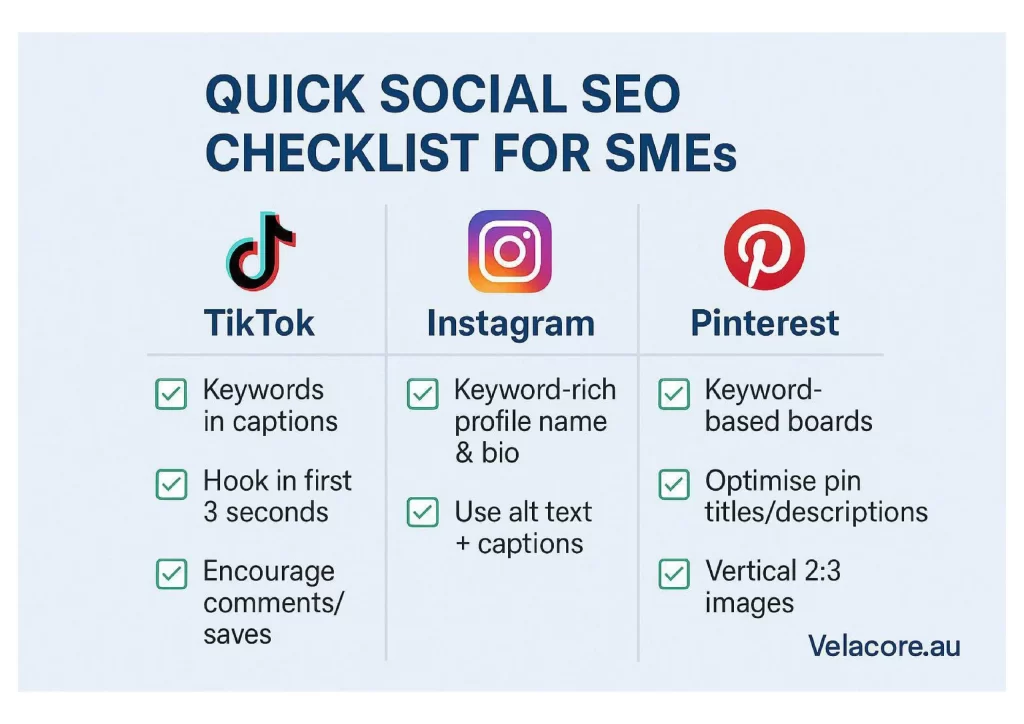
- Keywords in captions and on-screen text: TikTok’s algorithm reads both your caption and the text that appears in your videos. Use relevant keywords naturally (e.g., “how to style vintage jackets” instead of just “outfit ideas”).
- Leverage hashtags smartly: Mix broad hashtags (#SmallBusiness, #TikTokMadeMeBuyIt) with niche ones (#OrganicSkincareAustralia). This increases both reach and relevance.
- Hook in the first 3 seconds: TikTok SEO isn’t just about being found, it’s about watch time. The algorithm rewards videos that hold attention. Start strong with clear, keyword-aligned hooks.
- Encourage comments and saves: Engagement fuels discoverability. Ask a direct question in your video or caption to trigger conversations.
Instagram SEO: Building discoverability beyond hashtags
Instagram has evolved into a search-driven platform Instagram has evolved into a search-driven platform, making it a crucial pillar of any social media SEO strategy. People use the Explore page and search bar the way they’d use Google. According to a recent report, over 60% of Instagram users say they use it to research brands and products.
How to optimise for Instagram search
- Optimise your profile name & bio: Include keywords in your name line (e.g., “Ella’s Bakery | Vegan Cakes Sydney”) and bio to appear in searches.
- Alt text for images: Instagram allows you to add alt text for accessibility — but it also improves searchability. Add descriptive, keyword-rich text to each post.
- Keyword-rich captions: Instagram’s search now scans captions. Instead of writing “Weekend vibes”, write “Relaxing weekend picnic ideas for Sydney beaches.”
- Geotags & location tags: If you’re a local business, tagging your location boosts local SEO directly within Instagram search.
Pinterest SEO: Tapping into intent
Unlike TikTok and Instagram, Pinterest is built entirely around discovery, It functions as a visual search engine first, making it one of the most powerful tools in social media SEO. It functions as a visual search engine first, social media second. And here’s why it matters: 97% of Pinterest searches are unbranded. That means users are open to discovering new businesses.
How to optimise for Pinterest search
- Keyword research inside Pinterest: Use Pinterest’s search bar autocomplete to find trending queries (e.g., typing “wedding” might suggest “wedding table décor ideas”).
- Optimise pin titles and descriptions: Treat these like mini blog titles. Clear, keyword-rich, and benefit-driven: “10 Minimalist Office Desk Ideas for Small Spaces.”
- Use high-quality vertical images (2:3 Ratio): Pinterest prioritises visually appealing content. Pins with a clean design and vertical orientation perform better.
- Create boards around keywords: Group your pins into keyword-based boards (e.g., “Eco-Friendly Home Décor”) to signal relevance to Pinterest’s search engine.
Action Plan: Bringing it all together
For SMEs, optimising for TikTok, Instagram, and Pinterest doesn’t replace Google SEO; it complements it. A layered approach ensures your brand appears across all the search touchpoints your audience uses.
Here’s a quick roadmap:
- Audit where your audience is searching most (TikTok vs Instagram vs Pinterest).
- Align your content with keywords and search intent on each platform.
- Measure result, track engagement, clicks, saves, and conversions, not just views.
If you haven’t yet covered the basics, check out our guide on SEO for new ecommerce websites in Australia before diving into social media strategies.
Final Thoughts
Social media SEO isn’t about replacing Google; it complements it. It’s about being discoverable wherever your audience is searching, and using more, even if that’s inside social media platforms.
TikTok, Instagram, and Pinterest aren’t distractions from “real SEO.” They are the new search engines for younger, digitally native consumers. By optimising your presence now, your business won’t just be seen, it will be found.Ready to make your brand discoverable everywhere? Reach out to us already and start building a strategy that works beyond Google.
Is Your Website Working for You?
Most websites don't generate leads. We fix that with custom designs that look great and deliver measurable results for your business.
Get Started With Velacore