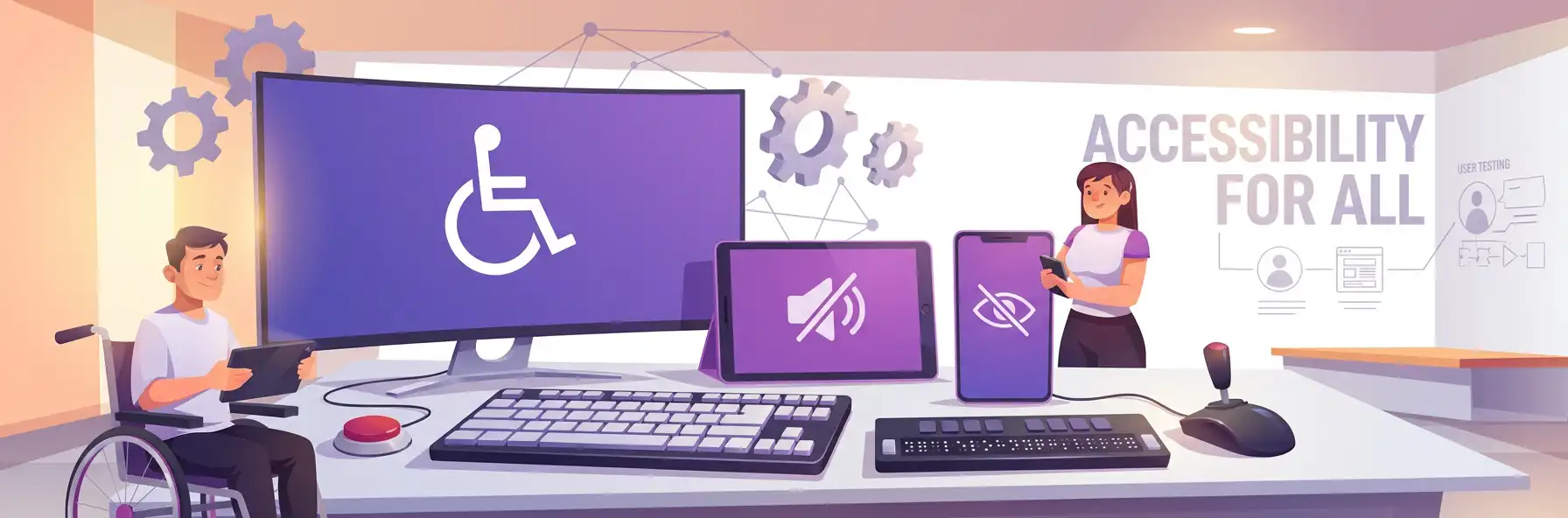
Trust Comes First
People looking for disability support services want reassurance quickly. Strong design, clear service pages, thoughtful credibility cues, and language that feels warm and direct all help create confidence from the first screen.
Your website should do more than look polished. It should help participants, families, carers, and support coordinators understand your services quickly, trust your organisation, and take the next step with confidence.
Velacore designs and builds high-performing NDIS provider websites that combine accessibility-conscious UX, clear messaging, strong service structure, secure enquiry handling, AU-based domain and hosting options, SSL protection, and conversion-focused design. The result is a website that feels clearer, stronger, and easier to trust, with rapid delivery available where scope and content readiness allow.

Whether you need a review of your current website or a new build, share a few details and we’ll point you in the right direction.
Your enquiry is handled securely.

Generic web design often falls short because providers operate in a space where trust, clarity, accessibility, credibility, and service structure matter more than visual novelty alone.
An NDIS provider website frequently needs to speak to participants, families, carers, plan managers, support coordinators, and referral partners in the same journey. That is a more complex communication challenge than a normal brochure website. The right page structure, information hierarchy, and conversion flow make the difference between a website that looks modern and a website that actually helps your organisation grow.
People looking for disability support services want reassurance quickly. Strong design, clear service pages, thoughtful credibility cues, and language that feels warm and direct all help create confidence from the first screen.
An NDIS website should make it easy for visitors to understand support categories, service areas, intake pathways, and next steps. Strong structure removes guesswork and helps people move forward with less hesitation.
Readable text, clear contrast, calm layouts, sensible forms, and user-friendly navigation all improve the experience for a wider range of users while lifting overall website quality.
A good-looking site alone is not enough. The strongest NDIS Web Design projects also support search visibility, local relevance, stronger internal linking, and content pathways that keep building trust.
One of the biggest differences between generic web design and specialist NDIS website design is audience handling. The site has to feel clear, useful, and reassuring for different people using it in different ways.
Need a website that feels simple to navigate, easy to read, and clear about what support is available.
Need quick trust signals, calm presentation, and confidence that the provider is organised and credible.
Need service clarity, location relevance, and a fast way to understand whether the provider is the right fit.
Need a website that supports enquiries, communicates value clearly, and remains practical to update over time.
This section should visually lead the page because it is one of your strongest proof assets for both rankings and conversion.
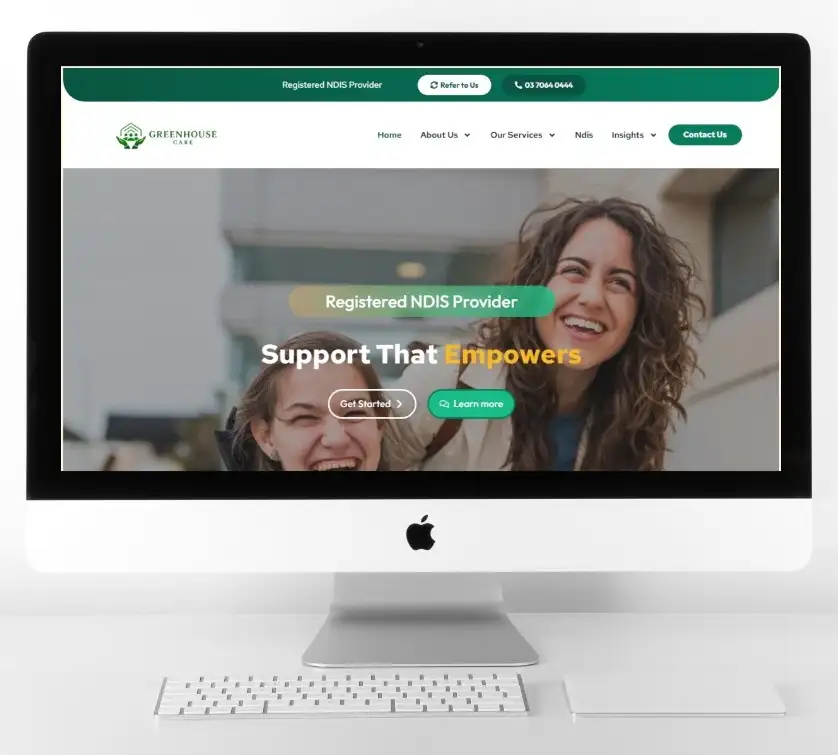
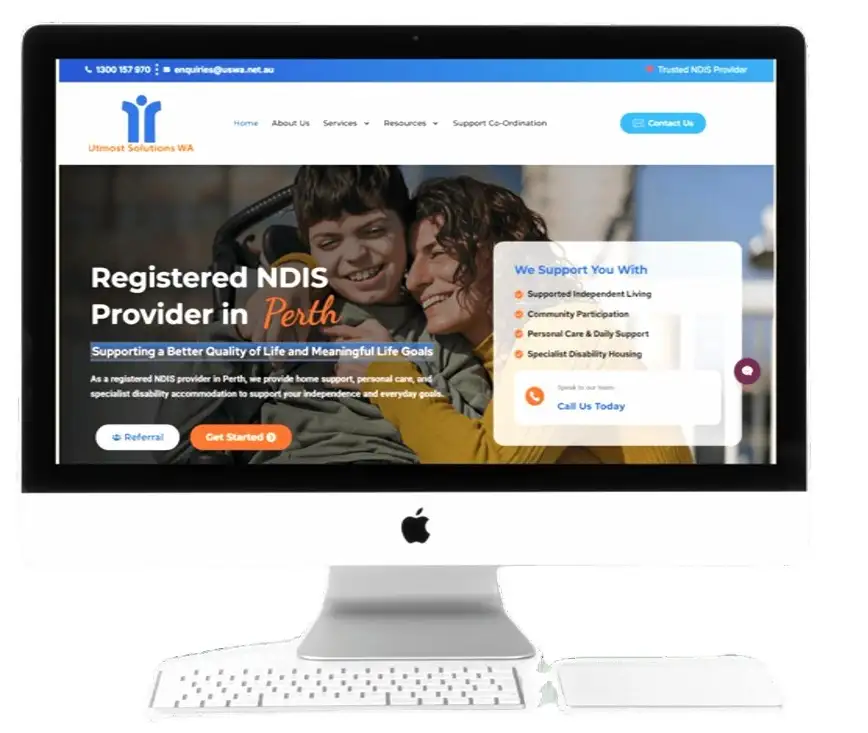
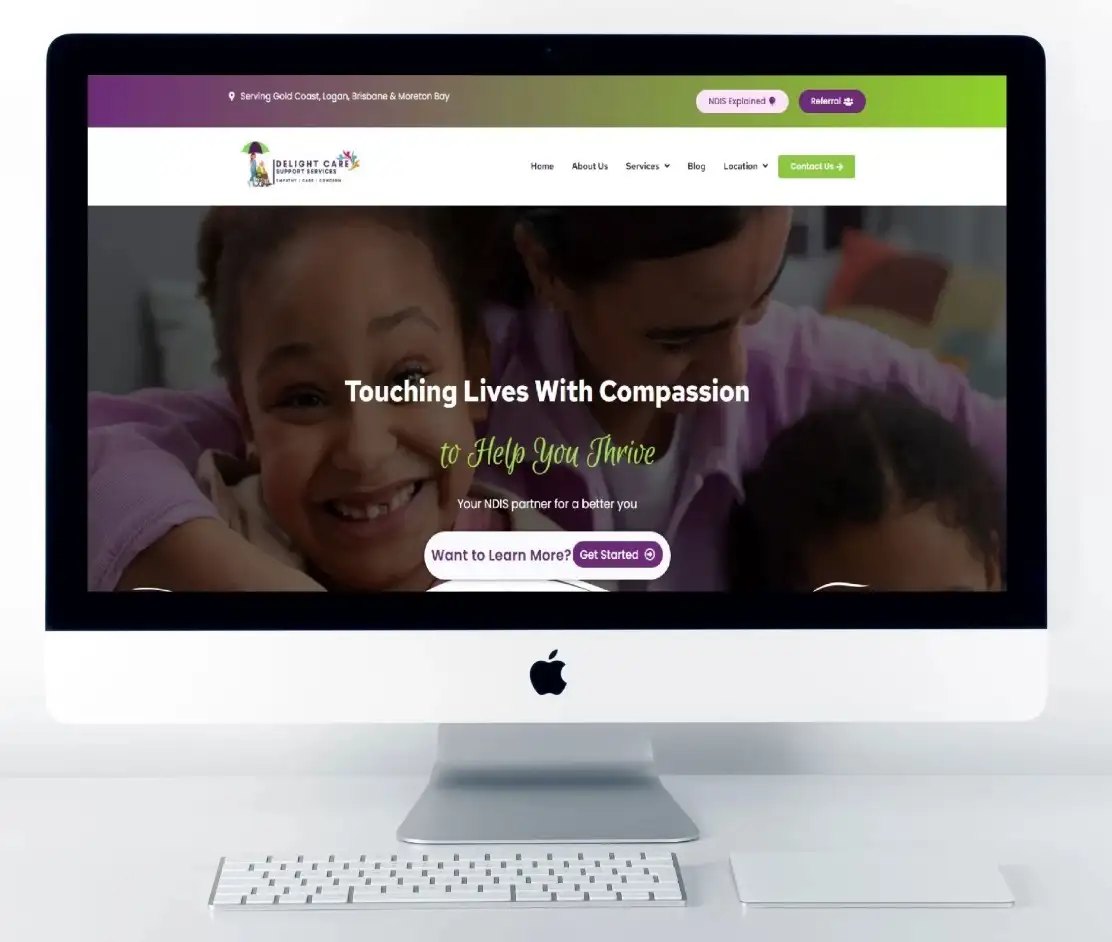
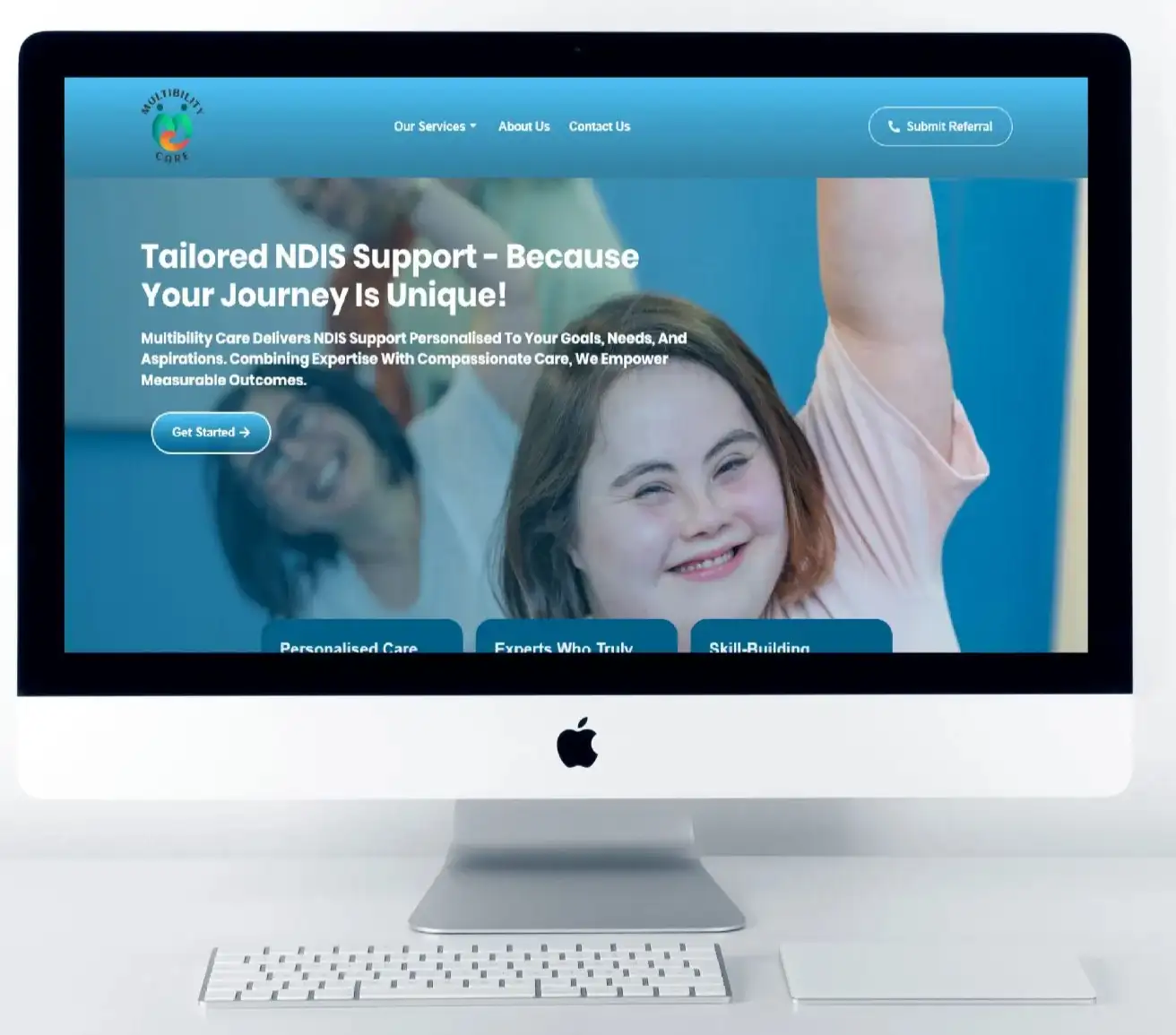
Velacore has delivered a growing portfolio of NDIS-related website projects, building direct experience in how providers need to present services, build trust, and reduce friction for people seeking support. These projects reflect the kind of practical, growth-oriented work that helps organisations feel clearer, stronger, and easier to trust online.
When providers compare web partners, they are not only looking at design. They are also looking for evidence of delivery quality, sector understanding, operational confidence, and a website experience that feels safe, clear, and professionally handled.
That is where experience counts. Velacore brings wider project depth, recent NDIS-specific delivery, trusted Australian infrastructure options, and the kind of practical execution that helps providers move faster without sacrificing clarity or quality.

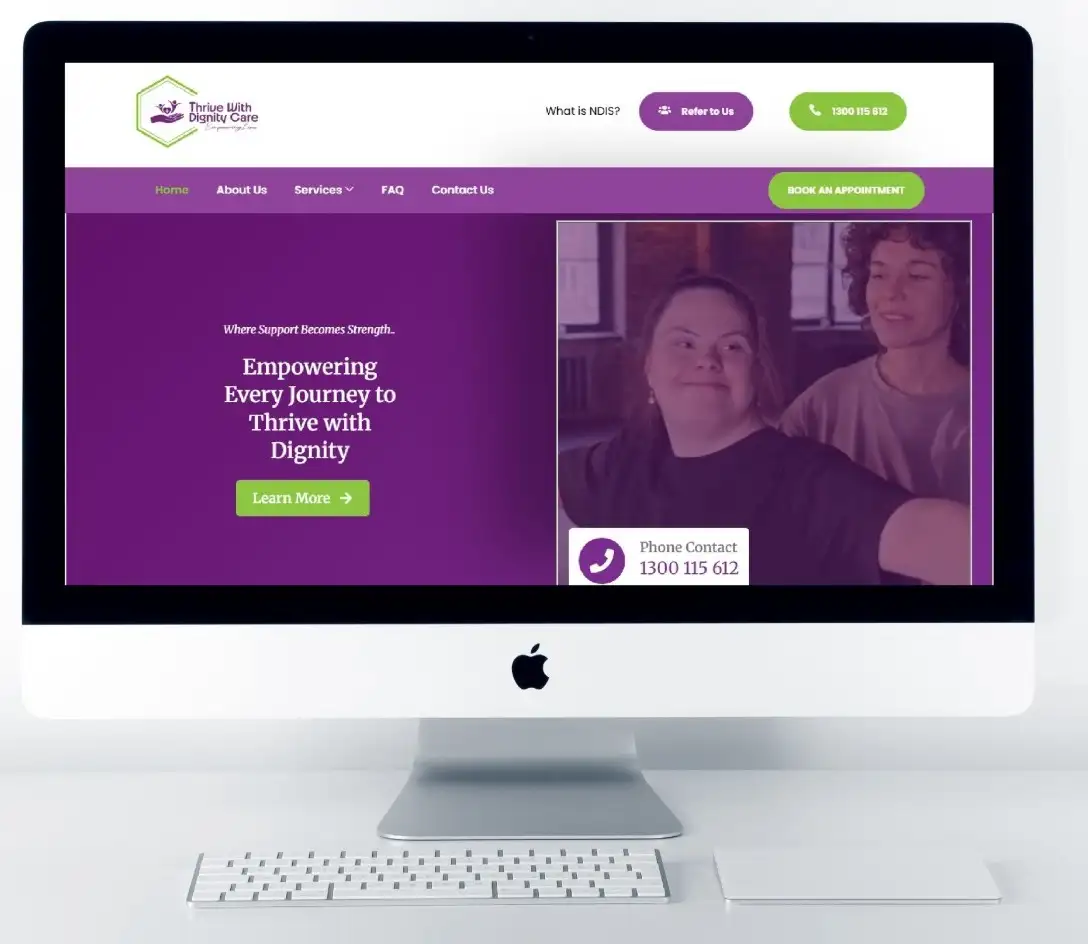
A new website built from the ground up for a Brisbane-based SIL and SDA provider. Velacore took time to understand their service mix and how families and support coordinators actually look for support online, then delivered a site that feels clear, professional, and built to convert from the first visit.

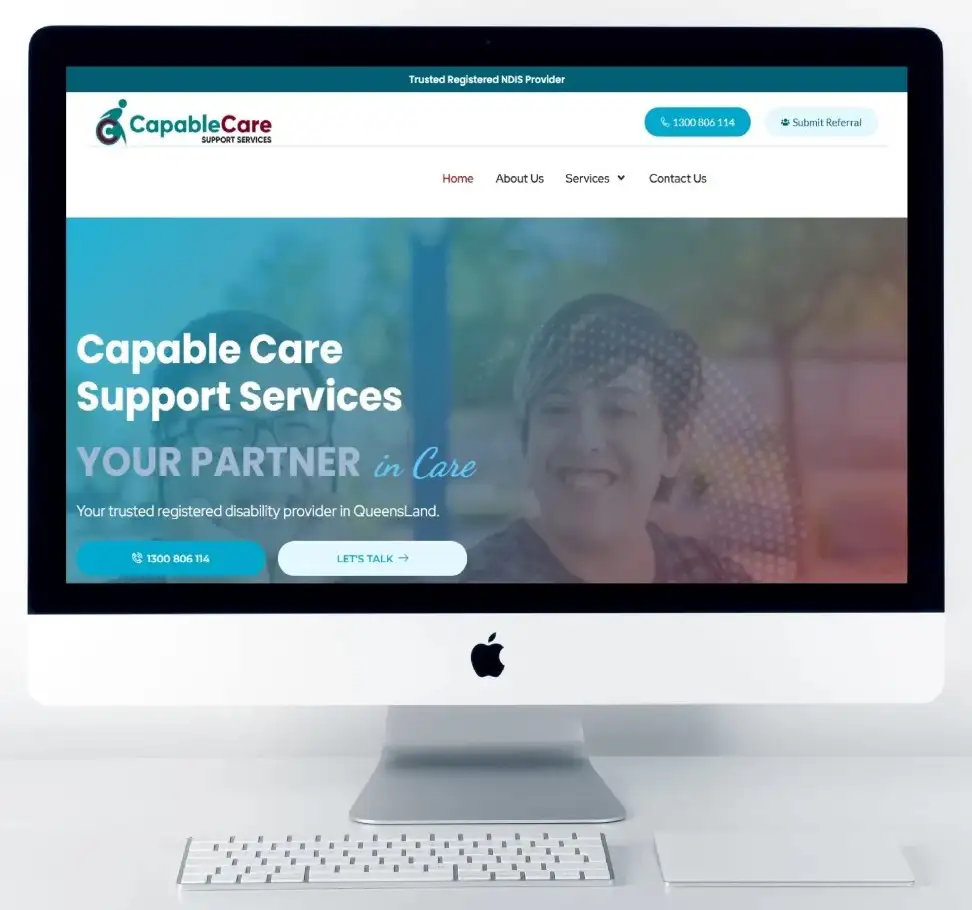
A new website built with accessibility as a core design principle from the start, not an afterthought. Velacore focused on making the site genuinely easier for people to use, creating a calmer reading experience and clearer pathways for families and support coordinators navigating disability support options.

A new build designed to present multi-service supports clearly while improving local search visibility. The site was structured around how local participants and referrers actually search for disability support, helping the right audiences find and trust the organisation faster.

A new website built to sharpen positioning and create a more professional digital presence for referral audiences. The project focused on clear messaging, credible presentation, and conversion-led structure so warm leads and support coordinators could engage with confidence.

A new website built to fix a longstanding visibility and usability problem. Velacore delivered a site that is much easier to use, with clearer messaging and better movement from homepage awareness through to contact intent. Local SEO pages followed shortly after, supporting stronger reach in the Logan area.

A new website built to present a professional, credible digital presence for a provider who needed to stand apart in a competitive NDIS market. Velacore listened to what was actually needed, kept the language clear and aligned with the NDIS audience, and delivered something that looks and feels genuinely professional. The result has helped Multibility Care connect with the right participants and present their services with real confidence.
Velacore also has real client testimonials that reinforce the portfolio with direct feedback about communication quality, delivery confidence, speed, and the strength of the final website outcome.
What stood out most with Velacore was how much they focused on accessibility and making the site easier for people to actually use. Since the launch, we’ve had more enquiries coming through, and the feedback has been really positive. The whole process was straightforward, and they were easy to work with from start to finish.
Velacore made the whole process really easy for us. We needed a better website for our SIL and SDA services, and they took the time to understand what we do and how people actually look for support online. The new site feels much clearer and more professional, and we’re already getting better enquiries from families and support coordinators.
We’d been meaning to fix our website for a long time, but it always felt like too hard a project. Velacore helped us sort it out properly and is now working on local SEO pages for us as well. That’s been a big help for reaching more people in Brisbane who are looking for NDIS support. The site is much easier to use now too, and the messaging is a lot clearer.
Velacore understood straight away that our website needed to be simple and easy to navigate, especially for families and support coordinators. We’re in Melbourne, and having a site that feels clear, accessible, and trustworthy has already made a difference to how people respond to us. They were patient, responsive, and easy to deal with throughout the whole process.
As an SDA provider in regional Queensland, we needed something that looked good but also made sense for the people visiting it. Velacore got that balance right. The website is cleaner, easier to read, and much better on mobile than what we had before. We’ve had a few people mention how easy it is to find what they need now.
What I appreciated most was that Velacore listened to what we actually needed instead of trying to push a generic design. They understood our NDIS audience, kept the language clear, and built something that feels much more aligned with our services. It’s helped us present our business in a more professional way.
We were looking for someone who understood accessibility and how to present SIL services properly online. Velacore delivered a site that feels polished without being overcomplicated, and it’s already helping us make a stronger first impression with new enquiries. They really understood our goals from the start.
James was great to talk to. He really understood what our NFP needed while we transitioned to a different donation strategy, and he knew how our landing pages needed to reflect that change. He was patient, responsive, and easy to work with, and the messaging now feels much clearer for the people we’re trying to reach.
Whether you are starting from scratch or improving an underperforming website, the next step is to shape a clearer, more strategic digital presence that feels easier to trust and easier to act on.
If your current website feels dated, unclear, hard to manage, or underwhelming from a growth perspective, this is the best point to start the conversation. We can review your current position, your service structure, your goals, and what the right next build or redesign should prioritise.
Our service covers strategy and planning, website design, development, accessibility-conscious UX, SEO foundations, secure enquiry pathways, AU-based domain and hosting options, SSL, and ongoing support. It is a complete approach designed to help providers build a stronger, clearer, and more credible digital presence, with rapid delivery available where the scope allows.
We’ll respond personally. No obligation.
Your enquiry is handled securely.
A high-performing provider website should not force people to work for information. It should make services easier to understand, your organisation easier to trust, and the next step easier to take.
The strongest results usually come from getting four things right: trust, accessibility, enquiry flow, and visibility.
A provider website has to feel credible from the first few seconds. That means clear service positioning, a reassuring visual identity, polished visuals, visible proof points, thoughtful team presentation, and messaging that sounds human rather than vague or corporate. Trust is rarely created by one element alone. It comes from the combined effect of better design decisions, tighter structure, and stronger communication.
When a website feels calm, direct, and professional, users can focus on whether your services are the right fit instead of wondering whether your organisation is established enough to trust.
Accessibility-conscious design helps more people use your website comfortably and confidently. Larger readable type, sensible spacing, logical content order, clear headings, strong contrast, straightforward buttons, helpful form labels, and consistent navigation all contribute to a better experience. This is not only about compliance thinking. It is also about respect, usability, and better overall website quality.
In practice, cleaner accessibility decisions often improve engagement for every visitor because they make the interface easier to process and the next step easier to take.
An enquiry path should feel natural. Visitors should know what services you offer, whether you are the right fit, and how to contact you without confusion. Forms should be short, obvious, and placed at the right points in the page. Service pages should support action. CTAs should feel relevant to the user’s stage rather than repetitive or generic.
Good conversion flow is about timing as much as design. The right information, the right level of friction, and the right call to action should work together so users can move forward with confidence.
A good NDIS website should also support discovery. That includes structured service pages, local relevance where appropriate, strong internal linking, SEO-aware copy, and a content strategy that builds topical depth over time. Your website should not just exist online. It should help your organisation become easier to find and easier to understand.
This is where NDIS Website Design and NDIS Web Design strategy connect with broader content planning, local SEO, and supporting articles that reinforce the service page rather than competing with it.
Your participants, families, and referrers search in different ways. Some still use Google. Others ask direct questions through AI-assisted search experiences. Velacore builds NDIS websites to perform in both environments, so your services are easier to find, easier to understand, and easier to trust.
We structure pages around the kinds of local and service-led searches potential participants actually use, helping the right traffic reach your website at the right moment.
Clear structure, stronger topical depth, and better service clarity help your website perform more effectively across AI-assisted search and answer-led discovery environments.
From location-led phrases to service-specific intent, the website is designed to support stronger local relevance where providers need visibility most.
The goal is not traffic for its own sake. The goal is better-fit visitors, stronger trust signals, and more meaningful NDIS enquiries.
For NDIS providers, credibility is not only visual. It also comes from how the site handles forms, hosting, maintenance, user confidence, and the overall sense of care built into the experience.
Velacore offers Australian domain and hosting options with SSL protection so providers can build on infrastructure that feels stable, professional, and locally appropriate.
For many providers, privacy handling and data residency considerations matter. The website should reflect that level of care from the first form interaction onward.
Strong websites need more than launch-day polish. Ongoing updates, maintenance awareness, and careful platform stewardship support trust over time.
When trust, accessibility, and secure foundations work together, the whole experience feels more credible and more reassuring from first click to final enquiry.
Many providers do not realise why their current website underperforms until they compare it properly. A generic approach often focuses on surface aesthetics. A specialist NDIS approach looks deeper at how users think, what they need to know, and what makes them act.
Small digital mistakes create bigger trust problems in the NDIS space. These are some of the most common issues that quietly reduce confidence and conversions.
Without accessibility-conscious design, some users face unnecessary barriers and the website can become harder to trust from the first interaction.
If visitors cannot find what they need quickly, they leave with uncertainty instead of moving toward contact with confidence.
Delays create friction, weaken trust, and make it easier for potential participants and families to abandon the journey before enquiring.
We keep the process strategic, collaborative, and practical. Every stage is designed to move your website closer to what actually matters: clarity, trust, usability, and growth.
We learn about your provider model, service mix, target audience, service areas, and business goals so the website direction reflects real-world priorities rather than assumptions.
We shape the right page architecture, service pathways, content hierarchy, and user journey so users can understand what you offer and where to go next with less friction.
We create a polished visual direction that feels credible, modern, and easy to engage with while supporting the tone and trust level your organisation needs.
We develop the site with careful attention to responsiveness, performance, usability, and content flow so the finished experience works well beyond a static design mockup.
We review forms, CTAs, messaging, and page interaction so the site performs better in the real world, not just in a design presentation or development environment.
We support the next phase through refinement, SEO direction, content planning, and practical improvement opportunities that keep the website aligned with growth.
A strong service page should connect naturally to the wider knowledge around it. Rather than sending users into a generic blog feed, this section guides them into highly relevant NDIS content that builds trust and supports better digital decision-making.
Explore more NDIS-specific guidance across visibility, branding, marketing, security, and digital growth.

Essential data protection practices for NDIS providers handling sensitive participant information.
Read the NDIS cybersecurity guide
Practical growth strategies for NDIS providers looking to scale sustainably while maintaining care quality.
Read the NDIS business growth guide
How to dominate local search results and connect with participants searching in your immediate service area.
Read the local SEO for NDIS providers guide
Ethical marketing approaches that help NDIS providers reach participants who genuinely need their support.
Read the NDIS marketing strategies guide
A focused look at search visibility for NDIS providers, from local SEO to service-specific content strategy.
Read the NDIS SEO strategy guide
Using social platforms to reinforce credibility and community connection without sounding promotional.
Read the social media for NDIS providers guide
Building a brand identity that communicates reliability and care in a competitive NDIS market.
Read the NDIS business branding guideThese questions cover some of the most common things providers want to understand before starting a new website or redesign.
NDIS providers often need to communicate with multiple audiences at once, including participants, families, carers, support coordinators, plan managers, and referral sources. That means website structure, messaging, trust signals, accessibility thinking, and conversion flow all need more care than a standard brochure site. A specialist NDIS Website Design approach recognises that the user journey is usually more emotional, more information-heavy, and more dependent on trust from the first interaction.
Yes. Many providers already have a website, but it may be outdated, hard to navigate, visually inconsistent, or unclear in how it presents services. A redesign can improve usability, trust, structure, and enquiries without losing the strengths of your current brand. In many cases, a strategic redesign is the fastest path to better performance because it improves what users already see while also tightening the technical and content foundations underneath.
That depends on the organisation, but most providers benefit from a strong homepage, service pages, about page, contact page, trust or testimonial elements, and content that explains service areas or specialist support categories clearly. Where relevant, providers may also benefit from case-study style proof, blog content that supports trust and visibility, and carefully structured service detail pages that help families and referral sources understand the offer more easily.
Yes. Accessibility-conscious design supports a better experience for more users and often improves general usability at the same time. Clear typography, contrast, structure, navigation, and form design all help create a more inclusive and effective website. Good accessibility practice also tends to strengthen the overall quality of the interface because it removes unnecessary friction and helps content feel easier to scan, read, and act on.
Yes. SEO should not be treated as an afterthought. Page structure, internal linking, service copy, metadata direction, topical support content, and conversion-aware messaging should all support stronger visibility from the beginning. The strongest NDIS Web Design projects create a better website and a stronger foundation for long-term visibility, which is why structure and content planning need to be considered early rather than after launch.
Yes. Trust is not only visual. A provider website should also give users confidence that contact pathways are clear, well handled, and built thoughtfully. That includes form design, privacy-aware messaging, sensible information requests, and a site structure that feels professionally maintained rather than neglected or improvised.
Timing depends on project size, content readiness, feedback speed, and whether the website is a new build or a redesign. Where the scope is clear and content is ready, rapid delivery can be possible. For more involved builds, the right timeline is less about rushing and more about getting the structure, content, design decisions, and user experience right so the final result can support your organisation for much longer.
If your current site is not creating the right first impression, not clearly communicating your services, or not generating enough quality enquiries, this is the moment to fix it properly. Velacore designs NDIS provider websites that combine trust, clarity, usability, secure foundations, and strategic thinking so your digital presence can support where your organisation is going next.
If you are ready to improve clarity, trust, and enquiries, this is the right time to start the conversation.