The NDIS is evolving fast and so are the expectations of participants. In 2026 and beyond, families are no longer choosing providers based on proximity alone; they’re making decisions after comparing websites, reviews, and even social media activity. With more than 761,442 active participants currently supported and over 21,734 registered providers competing for attention, standing out is harder than ever.
That’s why effective NDIS marketing strategies matter. Providers who invest in visibility and trust, through SEO, digital advertising, content marketing, and social engagement, consistently attract more participants than those who rely on word-of-mouth alone. Data backs this up: over 90% of Australians research services online before making a choice, and local search visibility alone can increase discovery by up to 70%.
In this guide, we’ll break down the most practical, results-driven tactics for NDIS providers in 2026, showing you how to capture participant attention, build lasting relationships, and grow sustainably in a crowded market.
Why Marketing Matters for NDIS Providers in 2026
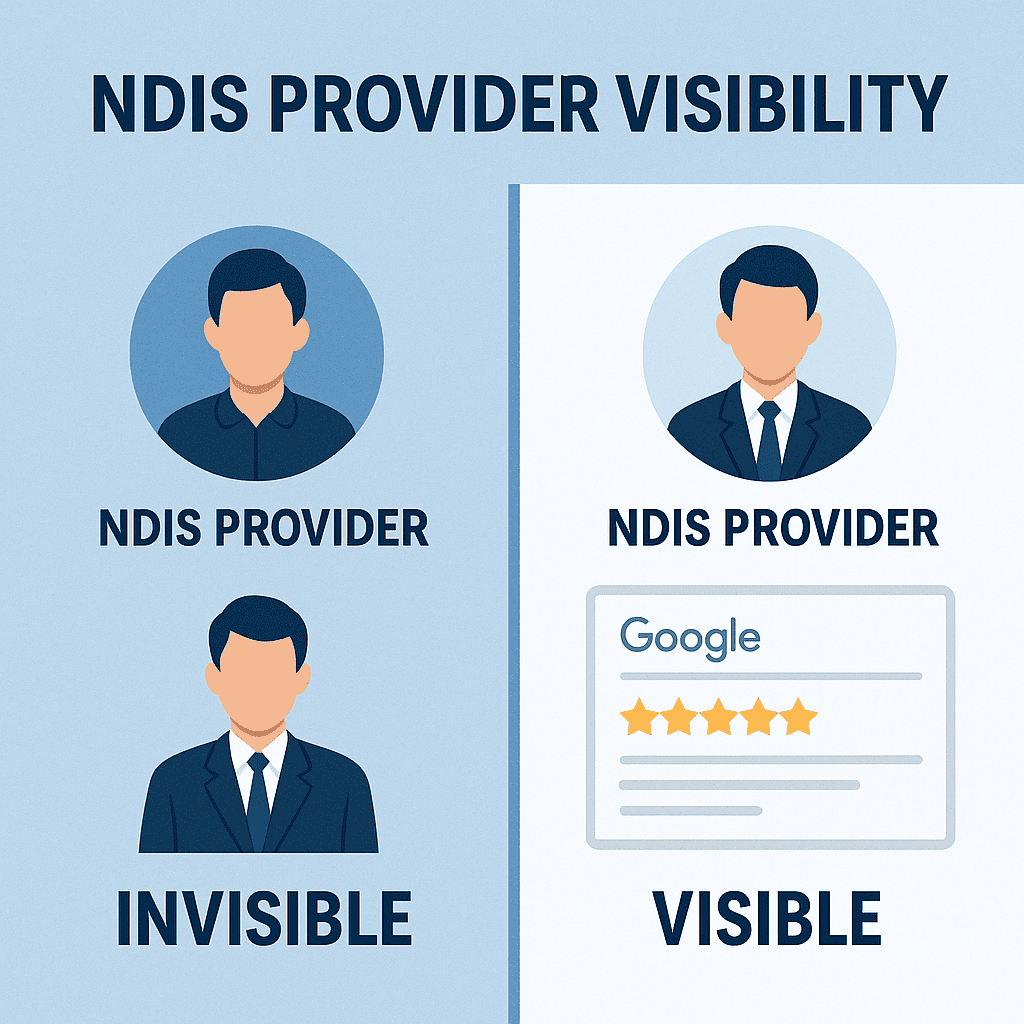
The NDIS is no longer a “new” system, it’s a competitive marketplace. Providers are up against 21,734 registered providers, each promising quality care. Yet, here’s the surprising truth: only a fraction of providers actively invest in digital marketing, leaving huge gaps for savvy operators to dominate.
According to the NDIS Quarterly Report, demand continues to climb, with more than 761,000 active participants and growing. At the same time, consumer behaviour is shifting:
- Over 90% of Australians research services online before making a decision (Google Consumer Insights).
- A study shows that 88% of people trust Google reviews as much as personal recommendations.
- Providers with optimised Google Business Profiles are 2.7x more likely to be contacted than those without.
What does this mean? Providers who fail to show up online risk invisibility, while those who embrace digital-first strategies position themselves as trusted leaders.
Table: Traditional vs Modern NDIS Marketing
| Approach | Traditional Providers (Pre-2020) | Modern Providers (2026 nd beyond) |
| Visibility | Word-of-mouth & referral lists | Local SEO, suburb landing pages, Google Ads |
| Participant Research | Flyers, brochures | Google search, social media, online reviews |
| Trust Signals | NDIS registration only | Testimonials, case studies, video storytelling |
| Growth Driver | Compliance + networks | Data-driven marketing + digital engagement |
| Competitive Edge | Low competition | High competition — trust & branding matter more |
In 2026 and beyond, being a registered provider isn’t enough. Participants expect providers to be discoverable, credible, and digitally active. The providers who stand out are not the ones with the longest history, but those who can tell their story where participants are already looking: online.
SEO for NDIS providers: get found first
When a participant or their carer types “NDIS provider near me” into Google, who shows up? In most cases, it’s not the biggest provider; it’s the one who has invested in NDIS SEO and local optimisation.
Here’s why this matters:
- 66% of consumers say Google is their most trusted source for finding local businesses, followed by Google Maps at 45%.
- Businesses with 15 or more landing pages generate 55% more leads than those with fewer than 10, proving the value of suburb-specific service pages.
- Consumers rarely stop at a homepage; most cross-check reviews, directories, and social media before contacting a business.
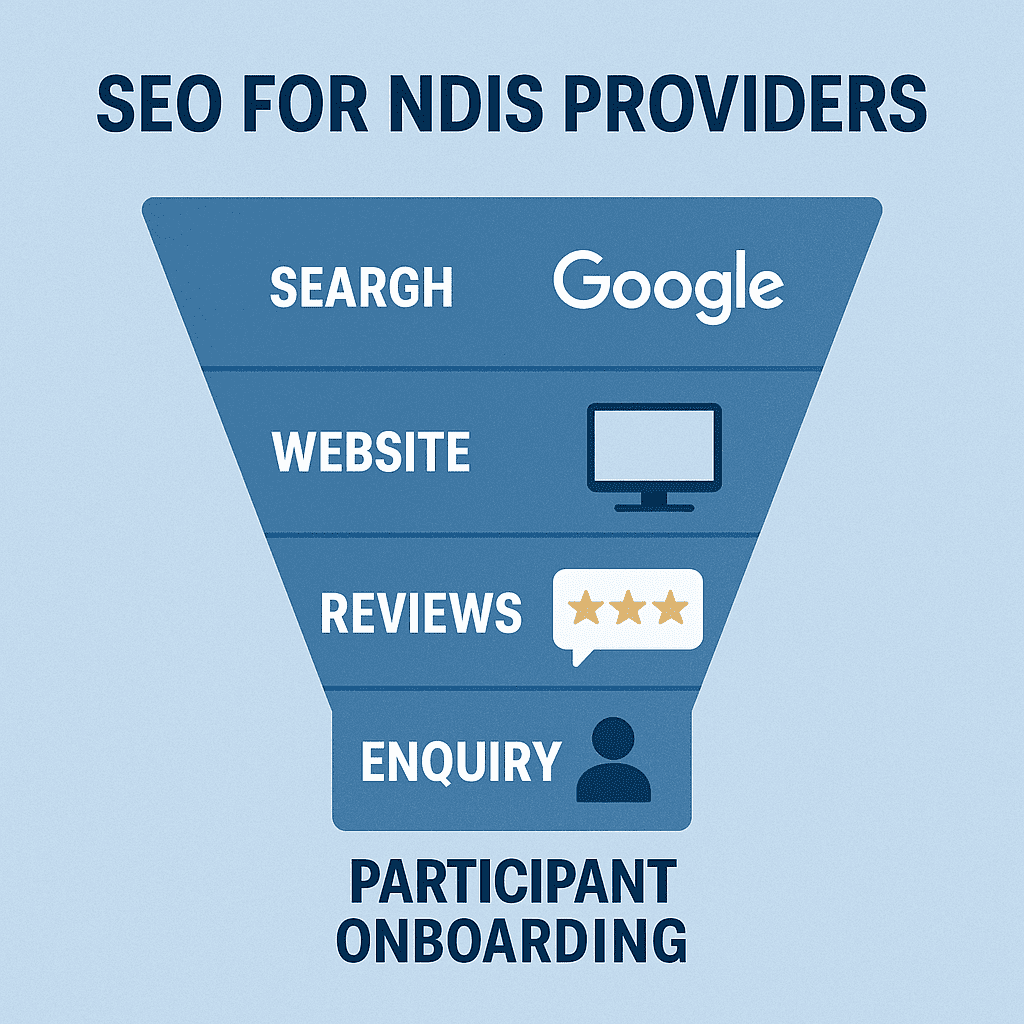
Key SEO tactics for NDIS providers in 2026
To truly stand out, providers need to go beyond having a website. The focus should be on building visibility, credibility, and accessibility. Here are three core areas every NDIS provider should prioritise:
1. Local SEO optimisation: Being visible in your community is crucial. Most participant searches include a location, which means providers must ensure they appear in suburb-level results.
- Claim and optimise your Google Business Profile.
- Create suburb-based landing pages (e.g., “NDIS services in Parramatta”).
- Collect and respond to reviews regularly.
2. Website optimisation: A participant’s first impression of your service is often your website. If it’s slow, confusing, or inaccessible, they’ll leave. A well-optimised site builds trust from the very first click.
- Ensure fast load speed (participants often leave if a site takes >3 seconds).
- Make the website accessible (WCAG compliance is not optional for disability services).
- Add clear CTAs like “Book a Consultation” or “Request a Call Back”.
3. Content targeting: Participants and carers are constantly searching for answers. By addressing their questions directly, you position your organisation as both helpful and trustworthy.
- Publish blogs around participant questions like “How do I apply for the NDIS?” or “What’s included in core supports?”.
- Build authority with FAQ pages and case studies.
- Use long-tail keywords like NDIS provider in Melbourne CBD or best NDIS support services for children.
You would want to check out this post: Local SEO for Australian Businesses: Winning Clients Within 5km
Paid ads for NDIS providers: targeting with precision
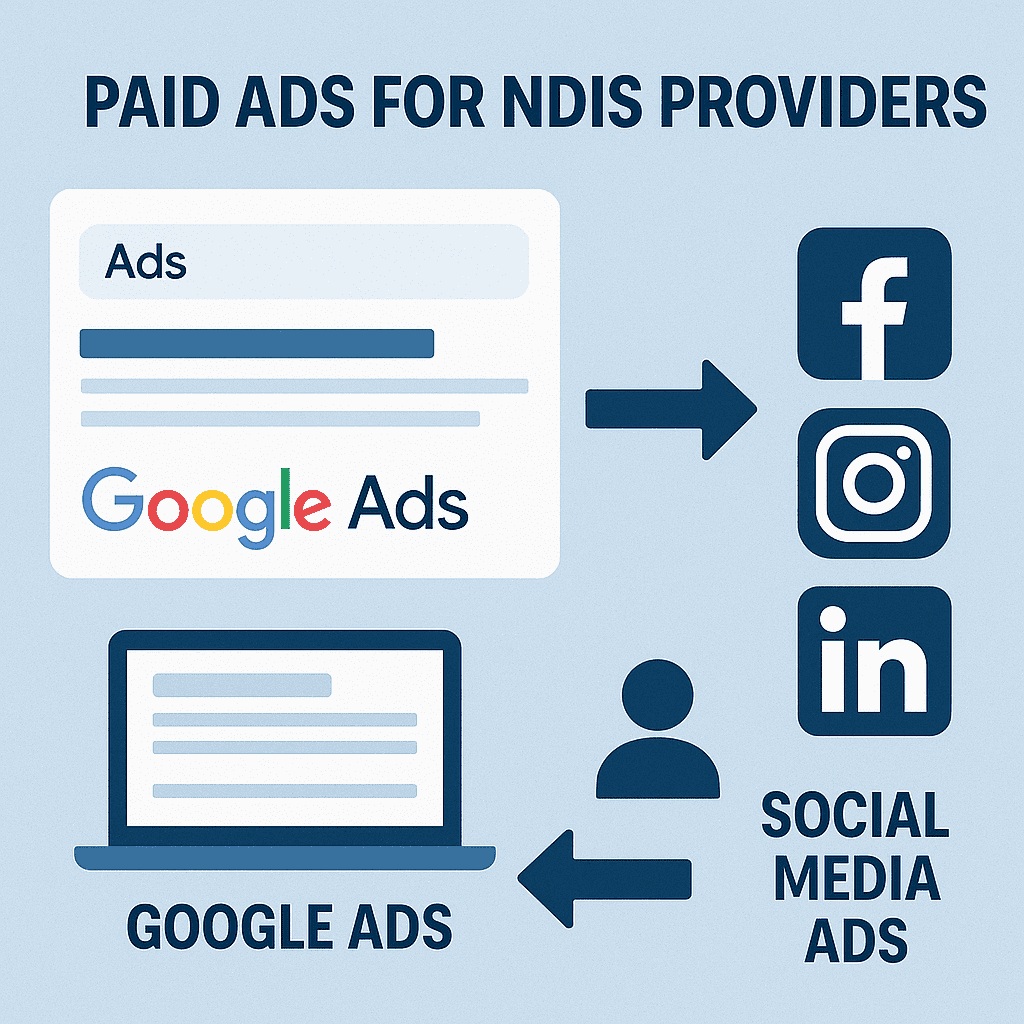
While SEO builds long-term visibility, paid ads give providers immediate reach. In a competitive system such as this, where participants are actively searching for support, running highly targeted campaigns can be the difference between being discovered today or overlooked entirely.
Smart paid advertising tactics for NDIS providers
Let’s explore some paid ads methods you may want to consider.
1. Google ads
Most participant journeys begin with a Google search. Running targeted Google Ads ensures you appear at the exact moment a carer or participant is looking for services.
- Focus on high-intent keywords like “NDIS provider in Sydney” or “best disability support services near me”.
- Use location targeting to limit spend to your actual service areas.
- Track conversions (calls, form fills, bookings) to measure ROI.
2. Social media ads
Platforms like Facebook and Instagram are where communities gather. For NDIS providers, this means reaching carers and families where they spend time.
- Leverage lookalike audiences based on existing participants.
- Use storytelling videos that show your team in action (with consent).
- Retarget website visitors who didn’t enquire the first time.
3. Retargeting campaigns
Not every visitor converts on their first click; in fact, 92% of first-time website visitors leave without taking action. Retargeting ensures they see your brand again.
- Show gentle, trust-building messages like “Learn how we support families in [suburb]”.
- Offer downloadable guides or booking reminders.
Table: Paid Ads vs Organic SEO
| Strategy | Paid Ads | SEO (Organic) |
| Speed | Immediate visibility | Takes 3–6 months to show results |
| Cost | Ongoing spend (pay-per-click) | Long-term investment |
| Audience Reach | Highly targeted (location, demographics) | Broad, based on search intent |
| Trust Factor | Lower (sponsored label visible) | Higher (seen as earned visibility) |
| Best For | Quick participant acquisition | Sustainable, long-term growth |
Compliance reminder
While paid ads are powerful, NDIS providers must stay compliant and sensitive. Ads should focus on services and outcomes, never exploiting participant vulnerabilities. Always keep messaging supportive, professional, and aligned with the NDIS Code of Conduct.
Content Marketing: build trust and authority
For NDIS participants and their families, choosing a provider is not just a transaction; it’s a decision about care, safety, and trust. That’s why content marketing is one of the most effective ways for NDIS providers to attract and reassure participants in 2026.
Unlike ads, which compete for attention in the moment, content builds long-term credibility. When you consistently publish helpful, accessible information, you position your organisation as a trusted authority rather than just another service provider.
Research shows that 70% of consumers prefer to learn about a business through articles and resources rather than ads, and companies that prioritise content generate 3x more leads than those relying only on paid search.
Practical content marketing tactics for NDIS providers
1. Educational blog posts
Families entering the NDIS system often feel overwhelmed. Answering their common questions not only improves SEO but also establishes your expertise.
- Examples: “How do I prepare for an NDIS planning meeting?”, “What supports are included in core funding?
- Use plain, supportive language to make information easy to digest.
2. Participant stories and testimonials
Real experiences speak louder than marketing claims. With participant consent, showcase success stories through articles, short videos, or social posts. This builds emotional trust and relatability.
- Example: A video interview with a participant describing how your team supported them to achieve a specific goal.
3. Downloadable guides and checklists
Lead magnets like “NDIS Planning Checklist 2026” give families something practical, while building your email list for future engagement.
- Format them as PDFs, with simple step-by-step guidance.
- Promote them through both your website and social media channels.
4. Case studies for carers and professionals
Sometimes the decision-makers are allied health professionals or carers who recommend services. Case studies framed around outcomes (e.g., improved independence, community engagement) show measurable impact
Example Content Funnel for NDIS Providers
| Stage of Journey | Content Type | Goal |
| Awareness (Research) | Blog posts, FAQs, explainer videos | Answer participant questions |
| Consideration (Comparing) | Testimonials, case studies, guides | Build trust and credibility |
| Decision (Contacting) | Strong CTAs, booking forms, service pages | Convert visitors into enquiries |
Social media for NDIS providers: Engage communities
Social media is one of the simplest ways for NDIS providers to stay visible and connected with participants, carers, and local communities. With 74% of Australians using social media daily Source, platforms like Facebook and Instagram offer direct access to families who are actively researching or comparing services.
For providers, the goal isn’t posting every day, it’s about sharing authentic, participant-focused content that builds trust. A mix of participant stories (with consent), staff highlights, and educational explainer posts works best to show credibility and care.
Related reading: Social Media SEO for Australian SMEs
Measuring and Optimising Results
Even the best NDIS digital marketing strategies will underperform without measurement. Providers who track their efforts can quickly see what works, cut what doesn’t, and scale what drives participant enquiries. Those who don’t measure are essentially marketing blind.
A recent survey found that businesses that set clear performance metrics are 60% more likely to hit their goals. For NDIS providers, this means putting the right KPIs in place and reviewing them regularly.
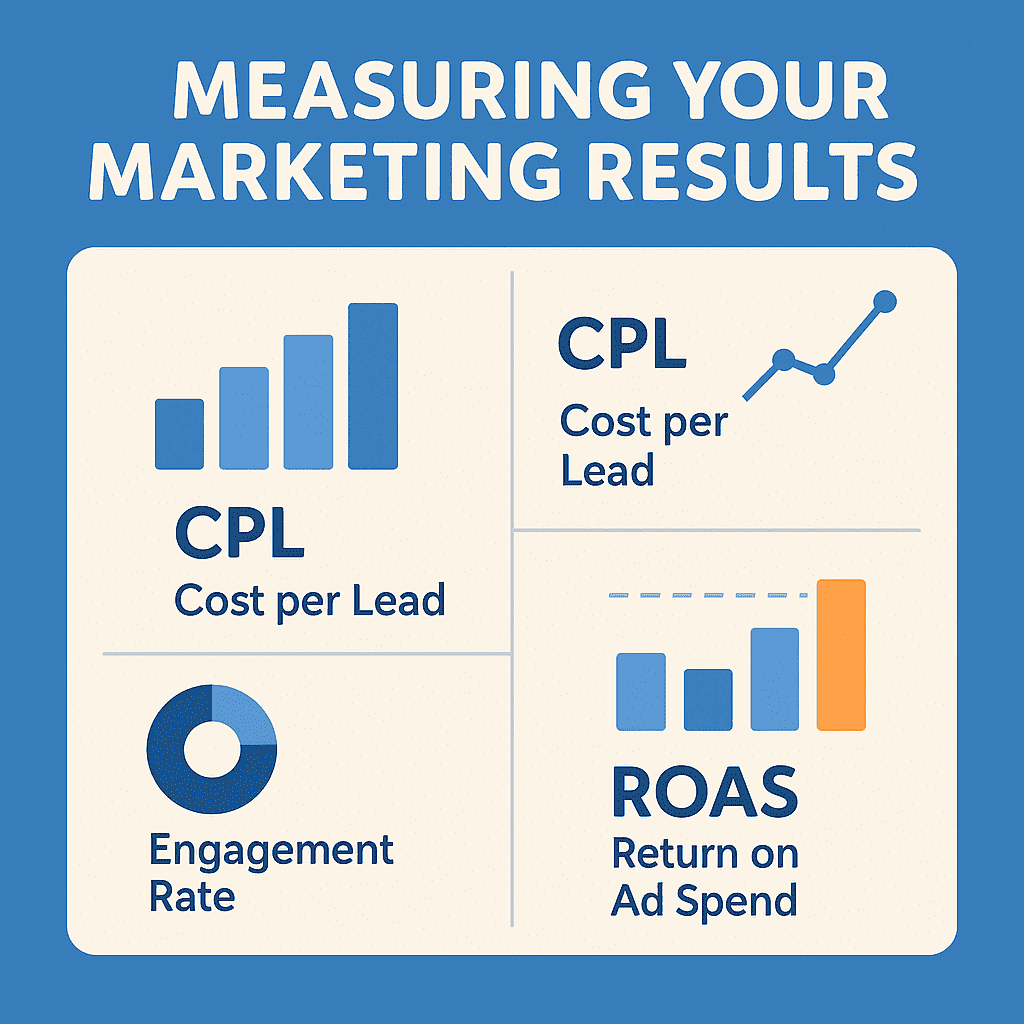
Key metrics NDIS providers should track
1. Cost per Lead (CPL): How much are you spending to generate one enquiry? Calculating CPL helps identify whether your ads, SEO, or content are delivering efficient results.
2. Participant Conversion Rate: Of all enquiries, how many convert into active participants? This shows if your messaging and onboarding are effective.
3. Engagement Rate: On social media, don’t just count followers. Track comments, shares, and clicks, signs that people actually connect with your content.
4. Website Analytics: Use tools like Google Analytics 4 to see:
- Which pages bring in the most traffic.
- Where visitors drop off.
- How long people stay on service pages.
5. Return on Ad Spend (ROAS): For paid campaigns, track how much revenue or confirmed participants you gain compared to ad spend.
Practical optimisation tips
- Run quarterly audits: prune underperforming keywords, refresh old blogs, and test new ad creatives.
- Use A/B testing: trial two different ad headlines or CTAs to see which performs best.
- Listen to participant feedback: integrate reviews and testimonials into your strategy.
- Double down on what works: if social video stories drive the most enquiries, make them a regular feature.
Snapshot: Measuring marketing effectiveness
| Metric | Why It Matters | How to Measure |
| Cost per Lead (CPL) | Shows efficiency of campaigns | Divide spend by number of enquiries |
| Conversion Rate | Reveals how persuasive your offer is | Track % of enquiries that become clients |
| Engagement Rate | Gauges relevance of content | Likes, shares, comments ÷ followers |
| Website Bounce Rate | Identifies poor user experience | Google Analytics reports |
| ROAS | Proves ad profitability | Revenue ÷ ad spend |
Pro Tip
Marketing is never “set and forget.” The most successful NDIS providers treat it as a loop: measure → tweak → repeat. Small, consistent optimisations often drive bigger gains than one-off campaigns.
In 2026, competition among providers is tougher than ever. Families and participants are no longer swayed by proximity or basic registration; they’re looking for providers who are visible, credible, and trustworthy online.
That’s where effective NDIS marketing strategies make all the difference. By investing in:
- SEO to get found first in participant searches,
- Paid ads to capture immediate attention,
- Content marketing to build long-term trust, and
- Social media to stay connected with communities,
providers can consistently attract more participants and grow sustainably.
The bottom line? Marketing isn’t just about visibility, it’s about building relationships that last. Providers who adapt now will thrive, while those who wait risk being invisible in an increasingly digital-first NDIS landscape.
Ready to grow your participant base?
At Velacore, we specialise in helping Australian NDIS providers stand out through SEO, digital advertising, content creation, and tailored marketing strategies that deliver measurable results.
Let’s talk about how we can help you attract more participants in 2026. Contact Velacore today.
Is Your Website Working for You?
Most websites don't generate leads. We fix that with custom designs that look great and deliver measurable results for your business.
Get Started With Velacore