
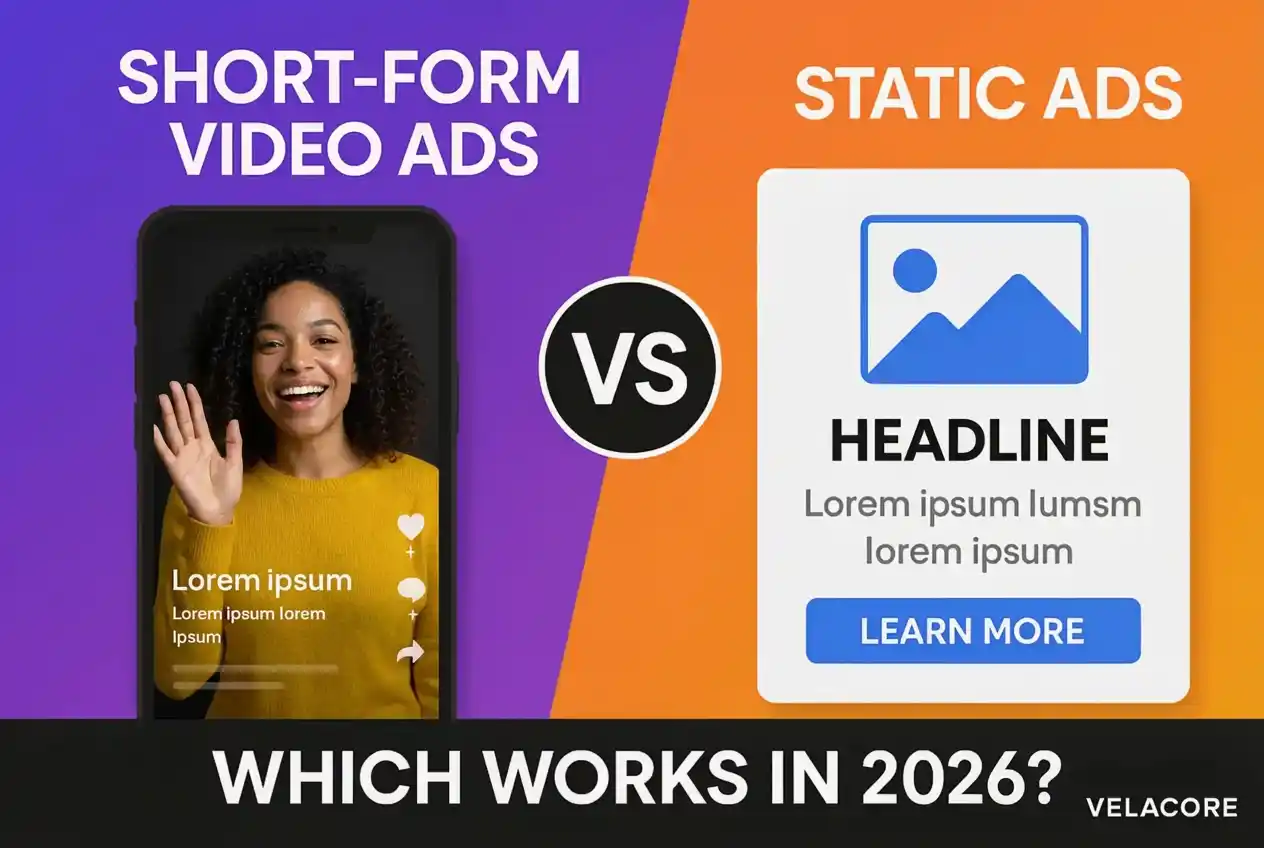
For small and medium-sized businesses, advertising in 2026 is no longer just about being visible; it’s about being effective. Every marketing dollar must prove its worth, which is why the debate around short-form video ads vs static ads has become so important. With tighter budgets and rising competition, SMEs can’t afford to spend on formats that don’t deliver measurable returns.
Industry data often positions video as the future of advertising. While this is largely true, the reality is more nuanced. Both static and video ads serve distinct purposes within the customer journey. The key is knowing where each format performs best.
This article explores the short-form video ads vs static ads debate in depth, benchmarking performance, costs, and engagement rates. More importantly, it provides SMEs with a practical framework to decide where to invest for maximum ROI in 2026.
The digital advertising landscape in 2026: Context for Short-Form Video Ads vs Static Ads
Audiences consume content differently today than they did even two years ago, and SMEs must adapt their strategies to align with these new habits. For instance;
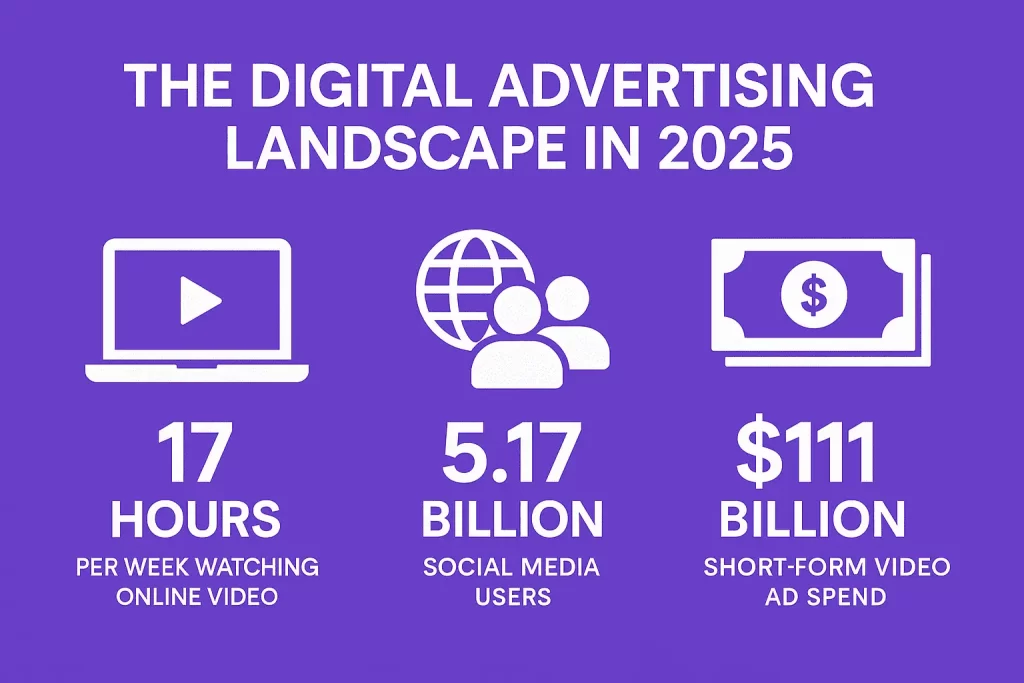
- Video is now the dominant medium: Internet users spend an average of 17 hours per week watching online video, up from 15 hours in 2023.
- Social platforms drive discovery: Over 5.17 billion people (64% of the world’s population) actively use social platforms daily, with short-form video emerging as the most consumed format
- Budgets reflect behavior: Advertisers are following consumers. Global short-form video ad spend surpassed $115 billion in 2025 and is projected to reach $145.8 billion by 2028, growing at a CAGR of 9.5%.
This shift creates both opportunities and dilemmas for SMEs. Video clearly commands audience attention, but static ads remain valuable for their cost-effectiveness and conversion potential. The question isn’t whether one will replace the other, but rather how both formats can be used strategically to maximize ROI. To decide where to allocate budgets, we need to examine each format’s role more closely.
Static Ads in 2026: Cost-efficient but limited
Static ads are the long-standing format of digital advertising. They include single images, banners, and carousel creatives used widely across platforms like Facebook, Instagram, LinkedIn, and Google Display.
For SMEs, static ads continue to appeal because they are quick to produce, affordable to test, and effective for retargeting. They perform especially well in bottom-of-funnel campaigns, where the goal is to nudge an already warm lead into taking action.
But their limitations are becoming harder to ignore. In feeds filled with motion and sound, static ads struggle to hold attention. Average CTRs have slipped to 0.6%–0.8%, and creative fatigue usually sets in within a week.
Strengths of static ads:
- Quick and inexpensive to produce.
- Effective for retargeting warm audiences.
- Ideal for bottom-funnel offers (discount codes, promotions).
Limitations of static ads:
- Limited ability to tell a story or build emotional connection.
- Lower engagement compared to video formats.
- Shorter shelf life due to creative fatigue.
Short-Form Video Ads: The new standard for engagement
Short-form video ads are clips under 60 seconds optimized for platforms such as TikTok, Instagram Reels, and YouTube Shorts. Unlike static images, they combine visuals, audio, captions, and motion, allowing businesses to capture attention and communicate more in less time.
In 2026, video is no longer optional. Social algorithms prioritize video content, and user behavior reflects this preference. Video ads improve brand recall by 80% compared to static ads, and benchmarks show short-form video ads deliver 58% higher CTRs and clicks that are up to 480% cheaper compared to static ads.
Strengths of short-form video ads:
- Higher engagement rates and shareability.
- Stronger brand recall and storytelling capability.
- Lower CPC and CPA compared to static campaigns.
Limitations of short-form video ads:
- Higher production costs and creative demands.
- Requires consistent testing and iteration.
- Poor execution can result in wasted ad spend.
The payoff, however, is clear: SMEs investing in video gain broader reach and stronger ROI, especially in the awareness and consideration stages of the funnel.
Static vs Video Ads: Performance benchmarks
| Performance Metric | Static Ads (2026 Avg.) | Short-Form Video Ads (2026 Avg.) | Format Advantage |
| CTR (Click-Through Rate) | 0.6%–0.8% | 1.3%–1.8% | Video |
| CPC (Cost per Click) | $5–$7 | $1–$2 | Video |
| CPA (Cost per Acquisition) | $50–$80 | $25–$45 | Video |
| Engagement Rate | Low | 30–40% higher | Video |
| Purchase Intent Lift | Neutral | +20% | Video |
| Ad Fatigue Lifecycle | 7–10 days | 14–21 days | Video |
Sources: Minta, Zeely, LocalEyes, Wyzowl 2025.
The evidence is clear: short-form video ads outperform static creatives across nearly every metric.
Channel Mix: Where static and video ads work best
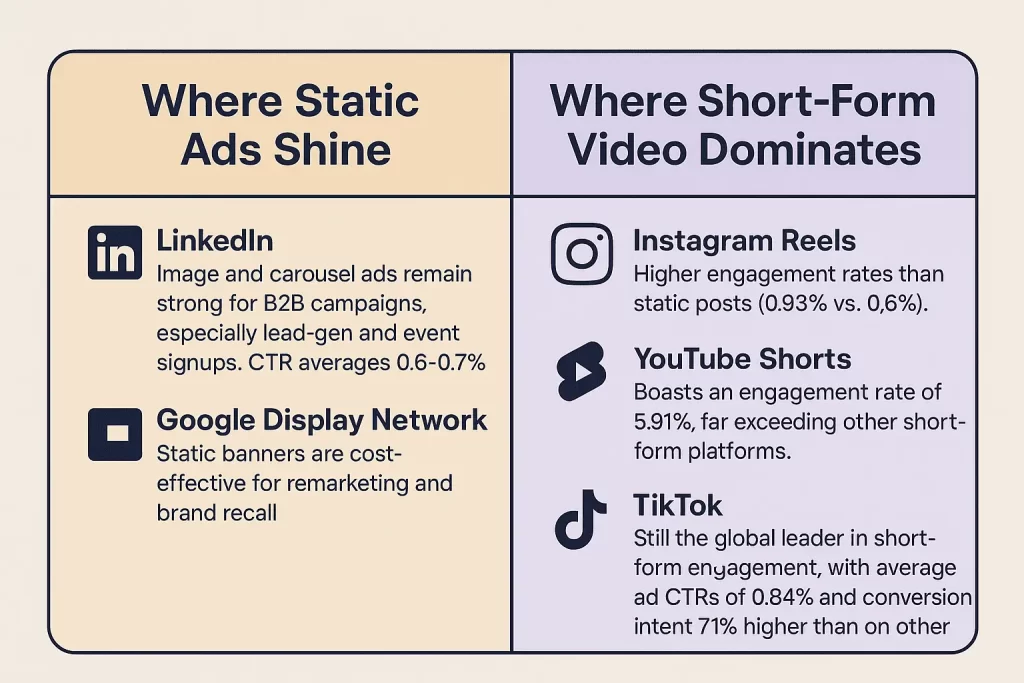
Not every platform treats ad formats equally, and understanding which channels favour static vs video ads performance is key to maximising ROI. Some platforms are built for visual storytelling, where short-form video thrives, while others still deliver solid results with static banners and carousels.
Where static ads shine:
- LinkedIn: Image and carousel ads remain strong for B2B campaigns, especially lead-gen and event signups. CTR averages 0.6–0.7%.
- Google Display Network: Static banners are cost-effective for remarketing and brand recall.
Where short-form video dominates:
- Instagram Reels: Higher engagement rates than static posts (1.23% vs 0.7%).
- YouTube Shorts: Boasts an engagement rate of 5.91%, far exceeding other short-form platforms.
- TikTok: Still the global leader in short-form engagement, with average ad CTRs of 0.84% and conversion intent that is higher than on other platforms.
Brands should align ad formats with platform strengths. Use static ads for LinkedIn lead-gen and remarketing, while leveraging video on TikTok, Instagram, and YouTube for awareness and engagement.
How brands should use both formats in 2026
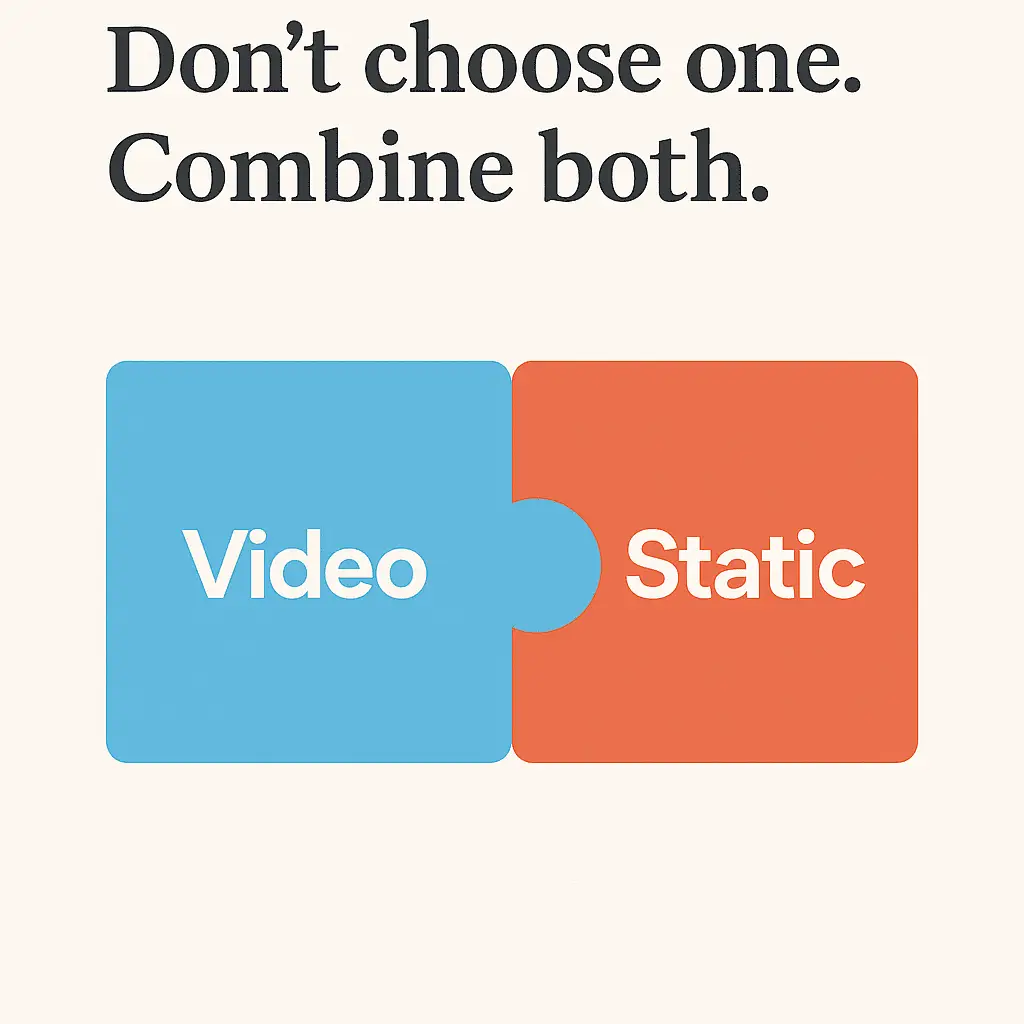
For brands, the best strategy is not choosing between static and video ads but using both where they perform best in the funnel.
- Top of Funnel (Awareness): Short-form video ads work best here. They capture attention, introduce your brand, and generate engagement at scale.
- Middle of Funnel (Consideration): Combine formats. Use video testimonials or product demos alongside carousel ads to nurture interest.
- Bottom of Funnel (Conversion): Static ads are highly effective for retargeting and conversion-focused offers, such as discounts or limited-time deals.
Pro Tip: SMEs with limited resources can validate messaging with static ads, then scale winning creatives into video ads to maximize reach and ROI.
The AI Advantage: Making Video Accessible for Every Budget
One of the most significant shifts in 2026 is how accessible short-form video production has become for SMEs. AI-powered tools now let smaller teams turn static assets, scripts, and ad copy into polished video ads in minutes, without a film crew or expensive agency. Over a third of marketing teams already use AI video generators to produce quick-turnaround creative, and nearly half of small businesses have created marketing videos using AI tools without any dedicated creative staff.
For businesses that have stuck with static ads purely because of production costs, that barrier is shrinking fast. The combination of lower production costs and higher performance makes the case for video stronger in 2026 than at any point before. If budget has been your reason for avoiding video ads, it’s worth revisiting that decision now.
Conclusion: The 2026 Verdict
In 2026, the debate between static and short-form video ads isn’t about which format is better overall; it’s about which format works best for your goals, budget, and audience.
- Short-form video ads clearly lead the way in engagement, cost efficiency, and ROI. They capture attention, tell stories, and deliver measurable results across awareness and consideration stages.
- Static ads, however, remain far from obsolete. Their speed, affordability, and effectiveness in retargeting and conversion-focused campaigns make them an essential tool in an SME’s toolkit.
- The smartest strategy is hybrid: use video to attract and educate, and static ads to convert and close. When deployed together, SMEs can stretch budgets further and often achieve up to 2x higher ROI compared to single-format campaigns.
The takeaway is simple: Don’t choose between static and video ads. Learn where each belongs in your funnel, measure performance against benchmarks, and let data, not assumptions, guide your ad spend.
Don’t leave your ad budget to guesswork. Contact us now and discover how we can help you craft high-performing campaigns tailored to your business