
When Australians search “GP near me” or “dentist open now,” they’re not just looking for a clinic, they’re looking for trust. According to studies, 77% of patients research healthcare providers online before making a booking. That’s why Healthcare SEO has become essential for every medical practice that wants to attract, engage, and retain patients.
Healthcare SEO isn’t just about climbing Google rankings. It’s about helping patients find accurate, trustworthy information and feel confident enough to reach out. From optimising your Google Business Profile to creating educational content that builds credibility, effective SEO turns your website into a digital front door; one that welcomes, informs, and converts visitors into patients.
In this article, we’ll explore how Healthcare SEO drives patient engagement, builds trust, and helps healthcare providers in Australia stand out in an increasingly competitive space.
Why Healthcare SEO matters more than ever
The healthcare industry in Australia is changing fast. Patients are now digital-first consumers. They compare clinics, read reviews, and check online availability before ever picking up the phone. In fact, most Australians search online before choosing a healthcare provider, and over 80% of consumers from a survey say they trust online reputation as much as a personal recommendation
That means if your practice doesn’t appear on the first page of Google, it might as well not exist. Healthcare SEO ensures your clinic’s website is discoverable, credible, and compliant; three pillars that define patient trust.
Unlike traditional marketing, SEO for healthcare websites doesn’t rely on guesswork. It builds lasting visibility through:
- Local SEO: which helps your clinic appear in “near me” searches and Google Maps.
- Medical content marketing: which answers common patient questions like “Is bulk billing available?” or “What’s the recovery time for dental implants?”
- Technical SEO: ensuring your site loads quickly, works on mobile, and meets accessibility standards.
For healthcare providers in Australia, a solid medical SEO strategy isn’t optional, it’s the foundation of patient acquisition and retention. It not only increases visibility but also positions your clinic as a trustworthy, patient-focused brand.
Core pillars of a winning healthcare seo strategy
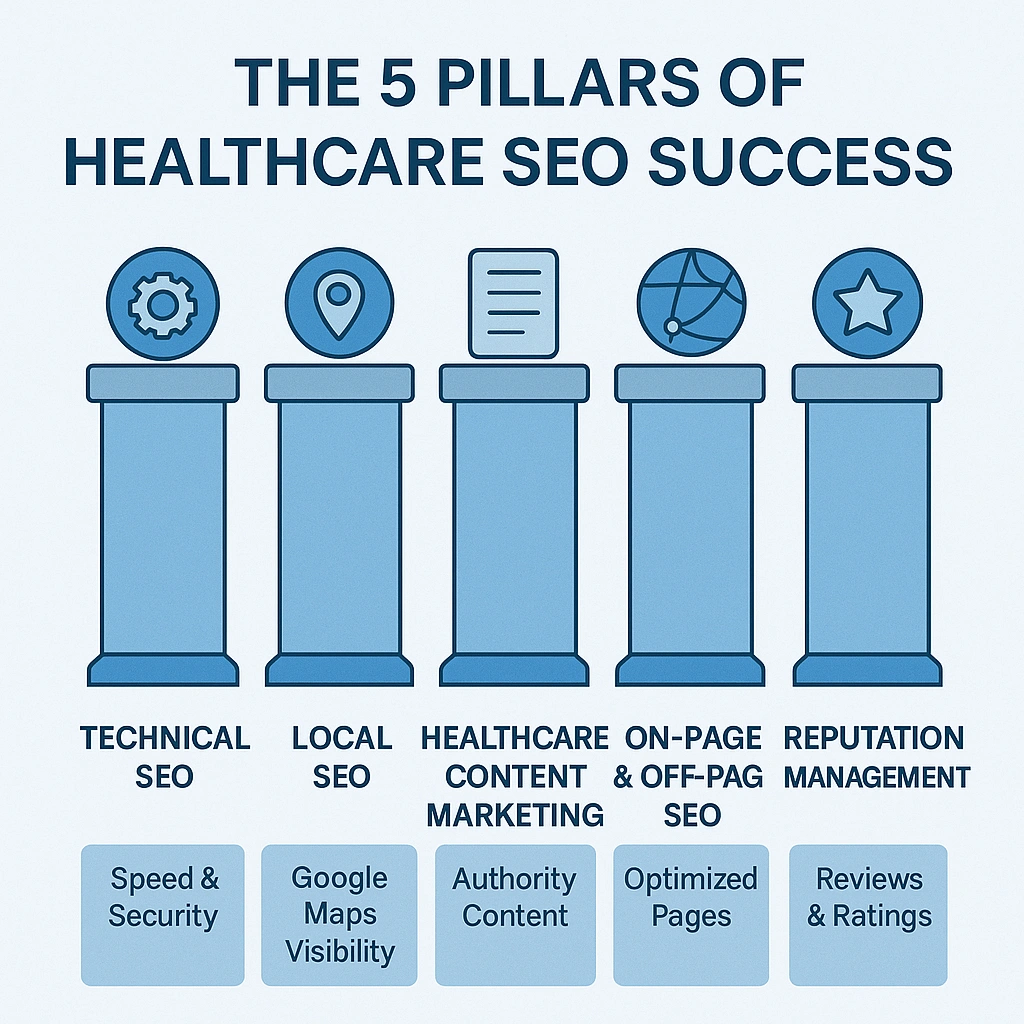
Building a successful Healthcare SEO strategy requires more than just targeting the right keywords. It’s about creating a digital ecosystem that reflects credibility, compliance, and care.
Here are the core pillars every Australian clinic or medical practice should focus on:
1. Technical foundation and user experience (UX)
A healthcare website must be both secure and seamless. Search engines prioritise sites that load fast, are mobile-friendly, and comply with accessibility and privacy standards.
- Site Speed: Studies show that a delay of even one second can drop conversions by 20%.
- Mobile Optimisation: With nearly 60% of searches happening on mobile devices, and over 85% of healthcare appointments being scheduled through phone, your site must be responsive and easy to navigate.
- Security & Compliance: Under the Australian Privacy Act, medical websites must protect personal data. Having SSL certificates (HTTPS),and complying to data processing and residency regulations is non-negotiable for healthcare SEO.
A strong technical setup signals to Google, and patients that your website is trustworthy.
2. Local SEO for healthcare providers
Local visibility is the core of SEO for medical practices. Most patients look for clinics within a 5–10 km radius. Optimising your Google Business Profile (GBP) ensures your clinic shows up in local search results and Google Maps.
Tips for Local SEO in Healthcare:
- Keep your NAP (Name, Address, Phone) details consistent across platforms.
- Encourage satisfied patients to leave authentic Google Reviews; this boosts your ranking and credibility.
- Add location-based keywords like “physiotherapy clinic in Brisbane” or “bulk billing GP in Melbourne” to your content.
Local SEO is how your practice becomes the go-to healthcare provider in your community.
3. Healthcare content marketing
Content remains the backbone of every effective medical SEO strategy. Patients crave reliable answers, from symptoms and treatments to post-surgery care. By producing quality healthcare content that’s accurate and empathetic, you can increase visibility while building patient trust.
Effective content ideas:
- Educational blog posts (e.g., “5 Signs You Should See a Physiotherapist”)
- Service pages optimised for conditions and treatments
- FAQs on procedures, billing, or Medicare
- Explainer videos and visual infographics
Search engines reward informative, people-first content. Remember, healthcare content should educate first, sell second.
4. On-page and off-page seo optimisation
On-page SEO focuses on the elements you control directly, the technical and content components that help Google understand what your page is about. For healthcare websites, this is crucial because accuracy and clarity directly influence patient trust and compliance.
Key tactics include:
- Keyword optimisation: Integrate phrases like “dental clinic in Sydney” or “NDIS-registered physiotherapist” naturally into headings (H1–H3), meta descriptions, image alt text, and URL structures.
- Schema markup: Use medical schema tags such as MedicalClinic, Physician, or LocalBusiness to help Google display rich results like ratings, services, and operating hours.
- Meta tags: Every page should have a unique meta title and description that highlight relevant medical services while addressing patient intent (e.g., “Book a same-day GP appointment in Brisbane”).
- Content structure: Break content into digestible sections using bullet points, FAQs, and patient-friendly language, this improves readability and dwell time, both key ranking signals.
- Accessibility: Ensure content meets WCAG 2.1 standards and complies with the Australian Privacy Principles when handling medical or personal data.
A well-structured on-page SEO strategy transforms your site into a patient-friendly digital hub, reducing bounce rates and boosting conversions.
Off-Page SEO:
Off-page SEO strengthens your website’s reputation beyond your domain. It’s about earning trust signals through backlinks, reviews, and mentions. This helps to establish your healthcare brand as credible and authoritative.
Practical off-page strategies include:
- Backlink building: Secure backlinks from reputable healthcare directories, hospitals, medical associations, and educational resources (e.g., HealthDirect, RACGP, or Australian Medical Association). These tell Google that your content is reliable and worth ranking higher.
- Guest posting: Publish educational articles on healthcare forums or digital health magazines, linking back to your website’s service or blog pages.
- Public relations (PR): Share media releases about new services, community health drives, or awards; these generate media mentions that strengthen domain authority.
- Social media signals: Although not a direct ranking factor, active engagement on LinkedIn, Facebook, and health forums improves brand awareness and referral traffic.
- Reputation management: Responding promptly and professionally to reviews helps build online trust.
5. Reputation & review management
In healthcare, trust is currency. Over 84% of patients trust online reviews as much as personal recommendations.
Encourage reviews from happy patients and respond professionally to feedback. This not only helps SEO but also shows transparency.
How SEO drives patient engagement and trust
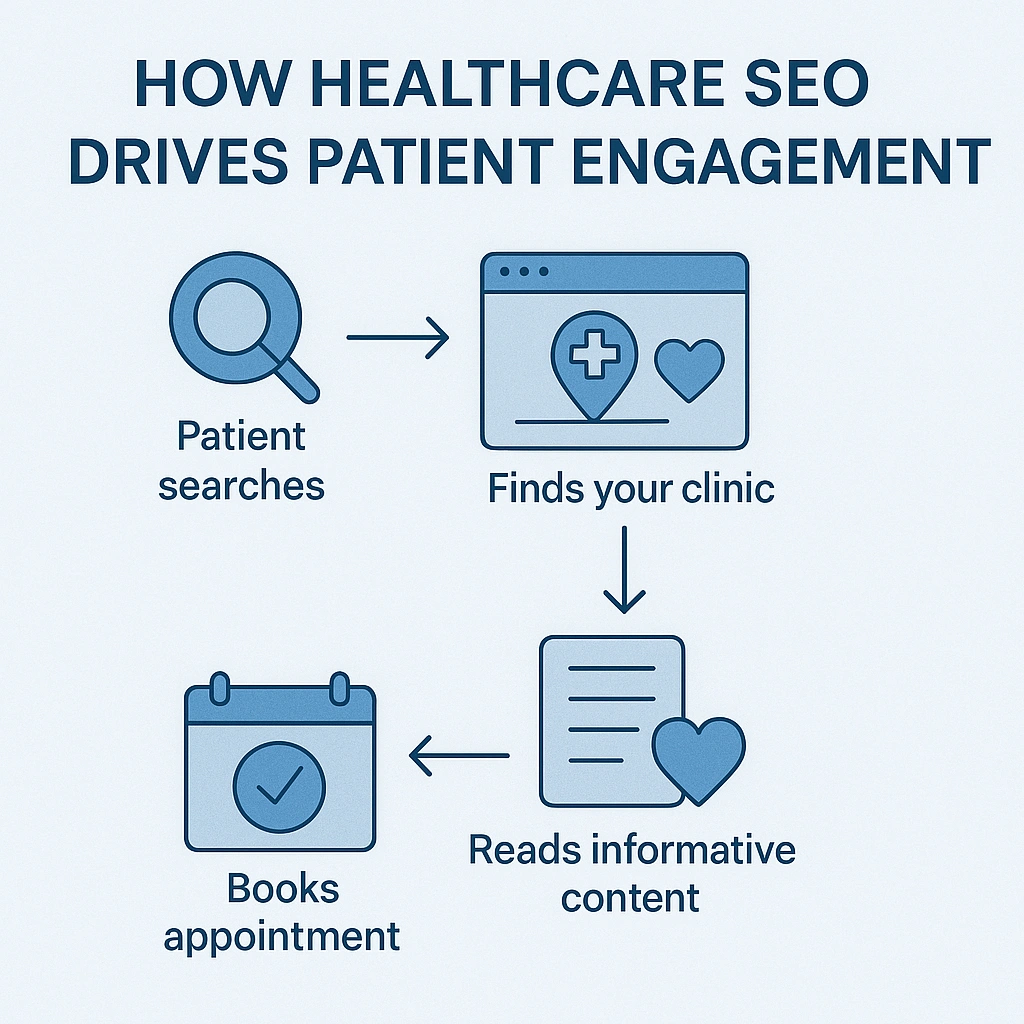
In healthcare, visibility without trust is meaningless. A high-ranking website is only valuable when it drives real patient interaction like; appointment bookings, online enquiries, and repeat visits. That’s why Healthcare SEO is more than a technical checklist; it’s a framework for building credibility, transparency, and connection with patients.
According to a Google report, 1 in 20 online searches are health-related. Another report suggests that there are 70,000 health-related searches on Google every minute. This means your clinic’s digital presence directly shapes how patients perceive your expertise and care.
1. SEO enhances patient education and empowerment
Through healthcare content marketing, clinics can answer common patient questions long before the first appointment. For instance, blogs about “How to manage post-surgery pain” or “What to expect from telehealth consultations” improve both search rankings and patient confidence.
Educational content positions your practice as an authority, helping potential patients feel informed and cared for. When patients find trustworthy, up-to-date information on your site, they’re 3x more likely to book an appointment. According to a recent survey, over 70% of healthcare marketers say blog posts improve organic traffic
2. Local SEO builds personal connection
Local SEO for healthcare providers bridges the gap between digital and physical engagement. When your Google Business Profile is optimised with photos, reviews, and accurate service hours, you become visible exactly when patients need you most, and tthis is often within their immediate suburb.
Local SEO isn’t just about being found; it’s about being chosen.
3. SEO strengthens digital trust signals
In healthcare marketing, trust signals — like HTTPS security, verified credentials, professional imagery, and genuine reviews — directly influence decision-making. A well-optimised medical SEO strategy ensures these credibility factors are prominent across your website and listings.
Google’s E-E-A-T (Experience, Expertise, Authoritativeness, and Trustworthiness) framework especially impacts healthcare websites under the “Your Money or Your Life” (YMYL) category. This means sites that provide accurate, evidence-based information from qualified professionals rank higher.
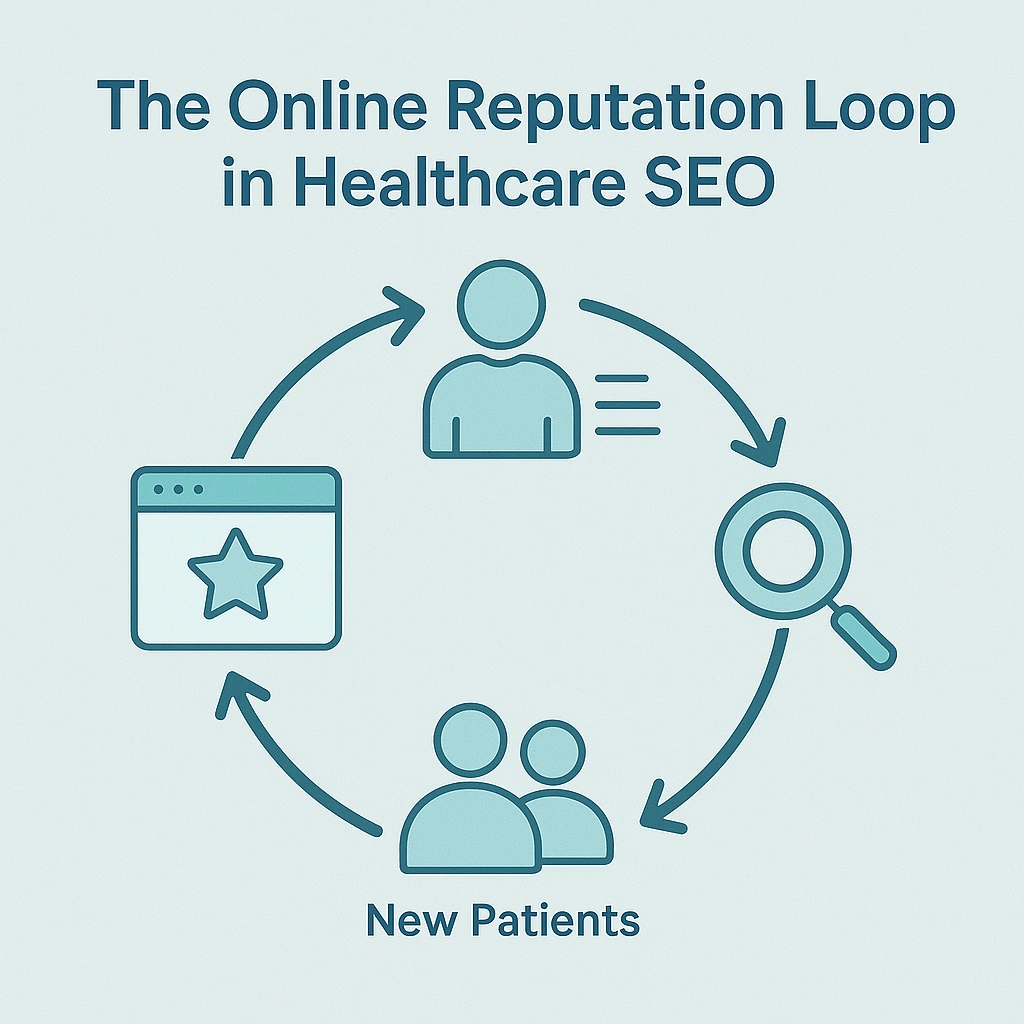
4. Reviews and engagement loop
SEO amplifies patient feedback, and that feedback feeds back into SEO.
When patients leave detailed reviews on Google or your practice management portal, they create keyword-rich user-generated content that improves search visibility.
Encouraging reviews and responding authentically builds digital rapport, boosting both engagement and your search rankings.
Measuring success: SEO KPIs for healthcare practices
You can’t improve what you don’t measure, and that’s especially true for Healthcare SEO. While ranking higher on Google is great, the ultimate goal is to turn visibility into patient action. Tracking the right SEO KPIs (Key Performance Indicators) helps you understand what’s working, where to refine, and how your efforts are improving patient engagement and practice growth.
Here’s how to measure the real-world impact of your medical SEO strategy:
1. Organic traffic and keyword rankings
Organic traffic remains the clearest indicator of your SEO performance. Tools like Google Analytics and Ahrefs can show which healthcare-related keywords drive visitors to your website.
Tip:
- Track high-intent keywords such as “dermatologist near me”, “bulk billing GP Sydney”, or “pediatrician open now”.
- Use location filters to monitor your visibility across suburbs or states in Australia.
A steady increase in organic traffic means your SEO for healthcare website is effectively connecting with patient searches.
2. Conversion rates and appointment bookings
Ranking high is one thing; converting visitors into patients is another.
Measure conversion actions such as:
- Online appointment bookings
- Contact form submissions
- Calls from your Google Business Profile
- Newsletter or resource downloads
3. Local visibility and map pack performance
For local SEO in healthcare, track how often your clinic appears in the Google Map Pack, the top three results that show business listings and directions.
Metrics to monitor:
- Impressions and clicks on your Google Business Profile
- Number of direction requests
- Review frequency and ratings
Appearing in the Map Pack can boost your click-through rate (CTR) by up to, making it one of the most valuable SEO positions for medical practices.
4. Patient engagement metrics
Your content should not only attract clicks but also keep patients engaged.
Track on-page behaviour such as:
- Average session duration (how long visitors stay)
- Pages per session (how many pages they explore)
- Bounce rate (how quickly they leave)
Engaged patients are more likely to trust your clinic and return. Healthcare websites that feature educational blogs and videos have higher session durations than those without .
5. Online reputation and reviews
Patient feedback is a hidden SEO powerhouse. Every review adds keyword-rich content that enhances your search visibility.
Monitor:
- Number of new reviews per month
- Average rating on Google and HealthEngine
- Response rate and tone
A consistent flow of genuine reviews can push your clinic higher in local search rankings — especially when you reply professionally and quickly.
Conclusion: turning visibility into care
Healthcare SEO isn’t just about ranking higher, it’s about earning trust. When patients find clear, credible, and compassionate information online, they’re far more likely to engage and book.
For healthcare providers in Australia, an optimised website is like your waiting room where first impressions, credibility, and patient loyalty begin.
At Velacore, we help clinics transform their online presence through data-driven, compliant, and patient-focused SEO strategies. From local visibility to content that builds trust, we make sure your digital footprint reflects the quality of your care.
Let’s help your clinic get found; and trusted. Send us a message already