

If you want to turn client wins into marketing assets, you’re already thinking smarter than many of your competitors. Most businesses stop at writing a single case study, some don’t even get that far. But a single client success story can be transformed into blogs, LinkedIn threads, PR features, email campaigns, even video content. That means less time starting from scratch and more time maximising ROI.
And the opportunity is massive. Case studies are consistently ranked among the top three most effective types of content for B2B marketing. Combine that with the fact that 74% of marketers say content marketing generates demand and leads, and you can see why repurposing wins is a competitive advantage.
This article will walk through why client wins matter, how to build strong case studies, and the practical steps to repurpose them into marketing assets that continue delivering value.
Why client wins are powerful marketing assets
Case studies and client success stories matter because they provide proof. In a marketplace where every business promises results, buyers want to see evidence. A well-crafted case study delivers that in a way few other formats can.
Research backs this up:
- 92% of B2B buyers say they are more likely to purchase after reading a trusted review or case study.
- Nearly 79% of B2B buyers use case studies when evaluating solutions
- Content marketing overall is 62% more cost-effective than outbound marketing, while generating 3x more leads.
Why does this matter to you? Because when you repurpose client wins:
- You build credibility at scale: Real results are persuasive.
- You extend efficiency: A single story becomes multiple formats.
- You influence decisions: Prospects see practical results, not promises.
- You align with AI search: Structured stories and Q&A formats feed directly into Google’s AI overviews and voice search answers.
Client wins aren’t just testimonials, they are some of the most valuable marketing assets a business can create.
How to Turn Client Wins into Marketing Assets: Step-by-Step
Turning client wins into marketing assets is not a one-off exercise—it’s a structured process. Each stage builds on the last, ensuring that your success stories don’t just sit in a folder but actively work for your brand. Below are the five key steps, explained in detail.
Step 1: Choosing the right client win
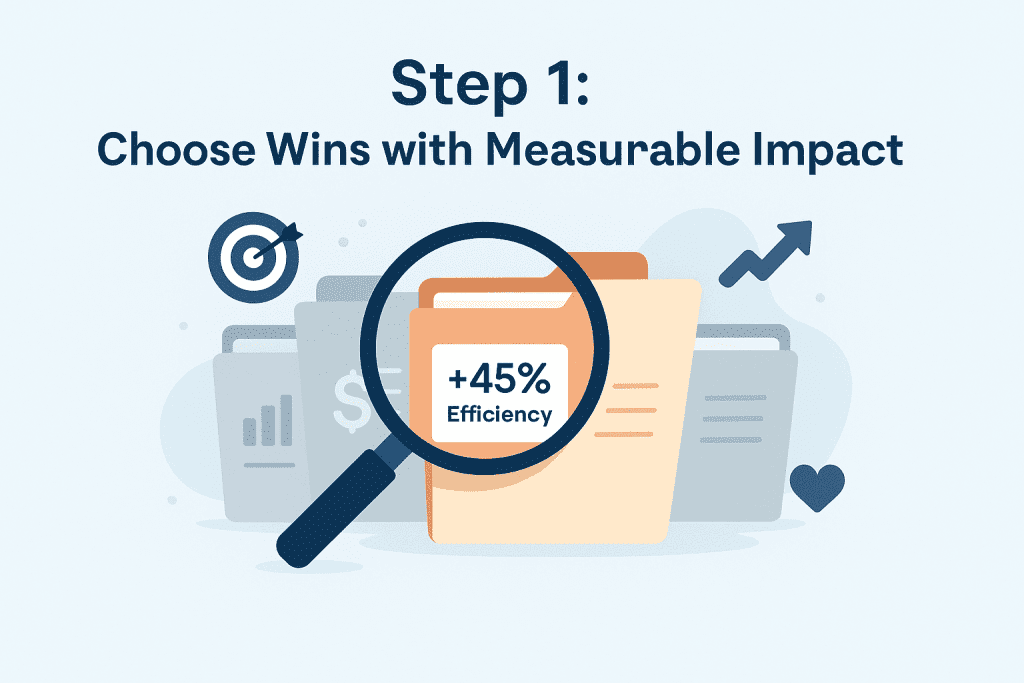
Not every project deserves to be turned into a case study. To maximise impact, choose wins that:
- Show measurable impact. Specific metrics such as “reduced processing time by 45%”, are more persuasive than vague claims.
- Reflect audience pain points. Pick stories that mirror the challenges your prospects face, making the story relatable.
- Offer a unique perspective. Wins that highlight creativity, innovation, or overcoming unusual obstacles stand out and capture attention.
By being selective, you ensure the stories you invest in are aligned with your brand strategy and resonate with your target market.
Step 2: Building a strong core case study

A case study is the foundation. Without a solid story, repurposing will feel shallow. To build a strong core, follow a clear structure:
- The challenge – Outline the problem or obstacle the client faced.
- The solution – Explain your approach and why it was chosen.
- The execution – Describe how you implemented the solution.
- The results – Present the measurable outcomes, supported by data.
- The client’s voice – Add direct quotes to humanise the story and provide authenticity.
This structure ensures that when you repurpose, you have enough depth and detail to adapt the content for multiple platforms.
Remember, a strong case study should be both data-driven and story-driven. Here’s how to balance both:
- Set the context clearly: Begin by framing the client’s industry and challenges in a way that prospects can identify with. Avoid jargon—clarity is more persuasive than complexity.
- Tell a structured story: Use a beginning (the challenge), middle (the solution and execution), and end (the results). Stories are remembered 22 times more than facts alone (Stanford research).
- Use data visually: Charts, before-and-after metrics, and comparisons make results easy to digest. For example: “Website conversion rate increased from 2.5% to 4.1% in three months.”
- Bring in the human voice: Client quotes add authenticity and help readers connect emotionally with the story.
- Keep it concise: Aim for 600–1,200 words for the full case study—enough detail to be credible, but not overwhelming.
Step 3: How to repurpose client success stories
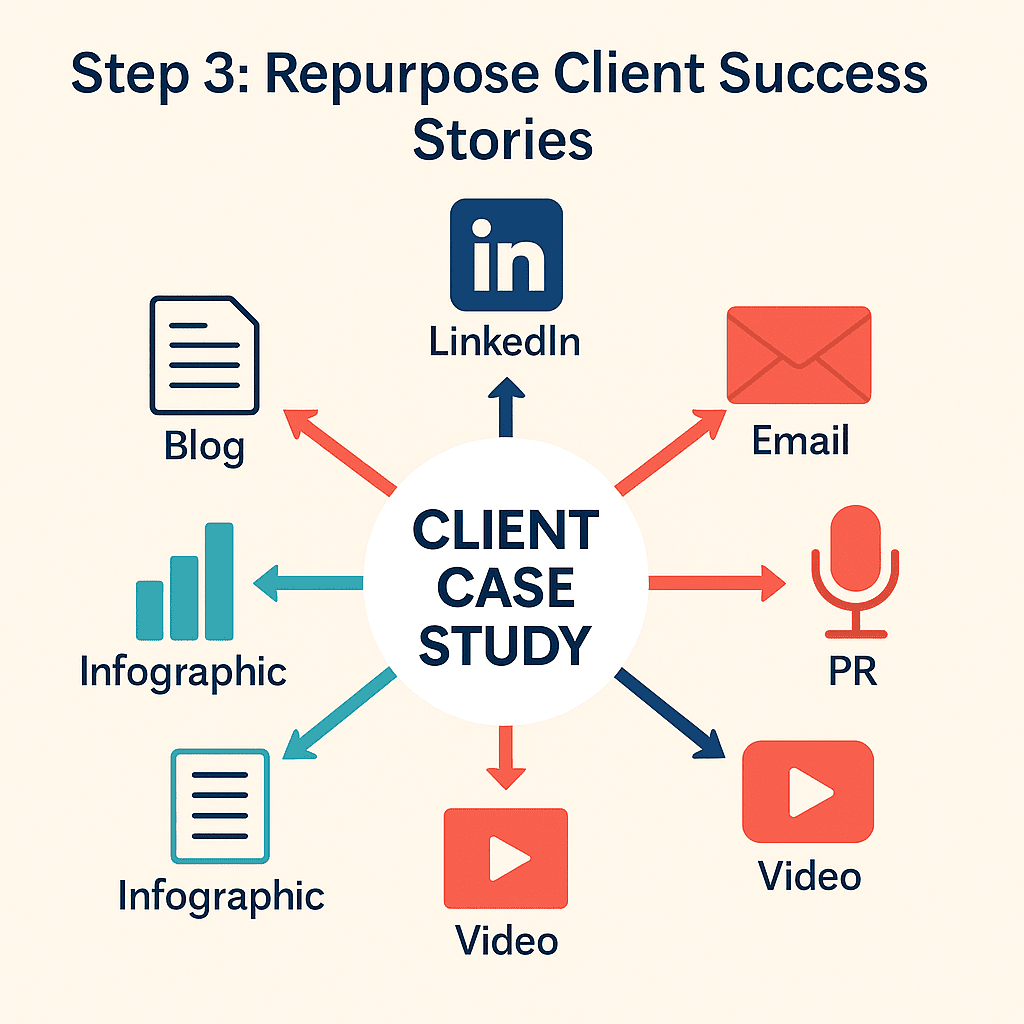
This is where you turn client wins into marketing assets. A single case study can become multiple pieces of content, each serving a different purpose:
- Blog Posts: Publish the full case study, optimised with keywords like repurpose client success stories and create marketing content from case studies. Add insights and lessons to enhance SEO and value.
- LinkedIn Posts: Break the story into smaller updates; one focusing on the challenge, another on the solution, another on the results. Visuals and charts help engagement.
- Email Campaigns: Share short snippets that act as social proof: “We helped [Client] achieve 65% more leads in three months.”
- PR Stories: Reframe the case study into an industry narrative or newsworthy hook. Journalists are interested in trends, not just your brand.
- Infographics: Turn metrics and milestones into shareable visuals. Perfect for quick consumption.
- Video Testimonials: Record the client’s perspective or create animated explainers to bring the story to life.
Each format addresses a different audience segment, multiplying the reach of one story without requiring entirely new content creation.
Step 4: Optimising for AI overviews and voice search

Generative AI and voice assistants are shaping how people discover content. To ensure your repurposed case studies remain visible:
- Use question-based headings. For example, “How can you turn client wins into marketing assets?”
- Provide concise answers. Google and AI tools prefer clear, structured responses.
- Include long-tail keywords. Use specific search phrases that people are likely to type into Google. These keywords are less competitive than broad terms and attract readers with clear intent.
- Add credible data. Citing statistics from reliable sources increases authority and visibility.
This ensures your content is not just seen by people but also surfaced by AI-driven platforms.
Step 5: Distribution and amplification
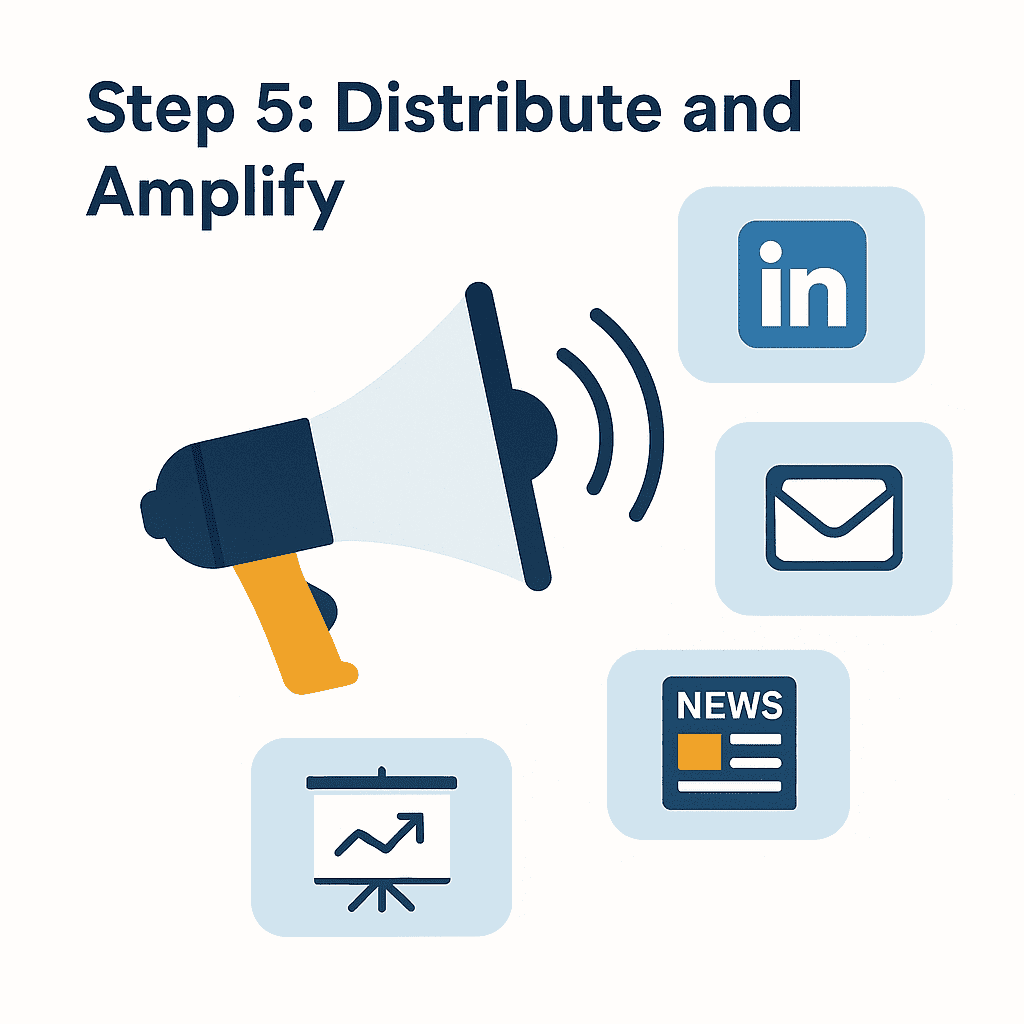
Creating assets is only half the work, distribution determines success. To amplify your content:
- Share stories on LinkedIn, tagging the client where possible.
- Send summaries in email newsletters with clear CTAs.
- Pitch the PR version to relevant industry publications or local media.
- Reuse snippets and visuals in presentations, webinars, or sales proposals.
- Boost high-performing posts with small paid campaigns to expand reach.
By strategically distributing and amplifying, you ensure that every repurposed story reaches the right audience and generates maximum value.
Example: Turning one win into many assets
Consider a Melbourne-based SaaS company that reduced churn by 30% in six months. Here’s how they could transform this into marketing assets:
- Blog Post: “How We Helped [Client] Cut Churn by 30% in Six Months.”
- LinkedIn Update: Share a chart highlighting the reduction with a client quote.
- Email Snippet: “See how [Client] reduced churn by 30% in record time.”
- PR Feature: Pitch a story about retention strategies in the Australian SaaS sector.
- Infographic: Visualise before-and-after churn metrics.
- Video Testimonial: A 60-second clip featuring the client’s voice.
That’s six distinct marketing assets created from a single client win—each tailored for a specific audience and channel.
Common mistakes to avoid
Even good stories can fail if executed poorly. Watch out for these mistakes:
- Weak data: Avoid vague claims. Always use quantifiable results.
- Lack of adaptation: Copy-pasting the same text into different formats won’t work. Each channel requires tailoring.
- Skipping approvals: Always secure client permission for data, quotes, and branding.
- Allowing stories to become outdated: Regularly refresh case studies to keep them relevant.
Avoiding these pitfalls ensures your repurposed assets remain effective and credible.
Conclusion
Case studies are more than proof of past performance, they are engines of future growth. When you turn client wins into marketing assets, you positively amplify the significance of each success, create efficiencies in content production, and provide persuasive proof that helps prospects make buying decisions.
At Velacore, we help Australian businesses repurpose their client success stories into compelling blogs, LinkedIn campaigns, PR features and more. If you’re ready to transform your case studies into marketing fuel, speak with us today.
FAQs
What qualifies as a client win?
Any measurable improvement such as higher revenue, reduced churn, or increased efficiency that resulted from your solution.
How often should businesses create case studies?
Quarterly is ideal, but even one strong case study can generate multiple months of marketing content if repurposed effectively.
Do I need client permission?
Yes. Always confirm with the client before publishing details, even if anonymized.