
Before you increase your ad spend, read this. Most businesses that come to us frustrated about their lead numbers are not actually short of traffic. They are short of conversion. Their website is receiving a reasonable number of visitors every month, but those visitors are not doing anything. No form fills. No calls. No enquiries. Just visits that disappear into nothing.
Here is the truth about how to get more leads from your website: spending more on ads to drive more people to a site that is not converting is like pouring water into a bucket with a hole in it. You will not solve the problem by pouring faster. You need to fix the hole first.
This article is about exactly that. The strategies here are not shortcuts. They are the building blocks of a website that works as a genuine lead generation engine, pulling in enquiries consistently without you needing to increase your paid media budget by a single dollar.
You Probably Do Not Have a Traffic Problem
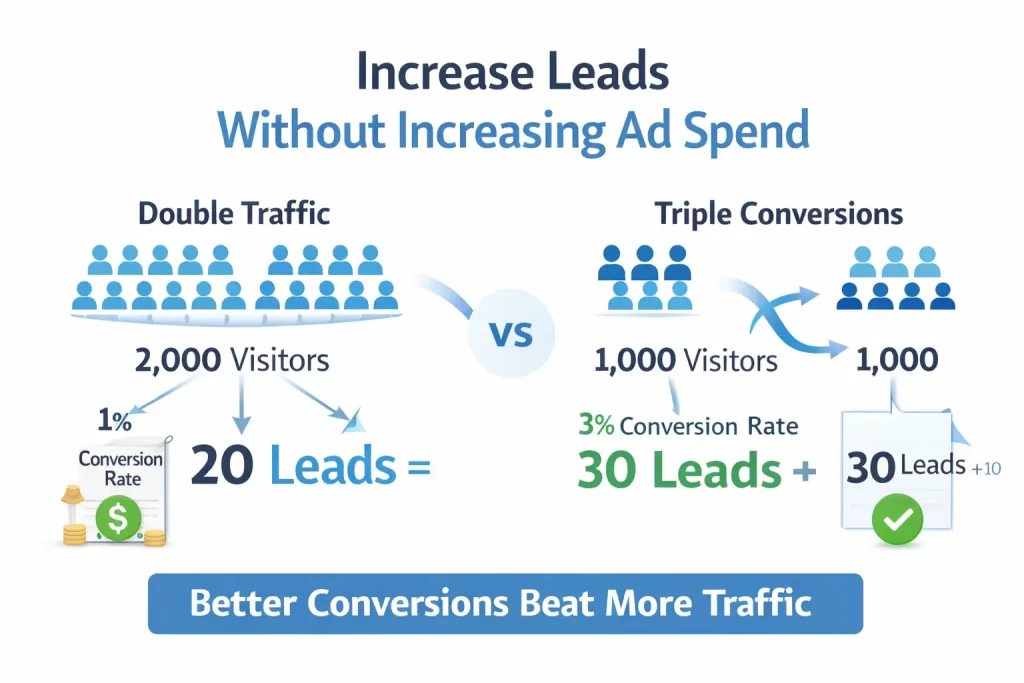
The average website converts somewhere between 1% and 3% of its visitors into leads, depending on the industry. That means for every 100 people who land on your site, 97 or more leave without doing anything. Most businesses respond to this by trying to get more people to the site. But think about what happens if you fix the conversion problem instead.
If your site currently receives 1,000 visitors per month and converts at 1%, you are getting 10 leads. Double your ad spend to bring in 2,000 visitors and you get 20 leads. But if you keep the same traffic and improve your conversion rate to 3%, you get 30 leads without spending anything extra. Better conversion beats more traffic, every time.
| Content marketing generates 3x more leads than outbound at 62% lower cost |
According to research, a 12% conversion rate is considered good for a landing page. The gap between where most websites sit and where they could be is enormous. And closing that gap costs nothing compared to buying your way to more traffic.
Fix Your Conversion Paths Before Anything Else
A conversion path is the route a visitor takes from arriving on your website to actually contacting you or taking the action you want them to take. Research consistently shows that websites with millions invested in design and content still underperform on lead generation simply because their conversion paths are broken.
Common conversion path failures include a homepage that describes your services beautifully but never invites the visitor to do anything, a contact form buried three clicks from the homepage, CTAs that use vague language like ‘learn more’ instead of specific language like ‘get a free quote’, and form fields that ask for far more information than is needed at the initial stage.
Shortening your contact form to a maximum of three to four fields and removing every non-essential question can dramatically lower the barrier to conversion. You can collect the rest of the information later in the sales process. Right now, you just need the person to raise their hand.
Every key page on your website should have one clear, unmissable call to action. Not three. Not a sidebar full of options. One primary action you want the visitor to take, made as easy as possible to complete.
The Content That Pulls Leads In on Autopilot
This is where most businesses leave a significant amount of money on the table, and it is also where the biggest long-term opportunity lives.
| Content marketing generates 3x more leads than outbound marketing, at 62% lower costSource: growthlist.co/lead-gen-statistics |
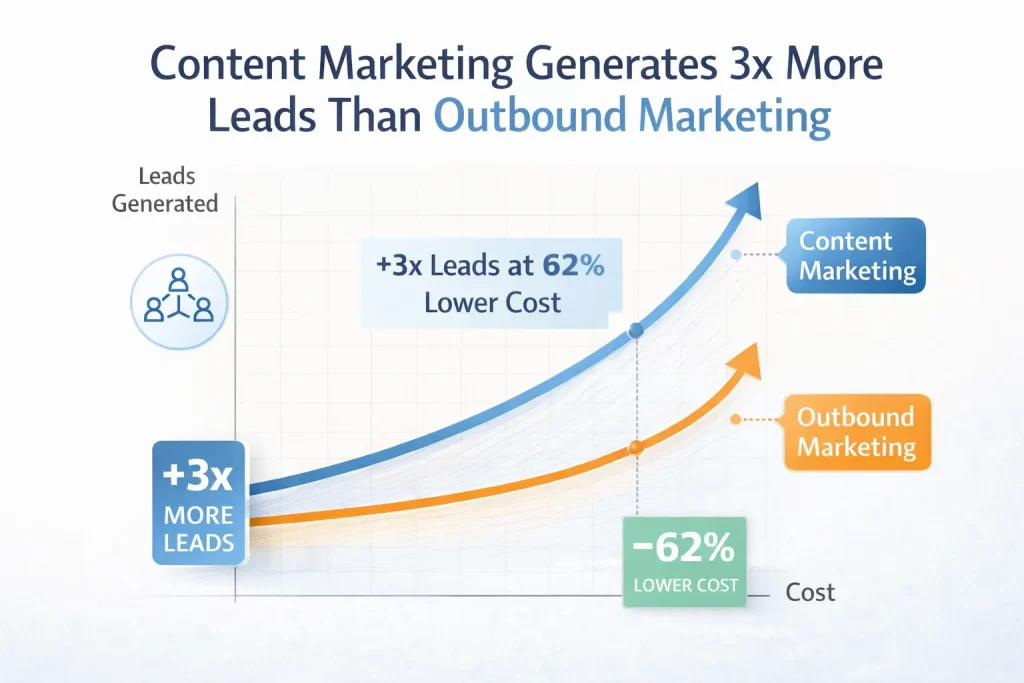
That is not a marginal improvement. That is a structural advantage that compounds over time. Every piece of genuinely useful content you publish is a permanent asset that can attract visitors and generate leads long after the day it went live. According to 27% of marketers, organic search generates more leads than any other single channel.
The key word is genuinely useful. Not content written to rank for keywords. Not content that talks about your company. Content that answers the real questions your potential customers are typing into Google right now, at the exact moment they need help. When someone searches a specific question and your article appears at the top of the results, that visitor arrives already interested, already looking for what you offer, and already in the mindset of taking action.
Companies that publish 16 or more blog posts per month generate 3.5 times more traffic and leads than those that publish four or fewer. And once that content is live, it keeps working around the clock without any ongoing spend.
Businesses that figure this out early build a significant competitive moat. Every relevant article they publish makes their website more visible, more credible, and more effective at attracting exactly the kind of visitors most likely to become customers. Businesses that rely entirely on paid ads have to keep paying the same toll forever. Businesses with strong content libraries keep getting leads from content they wrote two years ago.
| How Velacore approaches content marketing for clients: Rather than just writing articles, we identify the specific questions your buyers are asking at the moment of highest commercial intent. We map those questions to your services, create content that genuinely answers them better than competitors, and structure it to convert readers into enquiries. The result is a website that generates enquiries from organic search, continuously, without ongoing ad spend. Talk to us about building a content strategy for your business. |
Trust Signals: The Quiet Conversion Killers
Your website can have perfect conversion paths and genuinely excellent content, and still fail to convert if visitors do not trust you. Trust is built in seconds and lost just as fast.
Research shows that 75% of people judge a business’s credibility entirely based on its website design. That judgement happens before they have read a single word about what you do. And 89% of consumers say they would go to a competitor after a poor website experience.
Pages that include social proof convert at an average rate of 12.5%, compared to 11.4% for pages without it. That might sound like a small difference, but at scale it represents a meaningful uplift in leads from the same traffic.
The most effective trust signals to add to your website:
- Genuine client testimonials with names, companies, and specific outcomes rather than vague praise
- Case studies that show a real problem you solved and the measurable result you achieved
- Logos of recognisable clients or brands you have worked with
- Industry accreditations, awards, or memberships that validate your expertise
- A visible phone number and physical address on every page, not just the contact page
- Recent activity: dated blog posts, updated copyright years, and current news that show your business is active
One trust signal businesses frequently underestimate is specificity. A vague claim like ‘we deliver great results’ means nothing. A specific statement like ‘we helped a Melbourne accountancy firm reduce admin time by 40% within 90 days’ is compelling because it is concrete and verifiable.
Speed and Mobile: The Floor, Not the Ceiling
If your website loads slowly or breaks on mobile, none of the other strategies in this article will work at their full potential. Speed and mobile are not advanced tactics. They are the price of entry.
Google data shows that 53% of mobile visitors abandon a page that takes longer than three seconds to load. And for every additional second of load time between 0 and 5 seconds, conversion rates drop by an average of 4.42%. A slow website is not just frustrating. It is actively destroying your lead numbers.
As of 2025, approximately 64% of all global web traffic comes from mobile devices. If your website is not genuinely built for that experience, including tap-friendly buttons, readable text without zooming, and forms that work cleanly on a small screen, you are losing more than half of your potential leads before they even see your offer.
Run a free test on Google PageSpeed Insights right now. If your score is below 70 on mobile, fixing it should be your highest priority before anything else in this article.
Lead Magnets: Give Something to Get Something
A lead magnet is anything of genuine value that you offer a visitor in exchange for their contact details. Done well, a lead magnet can transform a percentage of your casual browsers into warm prospects who have actively opted in to hear from you.
The most effective lead magnets are tightly specific to the problem your ideal customer is trying to solve. A generic ebook about your industry is not a lead magnet. A practical checklist titled ’15 Questions to Ask Before Hiring a Web Design Agency’ is a lead magnet. The more precisely it maps to the visitor’s immediate situation, the higher the conversion rate.
Effective lead magnet formats for service businesses include practical checklists, diagnostic tools or quizzes, pricing guides or calculators, short video tutorials, and templates that save time on a task the visitor is already doing.
Look in your analytics at which pages attract the most traffic and add a relevant lead magnet on those pages. A page that already gets strong traffic combined with a tightly relevant offer can generate a meaningful uplift in leads with almost no additional cost.
Speed of Response: The Hidden Lead Killer
| Responding to a new lead within 5 minutes increases conversion rates by 9x compared to responding within an hourSource: growthlist.co/lead-gen-statistics |
Responding to a new lead within five minutes increases conversion rates by nine times compared to responding within an hour. Nine times. Yet the average business takes hours or even days to respond to a website enquiry. By that point, the person has contacted two or three of your competitors and one of them has already called back.
A simple autoresponder that confirms receipt of the enquiry immediately, combined with a genuine follow-up within a few hours, puts you ahead of the majority of businesses in your market. This is one of the easiest lead generation wins available and it requires no design, no content, and no ad spend.
SEO: The Compounding Lead Generation Machine
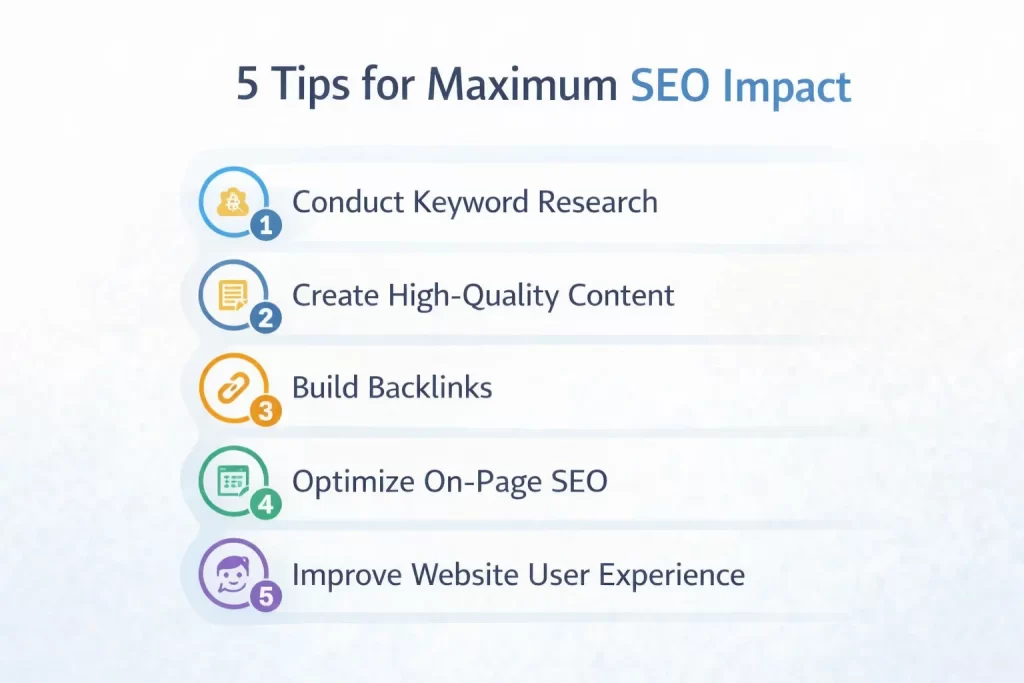
Paid ads stop generating leads the moment you stop paying. SEO keeps generating leads long after the work is done. That asymmetry is one of the most powerful arguments for investing in organic search as a lead generation channel.
49% of marketers say organic search provides the best ROI of any lead generation channel. Organic cost per lead is considerably lower than paid cost per lead across virtually every industry. And unlike paid traffic, which stops the moment your budget runs out, organic traffic from well-ranked content compounds over time as your authority grows and more content gets indexed.
The way SEO generates leads for service businesses is not through general brand awareness. It is through ranking for the specific questions your potential customers are asking at the exact moment they are looking for what you offer. Someone searching for your specific service in your area is not browsing. They are buying. Showing up at the top of that result, with a page that is fast, trustworthy, and has a clear conversion path, is how organic search turns into a reliable lead source.
Building that kind of SEO presence takes time. The content you publish today may take three to six months to reach its full ranking potential. But the leads it generates after that point come at essentially zero ongoing cost, and they keep coming for years. If you want to understand what a properly structured content and SEO strategy looks like in practice, our digital marketing services page walks through how we approach this for clients.
Your Homepage Is Not Your Best Lead Generation Page
This surprises a lot of business owners. Your homepage is important for first impressions and brand credibility, but it is rarely your highest-converting page. The pages that generate the most leads are usually the ones that match very specifically what a visitor was searching for before they arrived.
A service page that clearly describes a specific problem you solve, who you solve it for, what the process looks like, how much it costs, and what clients have said about the outcome, will consistently outperform a homepage that tries to say everything to everyone.
If your website does not have dedicated pages for each of your core services, each written with a specific ideal customer in mind and ending with a clear call to action, you are leaving a significant number of leads behind. Each of those pages is a door into your business for someone who is actively looking for exactly what you provide.
Measure the Right Things
You cannot improve what you are not measuring. But you also cannot improve if you are measuring the wrong things. Website traffic is not the metric that matters. Leads generated is.
Set up conversion tracking in Google Analytics so you can see exactly which pages and which traffic sources are generating enquiries. Track every form submission, every click-to-call, and every live chat conversation that results in a lead. Once you know which parts of your website are actually producing leads, you can do more of what works and fix or remove what does not.
78.1% of marketers use ‘leads generated’ as the primary metric for measuring campaign success. If you are measuring page views and session duration instead of actual leads, you are optimising for the wrong outcome.
Putting It All Together: The Prioritised Action List
If you are looking at this list and feeling overwhelmed, here is the sequence that delivers results fastest.
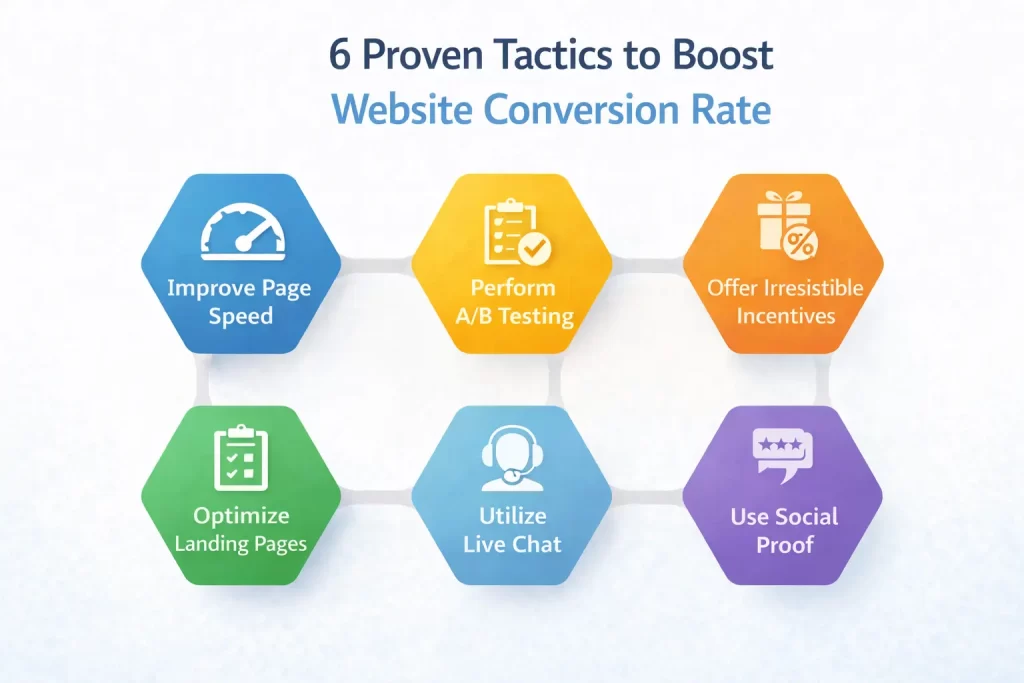
- Start with your conversion paths. Check every page on your site for a clear, specific call to action. Fix any that are vague, buried, or missing entirely. This costs nothing and can move the needle within days.
- Address speed and mobile. Run PageSpeed Insights and fix the top three issues it identifies. This alone can meaningfully improve your conversion rate.
- Add or improve your trust signals. Add one or two specific client testimonials with real outcomes to your homepage and key service pages.
- Start building content. Pick the three most common questions your potential customers ask before they hire you, write a genuinely thorough answer to each one, and publish them on your blog.
- Build a lead magnet on your highest-traffic page. A single tightly relevant offer on your most visited page can make an immediate difference.
- Fix your response time. Set up an immediate autoresponder and commit to following up every new lead within two hours.
Each of these steps builds on the one before it. Together they create a website that works as a genuine lead generation engine, pulling in enquiries from organic search, converting a higher percentage of every visitor, and building your business’s digital presence over time without paying the same toll for traffic over and over again.
Frequently Asked Questions
How long does it take to see more leads from these strategies?
It depends on which strategies you prioritise. Fixing your conversion paths, adding clear CTAs, and improving response time can show results within days or weeks. Content marketing and SEO take longer, typically three to six months before you see meaningful organic traffic, but the leads they generate compound over time rather than stopping when your budget runs out.
How many leads should my website be generating?
The average website converts between 1% and 3% of visitors into leads. A well-optimised service business website should be aiming for the higher end of that range or above. If you are converting below 1%, there are almost certainly structural issues with your conversion paths, trust signals, or both.
Is content marketing really worth the effort?
The data is clear. Content marketing generates three times more leads than outbound at 62% lower cost. 87% of B2B marketers say they successfully use content marketing to generate leads. The challenge is consistency and quality. A consistent programme of genuinely useful, well-optimised content built around your buyers’ real questions will compound year on year.
Do I need to completely rebuild my website to get more leads?
Not necessarily. Many of the highest-impact changes, including clearer CTAs, shorter forms, better trust signals, and faster load times, can be made to an existing site without a full rebuild. That said, if your website is fundamentally poorly structured or very old, there is a point at which rebuilding gives you a better return. Our article on how much a website redesign costs in Australia gives you a realistic framework for thinking about that decision.
What is the single most important thing I can do right now?
Open Google Analytics and find out what your current conversion rate is. If you do not have conversion tracking set up, set it up today. You cannot fix a problem you cannot measure, and most businesses are surprised by how low their actual conversion rate is once they look at the real numbers.
Ready to Turn Your Website Into a Lead Machine?
The businesses that generate leads consistently from their website without relying on paid ads have one thing in common: they invest in content and optimisation as long-term assets rather than chasing short-term traffic fixes.
At Velacore, our content marketing service is built around exactly this principle. We identify the specific searches your potential customers are making, create content that answers those questions better than anyone else, and structure that content to convert readers into enquiries. The result is a website that generates leads around the clock, from content that keeps working long after it is published.Talk to Velacore about building a content and conversion strategy for your website and find out what a properly optimised site could mean for your lead numbers.