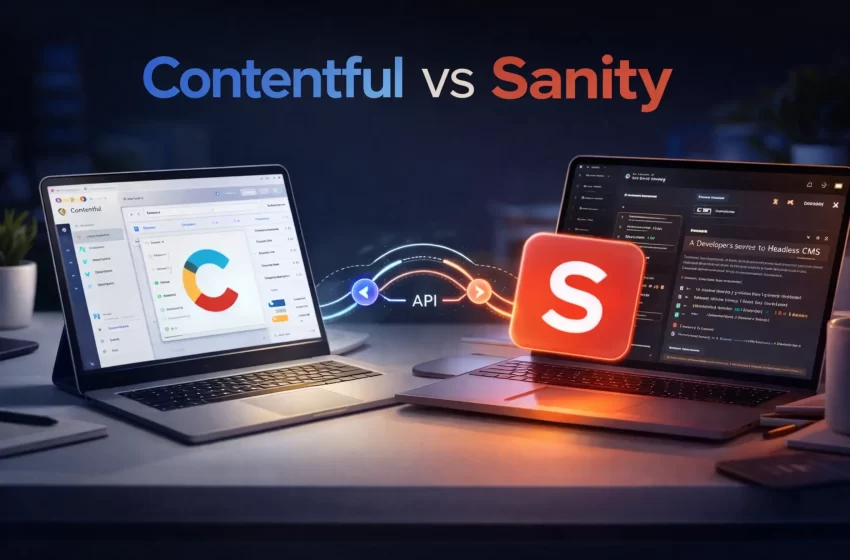
Choosing between Contentful and Sanity is one of the most important technical decisions your business will make. Both are leading headless CMS platforms that power websites, mobile apps, and digital experiences for companies from startups to enterprises. Both offer API-first architecture, flexible content modeling, and modern developer experiences. Yet they take fundamentally different approaches to solving the same problem.
Contentful is the established enterprise leader with proven scalability, extensive integrations, and structured workflows. Sanity is the developer-favorite known for real-time collaboration, flexible content modeling, and customizable editing experiences. Choosing between them depends on your team structure, use case complexity, budget, and technical priorities. This guide provides an objective comparison based on real-world usage in 2026, covering pricing, developer experience, content modeling, editor usability, performance, AI capabilities, security, and ideal use cases for both developers and business decision-makers.
Contentful vs Sanity: At-a-Glance Comparison
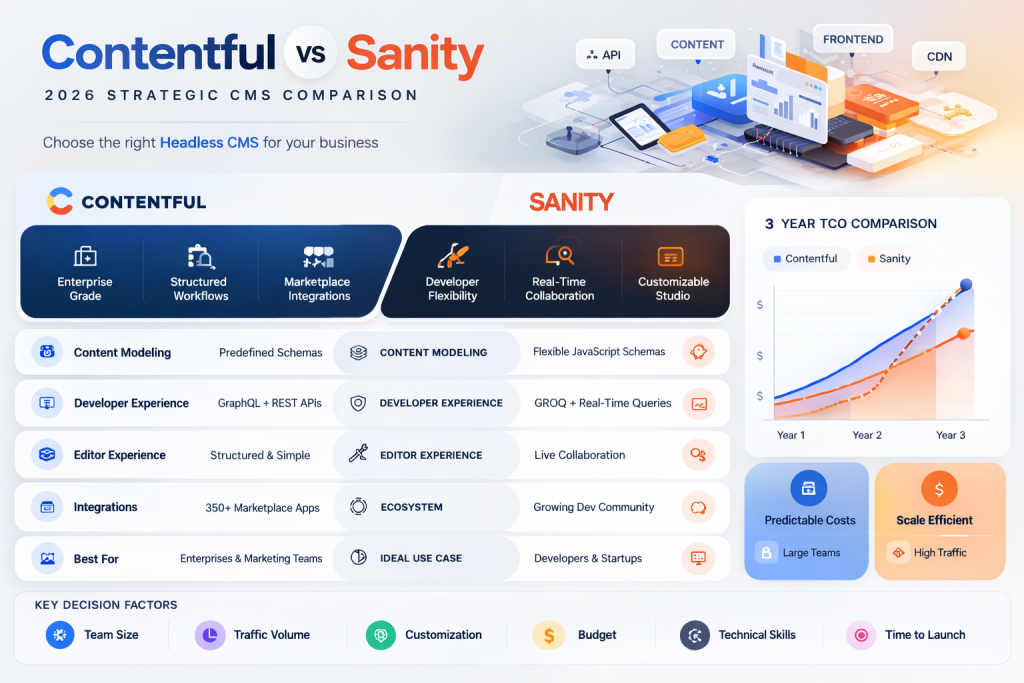
Here is a high-level overview of how Contentful and Sanity compare across key dimensions. We will explore each area in detail throughout this guide.
| Feature | Contentful | Sanity |
| Best For | Enterprise teams, structured workflows, multi-channel | Developers, flexible content, real-time collaboration |
| Pricing Model | Per-user + API calls + bandwidth | Per-user + bandwidth (no API call limits) |
| Free Tier | 2 users, basic features, API limits | 3 users, generous limits, full features |
| Content Modeling | Structured, predefined schemas | Highly flexible, JavaScript-based schemas |
| Editor Experience | Clean, enterprise-focused UI | Customizable, real-time collaborative |
| Developer Experience | RESTful + GraphQL APIs, extensive SDKs | GraphQL-like query language (GROQ), React-based |
| Real-Time Features | Available with paid add-ons | Built-in, core feature |
| Customization | UI extensions, limited customization | Fully customizable Studio (React) |
| Ecosystem | Large marketplace, many integrations | Growing ecosystem, developer-first tools |
| Learning Curve | Moderate, well-documented | Steeper initially, powerful once mastered |
| Hosting | Fully managed cloud | Fully managed cloud (content) + self-host Studio option |
| Ideal Use Case | Large-scale websites, enterprise content ops | Developer-heavy teams, custom requirements |
Neither platform is objectively better. The right choice depends on your specific needs, team composition, and priorities. Let’s explore what makes each platform excel in different scenarios.
Not sure which platform fits your project? Velacore’s team has helped Australian businesses choose and implement the right headless CMS for their specific needs. Book a free consultation with our team.
When to Choose Contentful
Contentful is the established enterprise leader in the headless CMS space. Founded in 2013, it has matured into a robust platform trusted by major brands including Spotify, Shopify, and British Airways. Here is when Contentful is the right choice.
Enterprise-Grade Infrastructure and Support
Contentful was built for scale from day one. It serves billions of API requests monthly with consistent performance and reliability. Enterprise customers get:
• Dedicated support with guaranteed SLAs
• Compliance certifications (SOC 2, ISO 27001, GDPR)
• Advanced security features and audit logs
• Enterprise procurement processes and legal agreements
• Proven vendor stability with long track record
Structured Content Workflows
Teams managing complex content operations benefit from Contentful’s structured approach:
• Strict schemas with validation rules ensure data quality
• Workflow features (scheduling, roles, permissions) provide governance
• Multi-environment setups (dev, staging, production) support campaign launches
• Content versioning and approval processes for stakeholder management
Marketing teams, content operations managers, and editors working across multiple brands or regions appreciate this structure and control.
Extensive Integration Ecosystem
Contentful has the most mature integration marketplace in the headless CMS category. Pre-built connectors exist for:
• Ecommerce platforms (Shopify, BigCommerce, CommerceTools)
• Marketing automation (HubSpot, Marketo)
• Analytics (Google Analytics, Segment)
• Translation services (Smartling, Transifex)
• Hundreds of other tools and services
If your tech stack is complex and you need integrations to work immediately without custom development, Contentful’s ecosystem is unmatched.
Multi-Channel Content Distribution
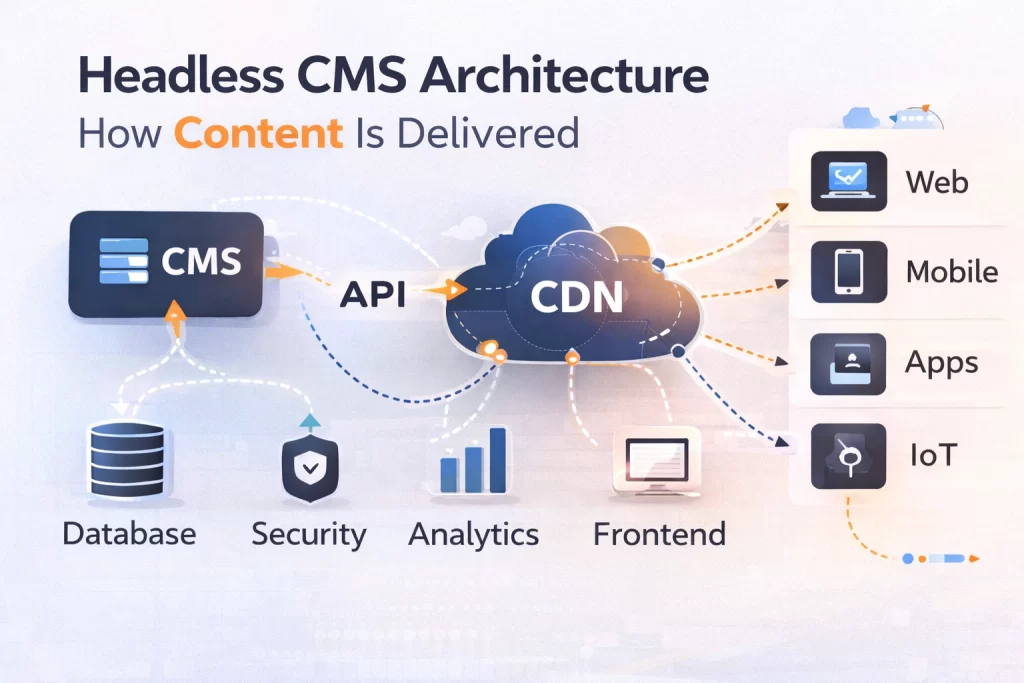
Organizations delivering content across websites, mobile apps, digital signage, smart devices, and voice assistants benefit from Contentful’s API-first architecture and robust SDKs for JavaScript, iOS, Android, .NET, Python, Ruby, PHP, and Java. The platform was designed for omnichannel from the start, making it natural for teams managing content across many touchpoints.
Contentful Pricing Structure
Contentful uses a per-user pricing model combined with API call limits and bandwidth caps. The free tier includes 2 users, 25,000 records, 48 content types, and limited API calls suitable for small projects or prototyping. Paid plans start around $300 USD per month for the Team tier, with Enterprise pricing customized based on usage volume, number of environments, and support requirements.
Important consideration: API call costs can escalate at high traffic volumes. Organizations with millions of monthly visitors need to carefully evaluate total cost of ownership including API usage, bandwidth, and user seats. Contentful is transparent about pricing but the final bill depends heavily on usage patterns.
When to Choose Sanity
Sanity is the developer-first headless CMS that launched in 2017 with a fundamentally different philosophy: treat content as data, give developers complete control, and enable real-time collaboration. Here is when Sanity is the right choice.
Developer Experience and Flexibility
Sanity gives developers extraordinary control over every aspect of the system:
• Content schemas defined in JavaScript, not through a UI
• Studio (editing interface) is a React application you can customize completely
• Every component can be extended, modified, or replaced
• Code-first configuration for version control and testing
• Deep customization without platform limitations
Developers who feel constrained by traditional CMS limitations love Sanity’s flexibility. If your team values code-first configuration and wants to customize everything, Sanity excels.
Real-Time Collaboration Built-In
Sanity’s real-time collaboration is similar to Google Docs for content. This is included in all plans, not a premium add-on. Benefits include:
• Multiple editors see changes instantly
• Presence indicators show who is editing what
• No refresh required to see teammate updates
• Prevents conflicting edits and overwrites
• Ideal for newsrooms, marketing teams, and collaborative workflows
GROQ Query Language
Sanity uses GROQ (Graph-Relational Object Queries), a query language purpose-built for content. It is more expressive and flexible than GraphQL for content use cases, allowing complex filtering, sorting, and data shaping in a single query. Developers who invest time learning GROQ gain powerful capabilities for fetching exactly the data needed without over-fetching or making multiple requests.
Portable Text for Rich Content
Sanity’s Portable Text is a JSON specification for rich text that is presentation-agnostic. Unlike HTML or Markdown, it stores content structure as data that any frontend can render appropriately. This means the same content can render as HTML on web, native components in mobile apps, or voice script for Alexa. Teams building for multiple platforms benefit from this flexibility.
Lower Cost at Scale
Sanity’s pricing is simpler and often more cost-effective at high traffic volumes:
• Free tier: 3 users, unlimited API requests, 10GB bandwidth, 500,000 documents
• No API call limits on any tier
• Paid plans start around $99 USD per month
• Pricing based on users and bandwidth, not API usage
• Predictable costs even with traffic spikes
For high-traffic applications, this model often results in significantly lower costs than platforms that charge per API call.
Customizable Studio
Because Sanity Studio is a React application, you can customize the editing experience completely. Want custom input components? Build them in React. Need specialized workflows? Code them. Want the Studio embedded in your own admin dashboard? Possible. This level of customization is unique among headless CMS platforms and valuable for teams with specific editorial requirements.
Want a real cost estimate for your project? Our web development team can break down what Contentful or Sanity would actually cost for your traffic volume, team size, and use case. Get in touch for a free estimate.
Contentful vs Sanity: Detailed Head-to-Head Comparison
Now let’s compare Contentful and Sanity across key technical and business dimensions with specific details relevant to decision-making.
Pricing and Total Cost of Ownership
Pricing structures differ significantly and impact total cost depending on your usage patterns.
Contentful charges based on users, API calls, bandwidth, and features. A typical mid-size website might cost $300-$1,200 USD per month on Team or Growth plans. High-traffic sites with millions of API calls monthly can see costs of $5,000+ per month. You pay for content delivery infrastructure (CDN, API calls) in addition to authoring capabilities.
Critical hidden cost consideration for Contentful: API call limits can create unexpected bills. If your traffic spikes or you implement real-time features, you may exceed included API calls and face overage charges. Preview environments, staging sites, and development work all consume API calls. Budget conservatively and monitor usage closely. Many teams underestimate API usage in planning and face surprise costs when scaling.
Sanity charges based on users, bandwidth, and optional features. The same mid-size website might cost $99-$499 USD per month because API calls are unlimited. High-traffic sites benefit from predictable costs since you are not charged per request. However, if you need many user seats (20+ editors), Contentful’s per-user pricing can become more economical.
Hidden cost consideration for Sanity: Customization requires development time. While monthly platform costs may be lower, building custom Studio components, integrations, and workflows requires developer resources. Organizations without strong in-house development teams may need to hire a web development agency for customization work. Factor development costs into total ownership calculations.
Key consideration: Estimate your monthly API calls, bandwidth needs, user count, and development resources before deciding. For traffic-heavy applications with few editors and strong dev teams, Sanity often delivers better total cost of ownership. For large editorial teams with moderate traffic and preference for pre-built solutions, Contentful’s all-inclusive pricing can be more economical despite higher monthly fees. Calculate total 3-year cost including platform fees, development, and operational overhead, not just monthly subscription prices.
Developer Experience
Both platforms offer excellent developer experiences but optimize for different priorities.
Contentful provides:
• RESTful and GraphQL APIs
• Comprehensive SDKs in all major languages
• Extensive documentation and tutorials
• Moderate learning curve, familiar patterns
• UI-based content modeling (visual, collaborative)
Developers can be productive quickly without deep platform expertise.
Sanity provides:
• GraphQL-like querying through GROQ (unique language)
• JavaScript-based content modeling
• React-based Studio customization
• Steeper initial learning curve
• More power and flexibility once mastered
Teams with strong JavaScript expertise often prefer Sanity’s approach.
Content Modeling Flexibility
Content modeling determines how you structure information and relationships.
Contentful uses a structured approach where content types are defined with fields, validation rules, and references. This creates consistency and makes it easy for non-technical users to understand structure. Complex relationships are possible but require careful planning. Changing content models in production requires migration scripts and careful coordination.
Sanity offers extreme flexibility. Schemas are JavaScript code, allowing complex types, conditional fields, custom validation, and dynamic relationships. You can change schemas rapidly during development. This flexibility is powerful but requires discipline to avoid creating overly complex content models that confuse editors.
Editor Experience and Usability
The editing interface determines how content teams interact with the system daily.
Contentful’s editor is clean, professional, and familiar to anyone who has used modern content tools. The interface is consistent and predictable. Non-technical editors can be trained quickly. However, customization is limited to UI extensions that require development. The editing experience is standardized, which ensures consistency but may not fit unique workflows.
Sanity’s Studio can be customized to match exact editorial workflows. Want a custom preview pane showing mobile and desktop simultaneously? Build it. Need specialized input fields for product data? Create them. This customization requires development work but results in an editing experience tailored precisely to your team’s needs. Out of the box, Sanity Studio is functional but generic. The value comes from customization.
Performance and Scalability
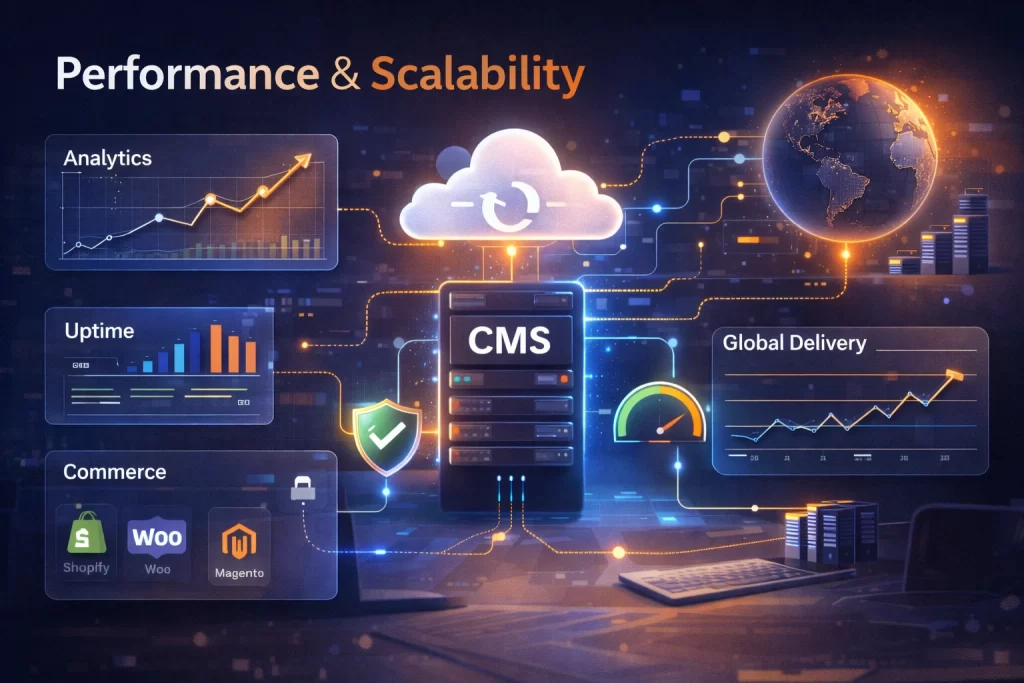
Both platforms are built for high performance and can scale to enterprise traffic levels.
Contentful uses a global CDN (Fastly) for content delivery with edge caching that delivers content in milliseconds globally. API response times are consistently fast. The platform is proven at massive scale with customers serving billions of requests monthly.
Sanity also uses global CDN distribution with edge caching and optimized query performance. GROQ queries can be highly efficient when written properly but require understanding query optimization. Sanity’s real-time features use web sockets, adding minimal latency while enabling live collaboration.
In practice, both platforms deliver excellent performance. The difference is not in raw speed but in optimization approach. Contentful’s performance is more consistent out of the box. Sanity’s performance requires developer expertise to write efficient GROQ queries but can be optimized for specific use cases more precisely.
Ecosystem and Integrations
Integrations determine how easily the CMS connects with other tools in your stack.
Contentful has the most mature ecosystem with an extensive app marketplace. Pre-built integrations exist for virtually every major SaaS tool. Non-technical teams can enable integrations through UI without developer involvement. The trade-off is less flexibility in how integrations work since you are using pre-built connectors.
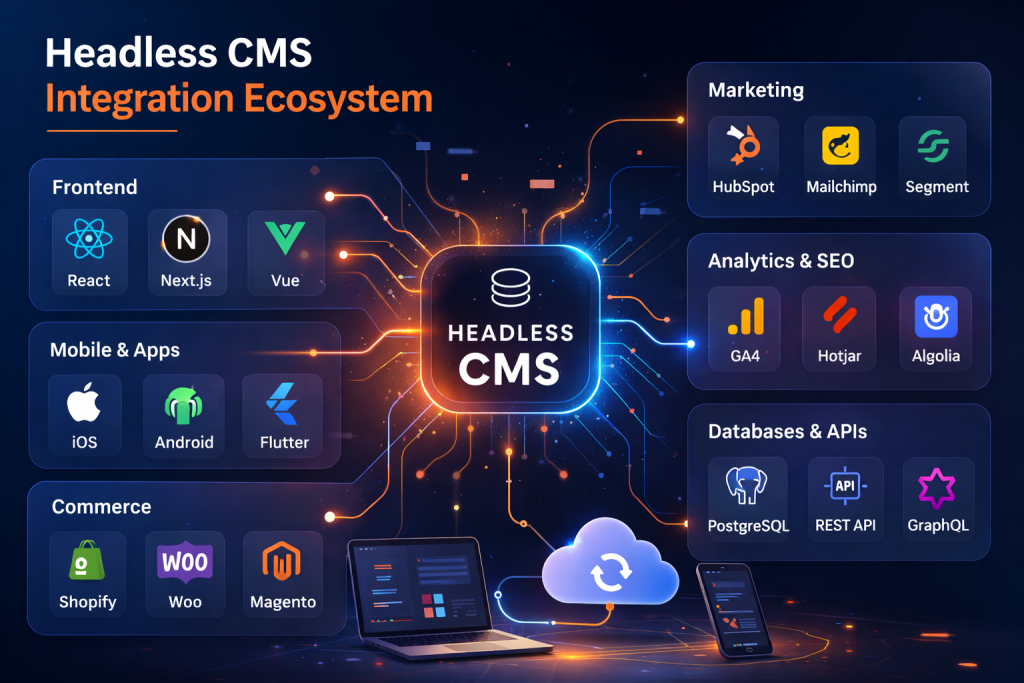
Sanity’s ecosystem is growing rapidly but smaller than Contentful’s. Many integrations require custom development or use of community-built plugins. This gives more control over exactly how integrations function but requires development resources. Developer-heavy teams often prefer building custom integrations tailored to their needs rather than adapting workflows to pre-built connectors.
AI and Automation Capabilities
In 2026, AI integration has become a key differentiator for headless CMS platforms. Both Contentful and Sanity support AI workflows but take different approaches.
Contentful offers AI-powered features through marketplace apps and integrations:
• Automated tagging and content categorization
• AI-assisted translation workflows
• Content recommendations and personalization
• SEO optimization through third-party integrations
• Integration with OpenAI, Anthropic, and custom models via APIs
The structured content model makes it straightforward to feed content into AI systems for analysis or generation.
Sanity’s flexible architecture makes it particularly well-suited for AI-driven content workflows:
• Build custom AI integrations directly into Studio
• Create AI-assisted editing experiences with React
• Real-time AI suggestions during content creation
• Structured content (Portable Text, schemas) ideal for AI processing
• Complete control over how AI interacts with content
Teams building AI-powered applications often prefer Sanity because they can customize AI interactions at every level.
For organizations planning AI-driven personalization, content generation, or automated workflows, both platforms are capable. Contentful provides faster implementation through pre-built AI integrations. Sanity provides deeper customization for teams building unique AI experiences.
Security and Compliance
Enterprise buyers prioritize security, compliance certifications, and data governance capabilities.
Contentful provides enterprise-grade security including SOC 2 Type II, ISO 27001, GDPR compliance, and HIPAA readiness for healthcare customers. Role-based access controls, audit logs, and SSO integration are standard on enterprise plans. Content is encrypted at rest and in transit. For regulated industries (finance, healthcare, government), Contentful’s compliance certifications and proven security track record provide confidence.
Sanity also offers strong security with SOC 2 Type II compliance, GDPR readiness, and encryption standards. Enterprise features include granular permissions, audit trails, and SSO. While Sanity’s security is robust, Contentful has more extensive compliance certifications due to its longer enterprise history. Organizations in highly regulated industries typically find Contentful’s compliance documentation more comprehensive.
Both platforms are secure and compliant for most use cases. Contentful has an edge for organizations requiring specific compliance certifications or extensive security documentation for procurement processes.
Hosting and Infrastructure
Both platforms offer fully managed cloud hosting with enterprise-grade infrastructure.
Contentful is entirely cloud-hosted. You cannot self-host any component. Everything runs on Contentful’s infrastructure across multiple regions (US, EU, Australia). This simplifies operations but means you are fully dependent on Contentful’s service and pricing.
Sanity’s content backend is cloud-hosted, but Sanity Studio (the editing interface) can be self-hosted or deployed anywhere. Some organizations embed Studio in their own admin panels or deploy to internal networks. This hybrid approach offers flexibility while keeping content storage managed by Sanity.
Real-World Use Cases: Which Platform Fits Best
Here is how Contentful and Sanity perform in common scenarios to help you map your requirements to platform strengths.
Ecommerce and Product Catalogs
Both platforms excel at ecommerce content management but optimize differently.
Contentful works well for structured product catalogs with consistent data models across thousands of SKUs. The integration ecosystem includes pre-built connectors for major ecommerce platforms. Marketing teams managing product content alongside editorial content appreciate the unified platform. Best for: Traditional ecommerce with defined product structures.
Sanity shines for complex or unique product data models. Custom product configurators, dynamic pricing rules, or products with highly variable attributes benefit from Sanity’s flexible schema design. Real-time inventory updates and collaborative product editing are seamless. Best for: Custom ecommerce platforms or products with complex data requirements.
Marketing Websites and Campaigns
Marketing sites benefit from both platforms but favor different team structures.
Contentful suits marketing organizations with established processes, multiple stakeholders, and approval workflows. Scheduled publishing, content versioning, and multi-environment setups (dev, staging, production) support campaign launches across global markets. Best for: Enterprise marketing teams with complex governance.
Sanity fits marketing teams that move fast, iterate frequently, and value creative flexibility. Real-time collaboration means teams can build campaigns together without stepping on each other. Customizable Studio allows creating purpose-built editing interfaces for campaign types. Best for: Agile marketing teams with strong development resources.
Multi-Brand and Multi-Region Platforms
Managing content across brands or regions requires specific capabilities.
Contentful’s environment system allows creating separate content spaces for different brands or regions with shared content types and workflows. Role-based permissions control who can edit what across brands. This structure works well for franchises, retail chains, or global brands. Best for: Structured multi-brand content operations.
Sanity’s flexible data model allows representing brand and region relationships however makes sense for your business. You can create shared content libraries, brand-specific variations, or completely independent brand spaces. The approach requires more initial planning but supports unique requirements. Best for: Custom multi-brand architectures.
Mobile Apps and Native Applications
Content-driven mobile apps benefit from headless CMS but have specific needs.
Contentful provides mature SDKs for iOS and Android with offline caching, sync strategies, and optimized data delivery. The structured content model makes it straightforward to map content to native UI components. Best for: Mobile apps built by native development teams.
Sanity’s Portable Text excels for mobile because content structure is presentation-agnostic. The same content renders appropriately on web, iOS, Android, and other platforms without modification. Custom GROQ queries allow fetching exactly the data needed for each screen. Best for: Cross-platform apps or content rendering in native components.
Migration Considerations: Moving to Contentful or Sanity
If you are migrating from WordPress, Drupal, or another CMS, understand what the migration involves. A good web development partner can significantly reduce the risk and timeline of your CMS migration.
Content Migration Complexity
Both platforms require migrating content via scripts or import tools. Contentful provides official migration guides and tools for common platforms. The structured content model makes it relatively straightforward to map old content to new content types. Sanity requires writing custom migration scripts in JavaScript but gives complete control over the transformation process.
Editor Training and Change Management
Contentful’s familiar UI reduces training time for editors transitioning from traditional CMS. Most content teams adapt within days. Sanity Studio looks different from traditional CMS and may require more training, especially if customized. Budget for onboarding time.
Developer Ramp-Up Time
Developers familiar with REST APIs and GraphQL can work with Contentful immediately. Sanity requires learning GROQ and Sanity-specific patterns, typically taking 1-2 weeks for proficiency. Both platforms have excellent documentation to support learning.
Frequently Asked Questions
Is Contentful or Sanity better for SEO?
Both are excellent for SEO because they are headless systems that let you control HTML output completely. Neither platform imposes SEO limitations. The difference is in implementation approach. Contentful’s structured content and pre-built integrations with SEO tools (Yoast, SEMrush) make it easier for marketing teams to manage SEO. Sanity gives developers more control to build custom SEO solutions but requires more development work.
Can I use Contentful or Sanity with Next.js, Gatsby, or other frameworks?
Yes, both platforms work excellently with all modern frontend frameworks including Next.js, Gatsby, Nuxt, SvelteKit, and others. Both provide official SDKs and starter templates for popular frameworks. Sanity has particularly strong Next.js integration with built-in preview modes and incremental static regeneration support.
Which platform is easier for non-technical content editors?
Contentful is generally easier for non-technical editors due to its more traditional CMS interface and consistent user experience. Sanity Studio can be customized to be extremely editor-friendly but requires development work to create that experience. Out of the box, Contentful is more approachable for editors without technical backgrounds.
What happens if Contentful or Sanity shuts down or raises prices dramatically?
Both platforms allow content export and provide APIs to retrieve all your content. Migrating away from either platform is possible but requires development work to move content to a new system. Neither platform locks your content in proprietary formats. However, rebuilding editorial workflows and frontend integrations takes significant effort, making platform choice an important long-term commitment.
Do Contentful and Sanity support multiple languages and localization?
Yes, both platforms support multi-language content but with different approaches. Contentful has built-in localization features where you define locales and manage translations within the platform. Sanity requires building localization into your content model using patterns the community has established. Contentful’s approach is faster to implement. Sanity’s approach offers more flexibility for complex localization requirements.
Which platform is better for AI-powered content workflows?
Both platforms support AI integration effectively but differently. Contentful provides AI capabilities through marketplace integrations and third-party apps, offering faster implementation for common AI use cases like automated tagging, translation, and SEO optimization. Sanity’s flexible architecture allows developers to build custom AI integrations directly into the editing experience, making it preferable for teams building unique AI-powered applications or requiring deep customization of how AI interacts with content. Choose based on whether you prefer pre-built AI solutions (Contentful) or custom AI workflows (Sanity).
Conclusion: Choose Based on Your Team and Requirements
There is no universal winner between Contentful and Sanity. Both are excellent headless CMS platforms that will serve your business well if chosen for the right reasons.
Choose Contentful if you prioritize enterprise support, extensive integrations, structured content workflows, and editor-friendly interfaces out of the box. It is the safer choice for organizations with complex stakeholder management, procurement requirements, and large editorial teams.
Choose Sanity if you prioritize developer flexibility, customization, real-time collaboration, and cost efficiency at scale. It is the better choice for developer-heavy teams, organizations with unique content requirements, and projects where the editing experience must be tailored precisely.
For many organizations, the decision comes down to team composition. If your developers outnumber your editors and you value technical flexibility, Sanity delivers more power. If your editors outnumber your developers and you need proven enterprise features, Contentful provides more structure and support. Both platforms are mature, reliable, and used by thousands of companies worldwide. Make your decision based on your specific requirements, not generic recommendations. If you need help evaluating which platform fits your use case, Velacore’s development team has experience implementing both platforms and can provide objective guidance based on your requirements.
Ready to build with a headless CMS? Velacore is an Australian web development agency with hands-on experience implementing both Contentful and Sanity for Australian businesses. We can scope your project, advise on the right platform, and handle the full build. Talk to us today.
Is Your Website Working for You?
Most websites don't generate leads. We fix that with custom designs that look great and deliver measurable results for your business.
Get Started With Velacore