Social media for NDIS providers isn’t just about likes or followers; it’s about connection and trust. When a participant scrolls through your page, they’re not just looking for updates; they’re quietly asking, “Can I trust these people with my care?”
Your online presence isn’t a checklist item, it’s where first impressions are made, and credibility is quietly measured. That means how you tell your story now matters far more than how often you post.
For NDIS providers, that changes everything. Social media isn’t just another marketing channel, it’s your chance to bring your mission to life. To put faces to names. To celebrate participants’ wins, spotlight your team’s dedication, and share stories that remind people what genuine support looks like.
When storytelling meets purpose; when you combine education, empathy, and everyday wins, your online content becomes more than marketing. It becomes a community, where loyalty builds, referrals grow, and your brand earns the kind of trust no ad spend can buy.
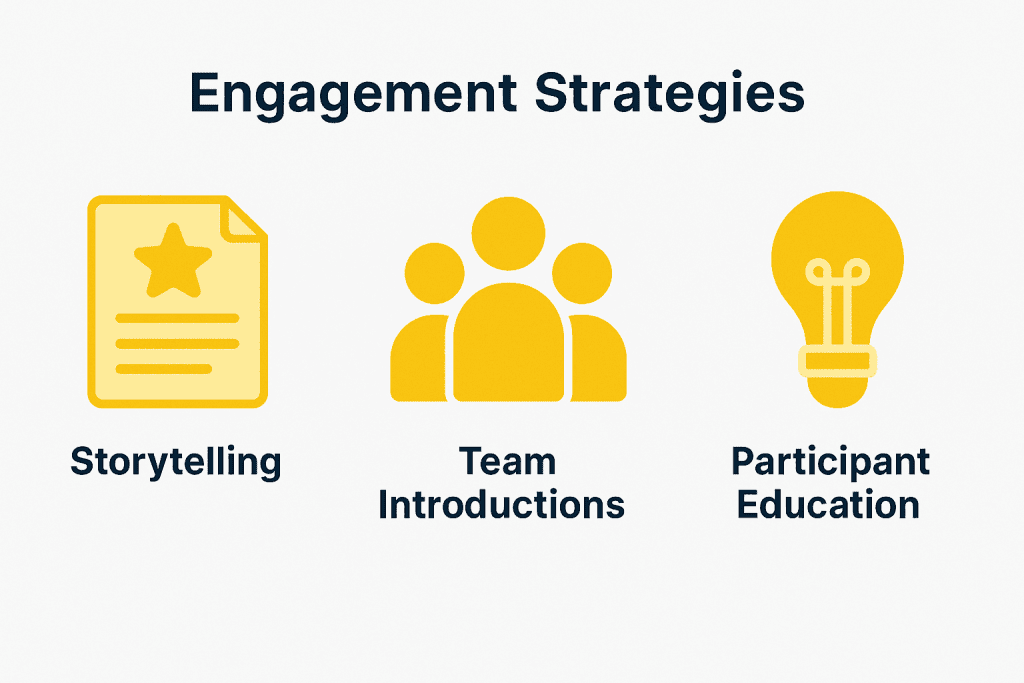
Let’s explore how storytelling, team introductions, and participant education can help NDIS providers build credibility, and connection online.
Why trust and authenticity matter in NDIS social media
In the NDIS space, trust isn’t a marketing buzzword; it’s your entire reputation. Participants aren’t just choosing a service; they’re choosing people who’ll become part of their lives. And in many cases, their first glimpse of you happens online.
A social report shows that Australians spend an average of 6 h 20 min per week on social media, and that social media behaviours and trust impact engagement with brand. The stakes becomes even higher among younger carers and families who rely heavily on digital research before choosing a provider.
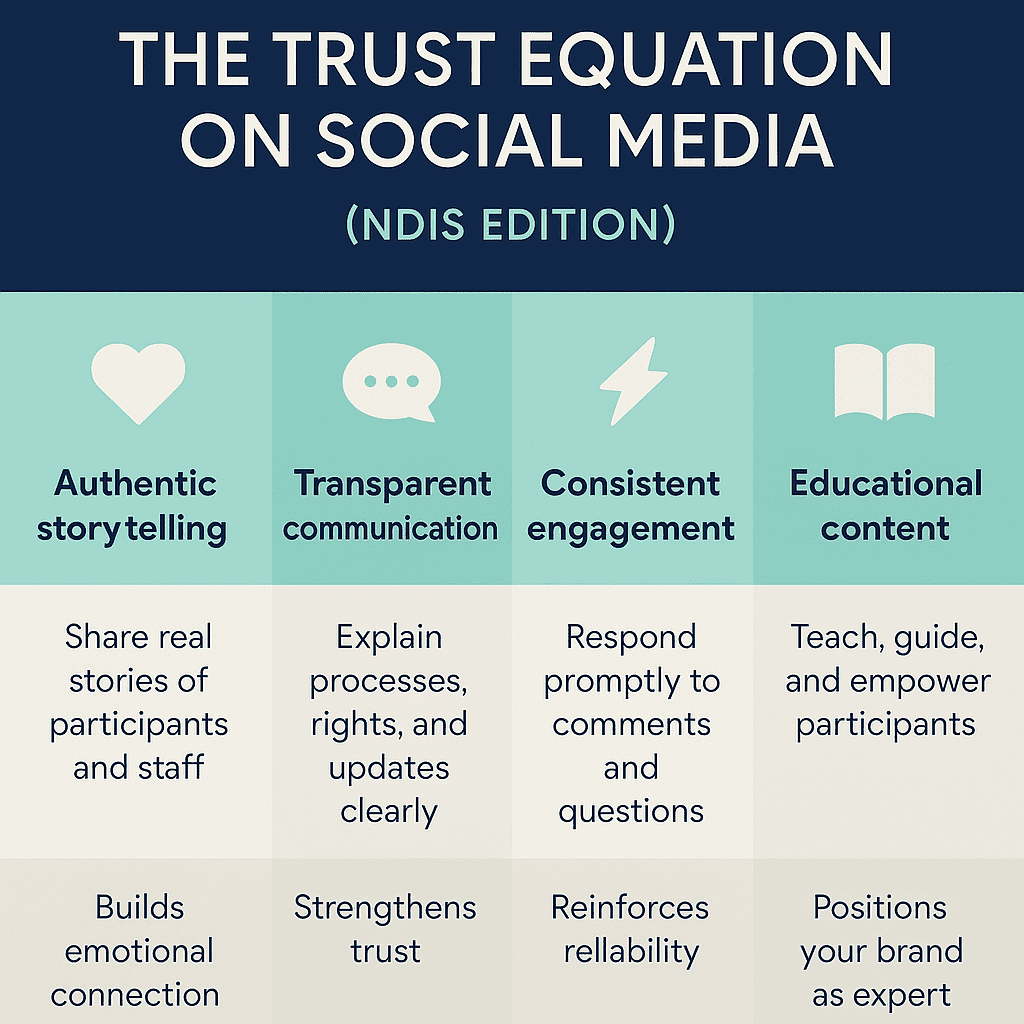
Why this matters for NDIS providers
Unlike traditional brands, NDIS providers deal with deeply personal services like care, therapy, support coordination, community inclusion. So, participants and families want to see:
- Who is on your team?
- What do you stand for?
- Do you understand my goals and needs?
When your social presence reflects empathy and real human stories, people see more than a logo, they see a community they can trust.
Velacore tip: Don’t just post updates about services. Post moments that build connection; a staff member celebrating a participant’s milestone, behind-the-scenes snippets from your programs, or community events you’re part of.
Some action steps to consider:
- Audit your last 10 social media posts.
- How many show faces or team members?
- How many educate your audience?
- How many celebrate participants or share community impact?
If fewer than half do any of the above, you’re likely posting, not connecting.
Storytelling – The heart of connection and engagement
Storytelling isn’t just creative flair; it’s strategy. In social media for NDIS providers, it transforms your organisation from a faceless brand into a living, breathing team of people who care.
According to the Stanford Graduate School of Business, stories are 22 times more memorable than facts alone. And when care services are involved, emotions drive connection far more than information ever could.
Why storytelling works for NDIS providers
Participants and families are drawn to relatability. They want to see people like them, not stock photos or generic graphics. Every story shared online becomes proof that your organisation doesn’t just deliver services, it changes lives.
When you post:
- A participant learning a new skill,
- A support worker sharing why they love what they do, or
- A behind-the-scenes look at how your team celebrates small wins
You’re showing values, culture, and community without ever needing to “sell.”
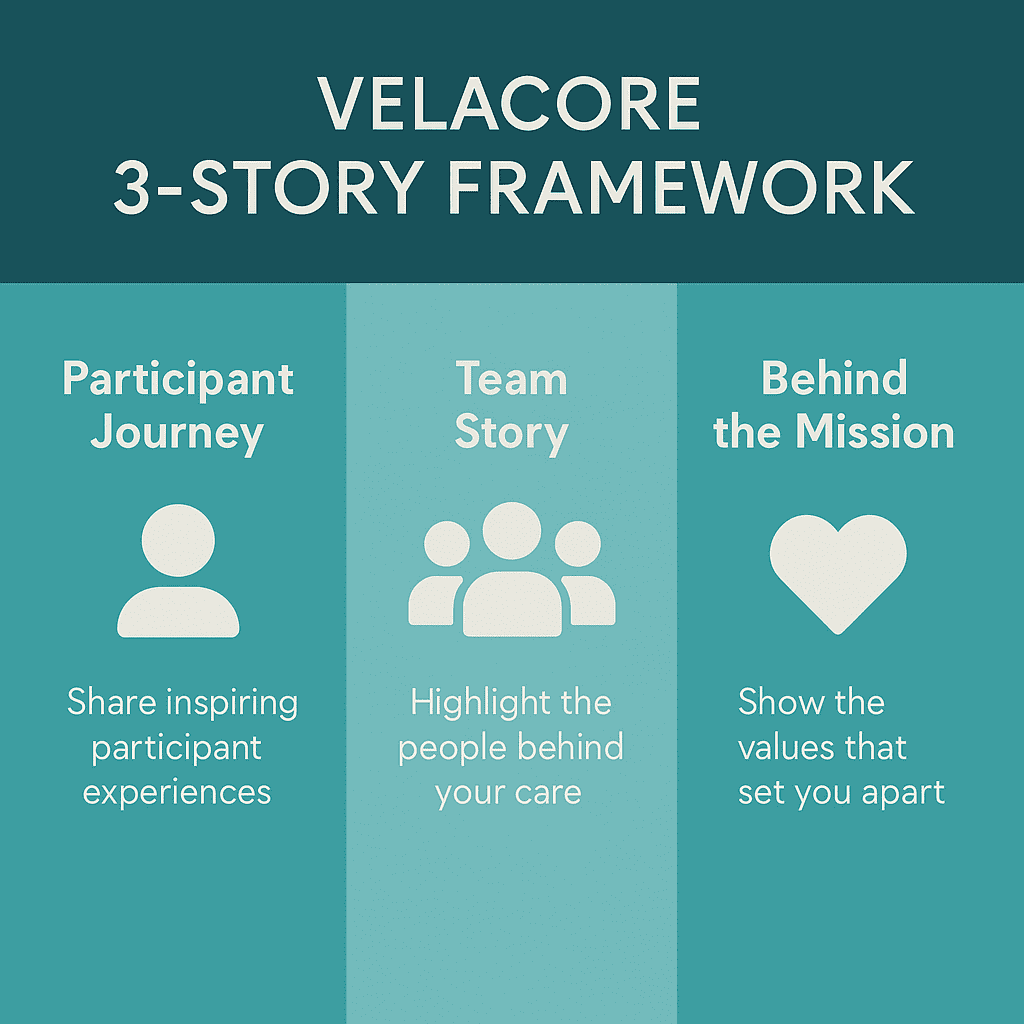
The 3-story framework for NDIS providers
To make storytelling structured and repeatable, use this Velacore Story Framework:
| Type of Story | What to Share | Goal | Example Post Idea |
| Participant Journey | Showcase milestones, progress, or goals reached (with consent) | Inspire and humanise your service | “Meet Liam – when he joined us, he was shy and anxious. Six months later, he’s hosting our Friday art class!” |
| Team Story | Introduce staff, share their motivation or fun facts | Build trust and approachability | “Say hi to Maria, one of our Support Coordinators! She’s passionate about helping participants explore community activities.” |
| Behind the Mission | Reveal what drives your organisation, show team training, planning, or outreach | Reinforce credibility and purpose | “We believe inclusion starts with understanding — here’s how our team spent last week learning about sensory-friendly environments.” |
Alt Text (for infographic): “Three key storytelling types for NDIS providers – Participant Journeys, Team Stories, and Behind-the-Mission content – each building authenticity and engagement.”
Post formats that work
- Mini-documentaries (30–60 sec reels): Quick interviews with team members or participants (with consent).
- ‘A Day in the Life’ posts: Show authentic snippets from your team’s day, even a coffee break with your coordinator.
- Before/After stories: Showcase participant growth or program results.
- Milestone shoutouts: Birthdays, anniversaries, or personal wins.
Tip: Add captions and alt text for accessibility: it’s good practice and aligns with WCAG guidelines for inclusive content.
Action steps to consider
Create a monthly “Story Calendar.”
- Plan one Participant Story per fortnight.
- Share one Team Spotlight every two weeks.
- Add one Behind-the-Mission post per month.
That’s four authentic stories a month, enough to consistently build recognition and trust
Introducing your team: humanising your organisation
If storytelling connects your brand to people’s hearts, team introductions give it a face. In a sector built on relationships, showing who’s behind your services isn’t just good PR, it’s a powerful trust signal.
According to Sprout Social’s, 72% of consumers feel more connected to a brand when its employees share authentic stories online. For NDIS providers, this connection is vital because participants often want to see and feel who will be supporting them before they reach out.
Why team introductions matter
Participants aren’t just comparing prices, they’re comparing people. Your coordinators, support workers, and administrators are the living proof of your organisation’s values. When you highlight their personalities, training, and motivations, you create a sense of familiarity that builds comfort even before the first call.
Team introduction posts can:
- Build trust before intake meetings.
- Boost engagement, especially when staff share posts on their own networks.
- Improve recruitment appeal, showing potential hires your positive team culture.
Types of team introduction posts that work
| Type | Description | Example Post |
| Meet the Team Monday | Short posts spotlighting each team member with photo or reel | “Meet Emma! She’s our community coordinator who loves helping participants find new volunteering opportunities.” |
| Behind-the-Scenes Moments | Show your team in action – planning sessions, community events, or casual chats | “Our support team planning next month’s inclusion workshop over coffee.” |
| Staff Highlights | Celebrate staff anniversaries, birthdays, or training completions | “Happy 3rd Work Anniversary to Alex – thank you for bringing smiles and empathy to every shift!” |
| Expert Tips from the Team | Short advice snippets or quotes from your specialists | “Our OT, Sarah, shares her top tip for maintaining independence at home” |
Image and Visual Ideas
- Natural portraits: Use photos in everyday work environments, not stiff headshots.
- Video intros: 15–30 second clips with staff sharing why they love their role.
- Team collages: Combine candid team moments into one carousel post.
- Quote cards: Pair a photo with a personal quote or value statement.
Velacore Pro Tip: Always include first names, roles, and a warm quote – “I love seeing participants achieve independence” feels more real than any slogan.
Mini team introduction template
Use this adaptable caption formula for any platform:
👋Meet [Name], our [Role] here at [Organisation].
When asked what they love most about their work, [Name] says: “[Quote].”
Outside work, you’ll find them [Fun fact or hobby].
💙 We’re proud to have passionate people like [Name] on our team – supporting our participants every step of the way.
This structure works beautifully for both Facebook and LinkedIn posts.
Action steps to consider
- Create a rotating schedule where every staff member gets introduced once every 6–8 weeks.
- Encourage team members to share their own posts on personal accounts – this multiplies reach organically and humanises your brand even further.
Participant education: Turning social media into a learning platform
Social media isn’t just a space to show up, it’s a chance to teach, empower, and support.
For NDIS providers, education-based content builds authority while helping participants and carers make informed choices about their wellbeing and independence.
According to the Australian Institute of Health, more than 1 in 6 Australians live with disability, and nearly half actively seek information online before accessing services. That means your Facebook post or Instagram story could be the first step in someone’s care journey, not just a scroll-by update.
Why educational content works
When participants learn something valuable from your page, even something small, they remember your brand as helpful, not salesy. Educational content:
- Builds authority in your niche.
- Encourages engagement and shares.
- Establishes you as a trusted resource, not just a service provider.
And it works. A research revealed that brands that share educational content see 131% higher engagement and are more likely to be perceived as credible.
Types of educational content for NDIS providers
| Content Type | Purpose | Example |
| Myth vs Fact Posts | Clarify common NDIS misunderstandings | “Myth: Only people with physical disabilities qualify for NDIS. Fact: The NDIS supports people with intellectual, sensory, and psychosocial disabilities too.” |
| How-To Tutorials | Help participants navigate funding or self-management | “Here’s how to use your NDIS plan for community participation programs.” |
| Quick Wellness Tips | Offer bite-sized, shareable advice | “5 calming exercises to manage sensory overload at home.” |
| Explainer Reels or Carousels | Simplify complex topics visually | “Breaking down your NDIS budget – Core vs Capacity vs Capital supports.” |
Velacore Insight: Turn information into empowerment
The most effective NDIS providers use social media as a micro-learning platform. For instance:
- Post 30-second reels where your team answers participant FAQs.
- Share weekly “Did You Know?” facts about funding categories or rights.
- Create downloadable PDFs that break down NDIS terms in plain English
These small efforts position your organisation as both knowledgeable and participant-focused.
For a step-by-step digital action plan, check out our 90-Day Growth Plan for NDIS Providers.”
Action steps to consider
- Start a weekly “Education Corner” series.
- Choose one topic participants often ask about.
- Write a post that explains it in simple, positive language.
- End with a gentle call-to-action like: “Have questions about your plan or funding? Send us a message – we’re here to help.”
By teaching before selling, you’ll attract participants who already see you as a trusted guide, not just another provider.
Building community and ongoing engagement
Social media for NDIS providers shouldn’t stop at awareness. The real goal is belonging – creating a space where participants, carers, and local partners feel seen, supported, and part of something meaningful.
Community-focused social media builds emotional connection and research shows it pays off.
For NDIS providers, this sense of community helps achieve three critical goals:
- Improved participant engagement; by turning passive followers into active contributors.
- Stronger brand trust; as participants see genuine, ongoing conversations.
- Better visibility; since community interactions boost algorithmic reach and SEO visibility.
Practical ways to build and sustain community
| Tactic | Description | Example |
| Community Spotlights | Feature stories from participants, carers, or local partners (with consent). | “This week’s community spotlight: The inclusive art group we proudly sponsor in Newcastle.” |
| Interactive Posts | Use polls, Q&As, or comment-based discussions to spark dialogue. | “What’s one small thing that makes your day easier? We’d love to know!” |
| Live Sessions | Host monthly Facebook/Instagram Lives for Q&A on funding or wellbeing. | “Join our OT this Friday as she answers your NDIS plan questions.” |
| Collaborations | Partner with local organisations or councils to share community events. | “We’re teaming up with Newcastle Council for an inclusion day – come meet our team!” |
| Participant-Led Content | Invite participants to share art, achievements, or testimonials (with consent). | “James designed this digital artwork to show what inclusion means to him .” |
Example: Monthly NDIS social media calendar
| Week | Focus Theme | Goal | Content Example |
| Week 1 | Team Story | Humanise your organisation | “Meet Chloe, our new Support Coordinator passionate about empowering independence.” |
| Week 2 | Participant Education | Build authority and trust | “Understanding your NDIS budget: Core vs Capacity supports explained.” |
| Week 3 | Community Feature | Strengthen connection | “Highlights from our sensory-friendly community BBQ in Penrith.” |
| Week 4 | Wellness or Tips | Add value beyond services | “5 ways to support sensory regulation at home (from our OT team).” |
Velacore Tip: Rotate these themes each month and schedule posts using tools like Meta Business Suite or Canva Planner for consistency.
Conclusion
For NDIS providers, social media isn’t about competing for clicks, it’s about building credibility, community, and compassion in a space where trust matters most.
By combining storytelling, team visibility, and participant education, you’re not just filling a feed, you’re shaping perceptions, strengthening relationships, and empowering your community to thrive online and offline alike.
And if you’re ready to transform your NDIS social presence into a purpose-driven growth engine, Velacore can help.
From social media strategy and content design to SEO and digital storytelling, we help Australian NDIS providers build trust that lasts.
Book a strategy chat with Velacore – let’s turn your story into connection, and your connection into growth.
Is Your Website Working for You?
Most websites don't generate leads. We fix that with custom designs that look great and deliver measurable results for your business.
Get Started With Velacore