If you’re running an NDIS business, growth can sometimes feel overwhelming. With compliance to manage, participant needs to meet, and staff to coordinate, marketing often gets pushed down the list. Yet the reality is clear: without a structured plan, enquiries slow down, competitors get ahead, and your provider brand risks being overlooked.
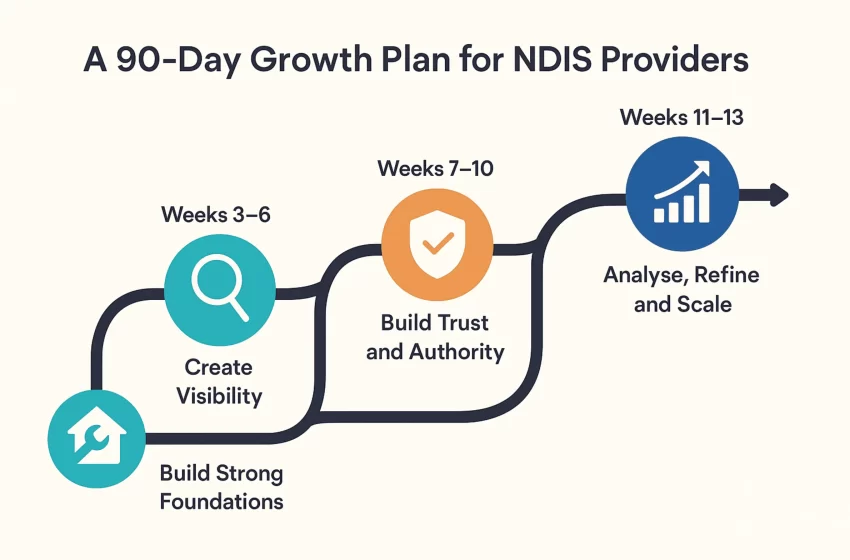
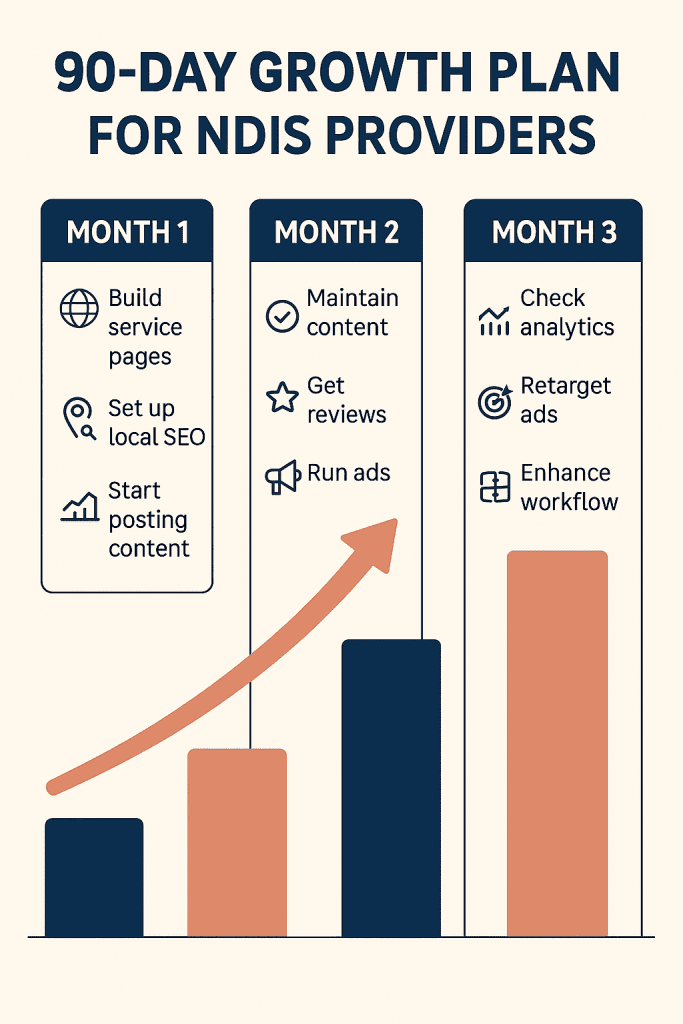
That’s where a 90-Day Growth Plan for NDIS Providers comes in. Instead of trying to do everything at once, this roadmap breaks down the first three months into manageable, high-impact actions.
And here’s why it matters: research shows that over 70% of businesses are discovered through local search, and providers with suburb-specific landing pages generate more enquiries. In the disability sector, participants and carers don’t just look at one page,they check multiple sources like reviews, social media, and directories before making contact. Having a 90-day roadmap ensures your NDIS business is visible at every stage of this decision-making journey.
Over the next few sections, we’ll walk through a step-by-step roadmap
By the end of this article, you’ll have a practical, actionable growth plan you can implement straight away, one designed to drive more participant enquiries, build credibility, and create sustainable growth for your NDIS business.
Here’s how to make the next 90 days count
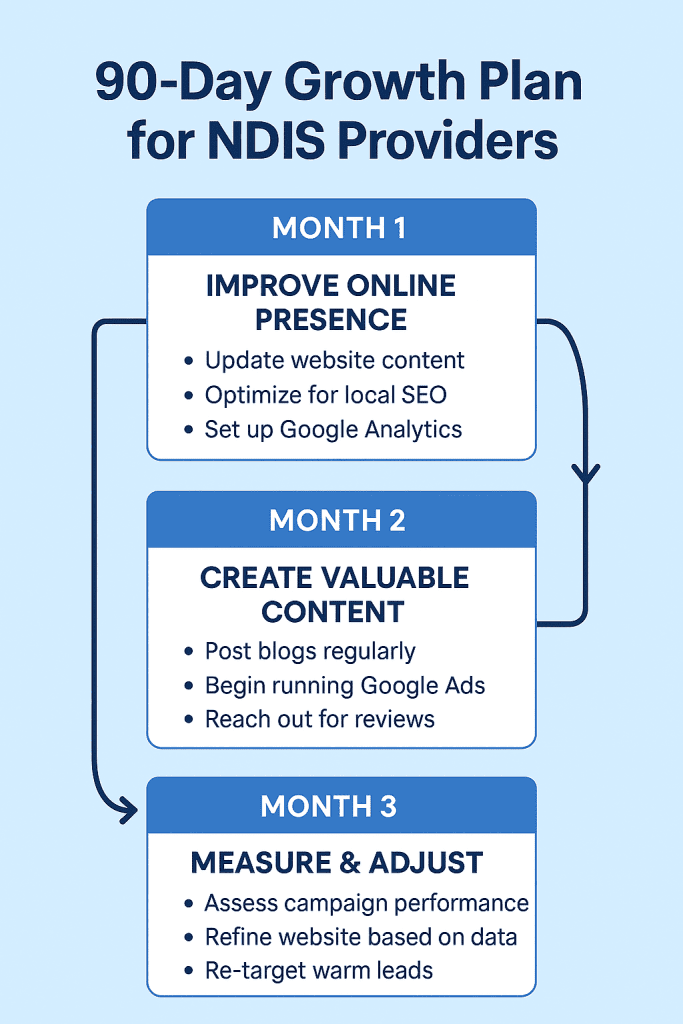
Weeks 1–2: Build strong foundations
Every successful growth plan starts with the basics. For NDIS providers, the first two weeks are about creating an online environment that builds trust from the first click. If your website is slow, inaccessible, or unclear, no amount of advertising will save it; participants and carers will simply move on to the next provider.
Your focus should be on three areas: your website, your Google Business Profile, and your local landing pages. Together, these form the backbone of participant visibility.
Why it matters
- 60%+ of users abandon slow websites.
- Providers with suburb-specific landing pages generate 54% more enquiries.
- A complete and optimised Google Business Profile gets up to 7x more clicks than an incomplete one.
Action Plan (Weeks 1–2)
| Task | Why It Matters | How to Do It |
| Audit & Optimise Website | First impressions matter — a poor site can lose participants instantly. | Use Google PageSpeed Insights; fix speed, ensure WCAG 2.1 accessibility, and simplify CTAs. |
| Update Google Business Profile (GBP) | Often the first thing families see when searching “NDIS provider near me.” | Add photos, complete services, post updates, collect reviews. |
| Create Suburb Pages | Builds local authority and trust, boosts search rankings. | Write participant-focused content for each catchment (e.g., “NDIS services in Parramatta”). |
| Map Enquiry Funnel | Smooth participant journey = higher conversions. | Test forms, phone links, and follow-up processes (aim for <1 hour response). |
By the end of Week 2: You’ll have a website that works, a polished GBP, and suburb pages that connect you directly with participants where they live.
Weeks 3–6: Content, local SEO, and ads
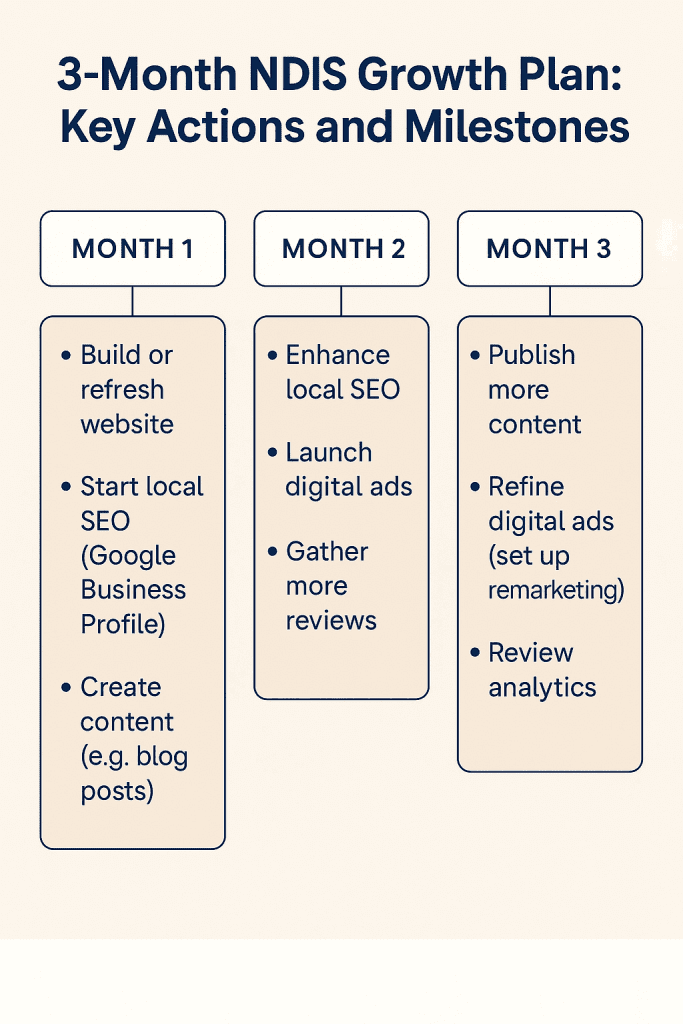
With the foundations set, the next four weeks are about building visibility. It’s not enough to have a polished website and a Google listing, you need to actively appear where participants and carers are searching, reading, and making decisions. This stage blends education, trust-building, and visibility, laying the groundwork for sustainable enquiries.
Why it matters
- Many consumer behaviour studies suggest that people consult multiple sources (reviews, directories, social media, websites) before making decisions
- Google Ads in healthcare average a 3.27% CTR, but remarketing converts even better.
Action Plan
| Task | Why It Matters | How to Do It |
| Publish Participant-Focused Content | Builds trust before contact. | Answer FAQs, share explainer blogs, post participant stories (with consent). |
| Optimise for Local SEO | Ranks your suburb/service pages higher. | Add schema, maintain NAP consistency, encourage keyword-rich reviews. |
| Launch Google Ads | Delivers immediate visibility. | Run two campaigns: branded + service+suburb; use call tracking. |
| Leverage Social Proof & Community | Participants trust “people like them.” | Repurpose blogs into posts, share GBP updates, connect with local groups. |
By Week 6: You’ll be publishing consistent content, visible in local search, and running ads that generate measurable enquiries.
Weeks 7–10: Trust, retargeting, and community authority
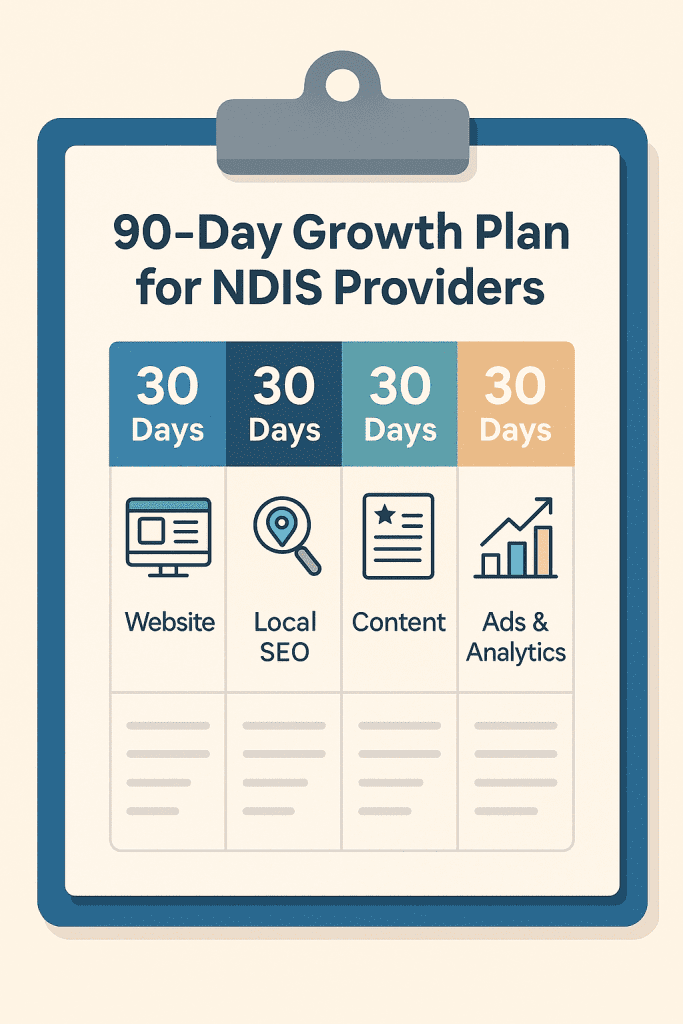
By the halfway mark of your 90-day growth plan, visibility should already be improving. Enquiries may be trickling in, and participants are beginning to notice your brand. But visibility is just the start. Families making life-impacting decisions about support need something deeper: trust. These next four weeks are about showing participants that you’re not only findable, but also reliable, human, and part of their community.
Why It Matters
- Businesses with more reviews tend to receive substantially more calls and enquiries than those with very few reviews.
- Retargeting keeps your brand visible even after a participant leaves your site.
Action Plan
| Task | Why It Matters | How to Do It |
| Strengthen Social Proof | Reviews build credibility. | Collect Google/Facebook reviews; showcase testimonials on site and suburb pages. |
| Run Retargeting Campaigns | Converts “almost ready” participants. | Use Google Display + Facebook Custom Audiences; tailor trust-focused messaging. |
| Showcase Team & Services | Humanises your brand. | Publish staff spotlights, behind-the-scenes updates, and service stories. |
| Community Engagement & Backlinks | Boosts SEO and credibility. | Partner with advocacy groups; sponsor local disability events; earn backlinks. |
| Refine Enquiry Experience | Fast response = higher trust. | Aim to respond within 1 hour; send SMS/email confirmations; create onboarding packs. |
By Week 10: You’ll have a trusted reputation, retargeting campaigns in motion, and community visibility that sets you apart from competitors.
Weeks 11–13: Analytics, scaling, and doubling down
By the final stretch of your 90-day plan, you’ve laid strong foundations, built visibility, and established trust. But here’s the truth: growth isn’t about doing more for the sake of more, it’s about doing more of what actually works. The last three weeks are where you step back, analyse the results, and decide which strategies to scale and which to let go.
Why It matters
- Studies suggest that teams conducting weekly reviews are up to 2.7× more likely to engage and hit targets.
- Scaling isn’t always about doing more; it’s about doubling down on what works.
Action Plan
| Task | Why It Matters | How to Do It |
| Track and Analyse Metrics | Data reveals what’s effective. | Use GA4 for conversions, track CPL/CPA, and monitor suburb keyword rankings. |
| Prune Underperformers | Saves money and focus. | Pause weak ads, refine content topics, simplify high-drop-off forms. |
| Scale What Works | Growth compounds when you invest in winners. | Expand suburb pages, repurpose high-traffic blogs, increase ad spend on best performers. |
| Create Long-Term Rhythm | Keeps growth sustainable. | Build a 6-month content calendar, review campaigns quarterly, gather reviews consistently. |
By Week 13: You’ll know what works, have systems for scaling, and confidence in a roadmap that can be repeated or expanded.
Final thoughts
A 90-Day Growth Plan for NDIS Providers isn’t about doing everything at once — it’s about focus. By moving step by step through foundations, visibility, trust, and analytics, you create a measurable system for growth instead of relying on trial and error.
At Velacore, we’ve seen how structured plans help NDIS providers achieve more enquiries, stronger local authority, and sustainable growth.
Ready to put this into action? Talk to Velacore about tailoring this roadmap to your NDIS business.
Is Your Website Working for You?
Most websites don't generate leads. We fix that with custom designs that look great and deliver measurable results for your business.
Get Started With Velacore