Five years ago, being an NDIS provider was enough to guarantee enquiries. Today, the story is different. With 21,734 registered providers and hundreds of unregistered operators active across Australia, competition is fierce.
The NDIS has also entered a new phase. Total market value reached $45 billion in 2026, supporting 761,442 active participants nationwide. But growth has decelerated significantly, from a peak of 23% annually to around 10%, and the government has signalled tighter fiscal oversight ahead. The era of automatic expansion is over. What replaces it is a disciplined, outcomes-focused environment where governance, digital presence, and participant trust determine who grows and who stalls.
At the same time, participants and carers have become more selective. They don’t just take the first name given to them; they research online, compare websites, read reviews, and scan social media for signs of credibility. The growth challenge is no longer about availability of services, but about visibility and trust. If your organisation can’t be found, understood, and trusted quickly, you’re invisible, even if your support is outstanding.
Velacore’s position is simple: NDIS business growth is hinged on credibility. Credibility is earned through a participant-centred digital experience, targeted visibility in the suburbs you serve, authentic social proof, compliant messaging, and a measurement mindset that proves what’s working and what isn’t. Let’s explore the areas that matter most.
The 2026 market reality: more digital, more selective
Australia is overwhelmingly online. As of early 2026, there are 26.2 million internet users at 97.1% penetration, and 21.0 million social media user identities, representing 77.7% of the population. Australians now spend an average of 41 hours online each week, well above the global average of 33 hours. That’s where carers and participants are comparing providers, reading reviews, and deciding who feels trustworthy. If your brand presence is thin, generic, or inaccessible, you’re ceding ground to competitors who take digital seriously.
It’s also worth noting that from December 2025, Australia introduced a minimum age of 16 for social media platforms including Facebook, Instagram, TikTok and Snapchat. For NDIS providers targeting younger participants or carers, this changes which platforms you reach different audiences on, and makes age-appropriate channel selection more important than ever.
At the same time, expectations of provider behaviour are tightening. The NDIS Code of Conduct applies to all providers (registered and unregistered) and your marketing must be honest, clear and not misleading. This is a real consideration when crafting claims, testimonials and paid ads. Growth and compliance are not opposites; done properly, they reinforce each other.
In the next sections, we will discuss the important steps that will enable your NDIS business to grow and compete strongly.
Turn your website into a participant-centric growth engine
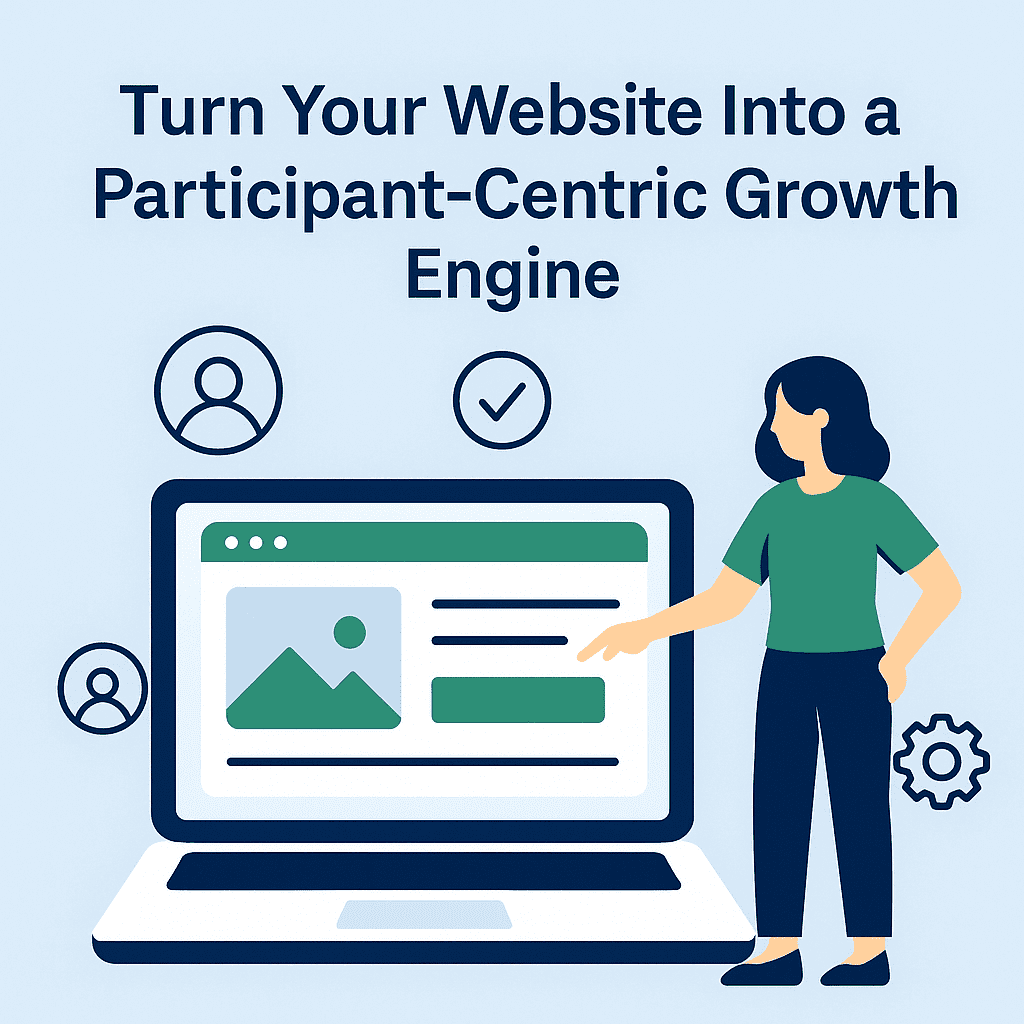
Most provider sites read like compliance brochures. Families aren’t searching for policy excerpts; they’re looking for reassurance: Do you understand my situation? Can you help in my suburb? What happens next?
A high-performing NDIS website does four things well:
- Clarity: Explain supports in everyday language, not jargon, with examples that show results. Replace “capacity-building supports” with “in-home therapy to improve daily routines”, paired with a short outcome story.
- Accessibility: Participants have diverse needs. Implement WCAG 2.1 practices: readable contrast, logical headings for screen readers, descriptive alt text, transcripts/captions for video, and large tap targets on mobile. Accessibility isn’t “nice to have”; it’s core to service delivery.
- Conversion: Every page needs one clear next step: Book a call, Refer a participant, or Request a service plan review. Don’t hide forms. Offer phone and WhatsApp for carers who prefer immediate contact.
- Local relevance: Create suburb/city pages (e.g., “Support Coordination in Parramatta” or “NDIS Physiotherapy in Logan”) with real photos, team introductions, and travel radius. Local intent converts.
Websites that publish consistently perform better. Organisations that blog generate 67% more monthly leads than those that don’t, by addressing the real questions participants and carers are already searching for.
Win locally: from “near me” to booked enquiry
NDIS decisions are hyper-local. Families search for precise services in their area: “NDIS occupational therapy Melbourne”, “support worker Eastern Suburbs”, “plan manager Brisbane CBD”. Google’s own research shows local intent is action-oriented: 76% of people who conduct a local search on their smartphone visit a business within 24 hours (and many of those searches lead to a purchase or booking). For providers, that behaviour translates to calls, form fills, and referrals when you appear in local packs and on Maps with strong reviews.
Use social to earn trust, not just reach
Australia is a social nation; ~78% of the population is reachable via social platforms. But reach without resonance is noise. In the NDIS context, the content that performs best is human and specific: short videos that explain how your OT sessions work in-home, a post introducing your Logan team with a photo outside a familiar landmark, a carousel demystifying “switching NDIS providers in three steps”.
What works best:
- Authenticity: Share stories of participant success (with permission).
- Human connection: Introduce staff, show behind-the-scenes moments.
- Education: Create explainers like “How to switch NDIS providers.”
- Consistency: Post regularly to maintain visibility and credibility.
These aren’t “campaigns”; they’re micro-moments that reduce anxiety for families and show your ethos in action.
Advertising that respects compliance and proves ROI
Paid traffic accelerates growth when you’re compliant and precise. The NDIS Code of Conduct and Australian Consumer Law prohibit misleading claims or implying NDIA endorsement. Practically, that means your ad copy must set accurate expectations, avoid medical promises, and clearly state service availability and intake criteria. Done right, Google and Meta campaigns let you meet high-intent searches (e.g., “NDIS physio Dandenong today”) and retarget site visitors who weren’t ready to enquire last week.
Content that answers questions carers actually ask
Most provider blogs recycle the same topics. That’s not how you earn rankings or trust. We mine real search queries and intake call notes to publish plain-English explainers that matter.
Examples of high-value content:
- “Plan Manager vs Support Coordinator: What’s the Difference?”
- “How to Prepare for a Plan Reassessment.”
- “Occupational therapy at home: what to expect.”
Why it matters:
- Providers who publish helpful blogs/videos see 55% more traffic and 67% more leads.
- Long-form guides rank 70
Over time, this library becomes a lasting advantage; it compounds organic traffic, supports email nurturing, and gives frontline staff credible URLs to send after a call.
This is also where long-form, well-structured content helps you compete for “People Also Ask” panels and featured snippets. Across industries, organisations that publish helpful articles see meaningfully higher traffic and lead volume than those without a content strategy.
Data: The compass for growth
Guessing is expensive. Growth decisions should be guided by data, not assumptions.
For NDIS providers, the most useful metrics to track include:
- Cost Per Lead (CPL): How much it costs to secure each enquiry.
- Time-to-first-response: How quickly your team follows up once an enquiry is made.
- Form completion rates: Which pages on your website are driving action, and which are losing visitors.
- Call-through rate: How often people call directly from your Google Business Profile.
- Organic conversions: Which landing pages are turning search traffic into participants.
It’s also wise to segment results by service type (e.g., occupational therapy vs speech pathology) and location (e.g., St Kilda vs Frankston). Demand is not the same everywhere, and seasonality plays a role.
A monthly review of these numbers helps turn data into action:
- Double down on suburbs or services with strong CPL.
- Improve or repurpose content that attracts impressions but not clicks.
- Retire campaigns that generate the wrong kind of enquiries.
This level of discipline matters in today’s market. With more than 21,000 registered providers active in 2025, many are technically qualified to deliver supports. What separates the providers who grow is their ability to measure, learn, and refine consistently.
Compliance is part of your brand
Growth that overlooks compliance is fragile. The NDIS Code of Conduct expects fair, honest, transparent interactions; including how you advertise, collect reviews, and use participant stories. Use informed consent for testimonials; never imply NDIA endorsement; and ensure pricing statements align with current caps and policies.
Treat this as brand hygiene: the more your communications reflect ethical practice, the more confidently referrers and families will choose you.
A pragmatic 90-day growth plan
Scaling an NDIS business doesn’t have to feel overwhelming. Breaking the process into clear, achievable phases makes it easier to build momentum while staying focused.
Weeks 1–2: Get the foundations right
- Audit your website for accessibility, structure, and conversion paths.
- Create suburb pages for your top three catchments.
- Refresh your Google Business Profile with updated services, hours, images, and messaging.
Weeks 3–6: Build credibility and visibility
- Publish four evidence-based explainers that answer common intake questions.
- Launch two tightly-scoped Google Ads campaigns – one branded, one high-intent service + suburb – with call tracking in place.
- Introduce a simple system for capturing participant/carer reviews with informed consent.
Weeks 7–10: Expand your presence
- Establish a fortnightly social media cadence focused on staff, real service settings, and community connections.
- Test a retargeting sequence to bring visitors back to a booking or enquiry page.
- Extend suburb pages to secondary postcodes where demand is growing.
Weeks 11–13: Review and refine
- Analyse Cost Per Lead (CPL) by service and location.
- Prune underperforming keywords and creatives, and expand those that are working.
- Develop a downloadable resource (e.g., a participant guide) that your team can share after discovery calls to reinforce trust.
This 90-day roadmap is designed to be achievable for small teams while still delivering meaningful traction. Larger organisations can increase cadence, add more service-specific campaigns, or scale content volume as resources allow.
To conclude: grow with care, and grow on purpose
The NDIS is a $45 billion market moving into a more measured, accountability-driven phase. Providers who win in 2026 won’t be the loudest; they’ll be the clearest, most helpful, and most discoverable. Scale alone no longer guarantees success. Providers with strong governance, data-led operations, and a genuine digital presence will grow. Those without will plateau.
If you want a partner that understands both NDIS realities and digital performance, you’re in the right place. Get in touch and let’s build your NDIS growth plan, suburb by suburb, service by service, and do it right the first time.
Frequently Asked Questions (FAQs) on NDIS Business Growth
1. What does NDIS business growth mean in 2026?
It refers to how NDIS providers can expand their reach, attract more participants, and build sustainable operations in a highly competitive sector. Growth isn’t just about taking on more clients; it’s about being visible online, trusted by families, compliant with regulations, and efficient in service delivery.
2. How can NDIS providers attract more participants?
The most effective methods include:
- Having a participant-focused, accessible website.
- Showing up in local Google searches through suburb pages and an optimised Business Profile.
- Sharing authentic stories and educational content on social media.
- Running compliant ad campaigns targeted at the right suburbs and services.
- Publishing helpful guides and blogs that answer participant questions.
3. Why is local SEO so important for NDIS providers?
Because most families search with local intent: “NDIS physiotherapy near me” or “support worker in Brisbane CBD.” If your service doesn’t appear in those results, competitors will win the enquiries. Local SEO ensures providers are visible where participants are searching.
4. What role does compliance play in marketing?
Compliance under the NDIS Code of Conduct and Australian Consumer Law is critical. Providers must avoid misleading claims, gain consent for testimonials, and ensure advertising is accurate. Compliance not only avoids penalties but also builds trust with participants and carers.
5. Is paid advertising worth it for NDIS providers?
Yes, when done correctly. Google Ads and Facebook campaigns can deliver immediate visibility, but they must be tightly targeted and tracked for ROI. Retargeting (ads that follow up with people who’ve visited your site) is especially effective at converting warm leads.
6. How can content marketing support NDIS growth?
By educating participants and carers. Articles like “Plan Manager vs Support Coordinator” or “How to prepare for a plan reassessment” help families make informed choices and position the provider as a trusted authority. This builds credibility and organic traffic over time.
7. What are the most important metrics to track?
Key metrics include Cost Per Lead (CPL), Participant Lifetime Value (PLV), conversion rate from enquiry to intake, and retention rates over time. Tracking these helps providers know which efforts are working and where to improve.
8. How quickly can providers see results?
- Short-term wins (1–3 months): Local SEO updates, refreshed Google Business Profile, and targeted ad campaigns.
- Medium-term growth (3–6 months): Consistent blogging, content marketing, and social media engagement.
- Long-term sustainability (6–12 months): Compounding SEO results, reputation building, and data-driven optimisation.
9. Do small NDIS providers have a chance against large ones?
Absolutely. Smaller providers can leverage agility, personalisation, and strong community ties. Digital tools allow them to compete on visibility, while authentic storytelling and excellent participant experience help them stand out in a crowded field.
10. What’s the first step if I want to grow my NDIS business?
Start with an audit: check whether your website is accessible, your Google Business Profile is up to date, and your service information is clear. From there, build a 90-day growth plan focusing on local SEO, content, and participant trust.
Is Your Website Working for You?
Most websites don't generate leads. We fix that with custom designs that look great and deliver measurable results for your business.
Get Started With Velacore