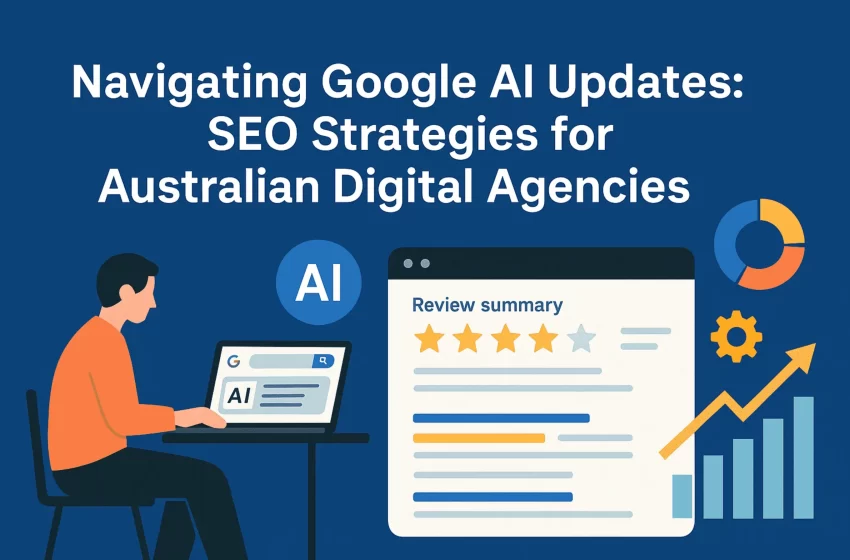
When Google introduced AI Overviews (part of its Search Generative Experience), the way users interact with search results fundamentally shifted. Instead of scrolling through a list of links, people now see AI-generated summaries that condense information into a single, digestible snapshot at the very top of the page.
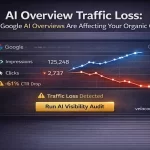
On the surface, this looks like convenience for users. But for agencies and their clients, it raises a serious challenge: reduced visibility and click-throughs. A study found that organic traffic can fall by 20–30% when AI summaries dominate above-the-fold results. For a local business in Sydney or Melbourne, this could mean losing hundreds of potential leads each month simply because their content wasn’t prioritised in the AI summary.
This is why exploring SEO strategies for Australian digital agencies is now essential. Success depends on adapting to how AI interprets content, reviews, ads, and design signals. In the next sections, we’ll outline the key steps agencies can take to stay competitive.
1. Optimise content for Google’s AI overviews
AI Overviews don’t just show snippets, they often replace the need for users to click through, which can cut organic traffic by as much as 30%. This makes it essential for agencies to structure content in ways that AI can easily interpret and highlight. Those who adapt will gain visibility inside Google’s most valuable real estate, while those who don’t risk being filtered out entirely.
Why it matters for australian digital agencies
- AI picks winners and losers: The AI decides whose content to summarise, often pulling from multiple sources. If your client’s content doesn’t meet the right criteria, their voice disappears from the conversation.
- Local SEO at risk: For Australian SMEs, local intent searches (e.g., “best accounting software in Brisbane”) are now being answered directly by AI. Without optimisation, agencies risk their clients being overlooked.
- Authority signals count more: AI tends to favour content with strong E-E-A-T signals; Experience, Expertise, Authoritativeness, and Trustworthiness especially in finance, health, and legal niches.
Actionable fixes for agencies
Here’s how SEO strategies for Australian digital agencies should adapt:
- Optimise for “answer-style” content Write content that directly addresses user questions in short, clear sections similar to how AI summaries are generated. Use structured headers (H2/H3) and concise explanations.
- Implement schema markup: Rich data (FAQ schema, product schema, review schema) gives AI clearer signals. According to a research, pages with structured data are 40% more likely to be included in AI-generated snippets.
- Focus on topical authority: Instead of thin blog posts, publish in-depth, interlinked content hubs. For instance, a Melbourne-based agency targeting real estate SEO could build a series of guides around “property marketing in Australia,” ensuring Google views the brand as an authority.
- Prioritise local signals: Ensure NAP consistency (Name, Address, Phone), optimise for “near me” searches, and weave in geo-specific keywords. AI Overviews rely heavily on local data for contextual accuracy.
- Human + AI synergy: Blend AI SEO tools (for insights, keyword clustering, and competitor analysis) with human-led content strategy. This ensures content isn’t just machine-readable but also emotionally engaging; something AI alone can’t replicate.
2. Review summaries and their impact
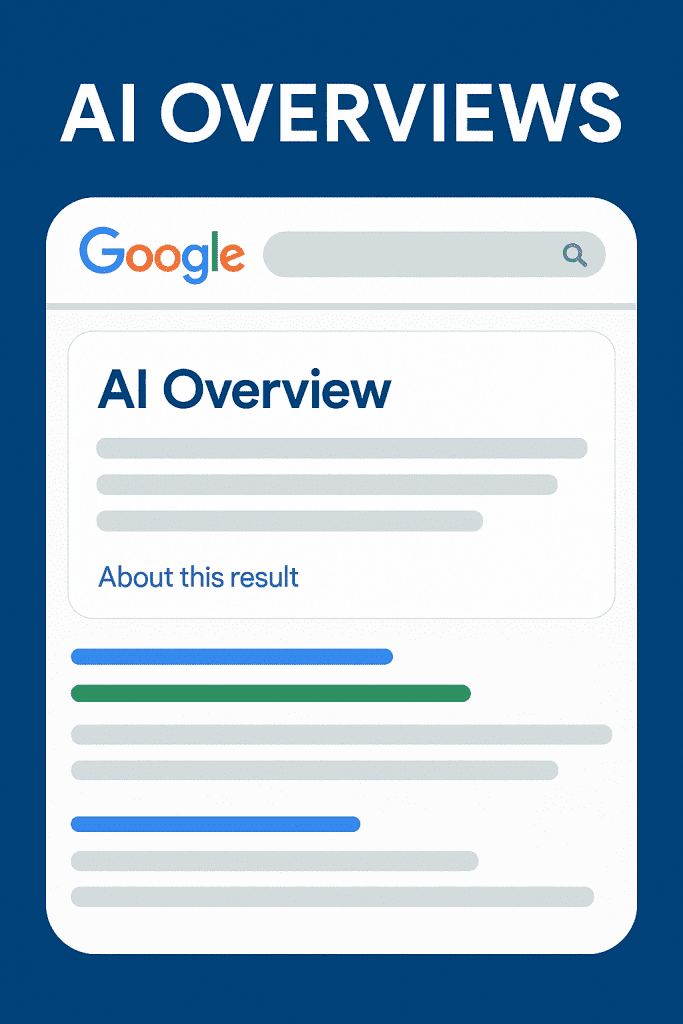
Another major outcome of Google’s AI updates is AI-generated review summaries. Instead of showing users a list of individual reviews, Google now compiles feedback into short AI-written highlights that appear directly in the search results.
For agencies, this can be a double-edged sword. While positive comments may get amplified, a single negative review can suddenly dominate the AI summary even if it’s buried in a sea of positive feedback. This matters because 93% of customers say online reviews influence their buying decisions.
Why It matters for Australian digital agencies
- First impressions at scale: When users see “slow service” or “unhelpful staff” highlighted in the AI summary, it becomes the defining reputation of the business, even if those comments represent a small minority.
- Local SEO overlap: Reviews feed into local ranking signals. Strong, consistent reviews not only build trust but also influence whether Google includes a business in its AI Overview.
- Less control over narrative: Businesses can no longer rely on prospects “reading through” multiple reviews. The AI summary becomes the single story told about them.
Actionable fixes for agencies
To safeguard clients and adapt SEO strategies for Australian digital agencies, consider these approaches:
- Build proactive review strategies: Encourage satisfied customers to leave feedback immediately after a positive experience. A survey reports that, 70% of consumers are likely to leave a review when asked directly.
- Optimise reviews with keywords: Ask customers to mention service categories, locations, or product names in their reviews. For example: “Velacore provided excellent SEO consulting in Sydney.” This gives Google AI clearer context when generating summaries.
- Monitor review highlights actively: Agencies should regularly track which phrases Google highlights. If negative terms keep surfacing, work with clients to adjust internal processes and encourage new positive feedback to rebalance the narrative.
- Respond to reviews strategically: A well-crafted response to a negative review doesn’t just placate the unhappy customer, it shows Google and future prospects that the business is responsive, responsible, and trustworthy.
- Leverage review platforms beyond Google: While Google dominates, don’t ignore industry-specific review sites. Feeding multiple trusted sources into Google’s ecosystem strengthens authority signals and can influence which reviews AI chooses to highlight.
3. Ad changes under Google AI
Google’s advertising ecosystem has always been dynamic, but AI integration has accelerated the pace of change. With Performance Max campaigns, automated bidding, and predictive targeting, Google Ads is increasingly less about manual optimisation and more about letting AI decide where, when, and to whom ads appear.
In 2024, Google Ads revenue reached USD $237 billion globally (Statista), and much of this growth came from AI-driven campaign models. For Australian agencies, this means two things: higher competition for prime visibility, and a need for smarter resource allocation to avoid wasted spend.
Why It matters for Australian digital agencies
- CPCs are rising: With AI-driven auctions prioritising “intent-rich” searches, cost-per-click in competitive sectors like finance and legal in Australia is climbing steadily.
- Less transparency: Agencies get fewer insights into why Google places ads where it does, making reporting and optimisation harder.
- Shift to intent-first targeting: Instead of broad demographics, AI now matches ads based on predictive behaviour and search context. This can improve ROI, but only if campaigns are aligned with the right signals.
Actionable fixes for agencies
Here’s how SEO strategies for Australian digital agencies should align with ad changes:
- Blend paid and organic strategies: Relying solely on ads is risky when CPCs keep rising. Agencies should use SEO + Google Ads synergy. Ranking organically for high-cost keywords while running targeted ads for transactional phrases.
- Focus on creative differentiation: Since AI handles targeting, competitive edge now comes from creative quality. Invest in persuasive ad copy, video ads, and landing pages optimised for conversions.
- Use first-party data: With Google moving towards cookieless advertising, first-party data from client CRMs, email campaigns, and website tracking becomes gold. Feeding this into Google Ads improves AI targeting accuracy.
- Run experiments, not assumptions: Agencies should leverage Google’s A/B testing tools to refine messaging and creative. AI thrives on data; the more structured inputs you provide, the better it performs.
- Measure beyond clicks; Success is no longer just CPC or CTR. Agencies must track Customer Lifetime Value (CLV), return on ad spend (ROAS), and conversion quality to prove campaign ROI to clients.
4. Web design & UX adjustments for AI search
Google’s AI updates don’t only change how search results appear, they also reshape how websites are evaluated. With AI Overviews and review summaries filtering traffic, the users who do land on a website are more qualified and expect seamless experiences. If the design or performance falls short, conversion opportunities are lost.
Studies show that 88% of online users won’t return to a website after a poor experience. Combine that with Google’s Core Web Vitals—which measure speed, responsiveness, and visual stability; and it’s clear that web design and SEO are now inseparable.
Why It matters for Australian digital agencies
- AI prioritises page experience signals: Slow, clunky websites are less likely to be included in AI summaries or recommended snippets.
- Accessibility is a ranking factor: Google increasingly rewards websites that meet accessibility standards, which is critical for agencies targeting Australia’s diverse audience.
- Trust is visual: A modern, mobile-friendly design reinforces the E-E-A-T principles (Experience, Expertise, Authoritativeness, Trustworthiness) that Google AI looks for.
Actionable fixes for agencies
To align with Google AI updates SEO strategies for Australian digital agencies, web design must be treated as a core optimisation pillar, not an afterthought.
- Prioritise speed and mobile-first design; Sites should load in under 2.5 seconds and be fully responsive, or risk being penalised by both users and Google’s AI.
- Integrate structured design elements: Clear menus, interlinked hubs, and logical hierarchies make sites easier for users and AI to navigate.
- Design for accessibility and inclusivity: Compliance with WCAG standards; alt text, keyboard navigation, and readability, improves both user experience and SEO.
- Embed trust signals directly into design: Prominent client testimonials, certifications, and case studies build credibility and reinforce E-E-A-T principles.
- Leverage UX to support conversions: Streamlined forms, strong CTAs, and live chat reduce friction, ensuring AI-driven visitors are more likely to convert.
For a deeper look at how AI Overviews are shaping the future of SEO globally, see our article on The Future of SEO in 2026: What Google’s AI Overviews Mean for Your Business.
5. Velacore’s adaptive consulting approach
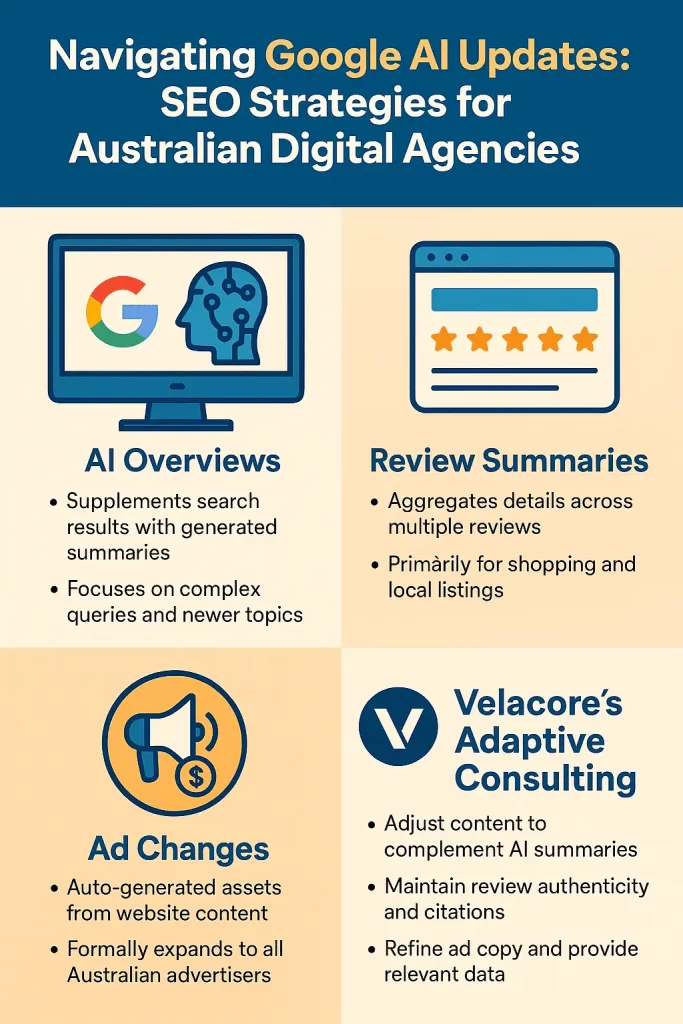
The reality is clear: Google’s AI updates are not a passing trend, they’re the new foundation of search. For agencies, this means success hinges on adaptability. From AI Overviews filtering traffic, to review summaries shaping reputation, to AI-driven ads tightening competition, every update carries both risks and opportunities. And with web design and SEO now inseparable, agencies can no longer afford siloed strategies.
This is where Velacore’s adaptive consulting model makes the difference. Instead of chasing every algorithm change, we focus on building resilient, future-ready strategies tailored for Australian agencies. Our approach combines:
- Web design optimisation: aligned with Core Web Vitals, accessibility, and conversion-first UX.
- Agile SEO audits that account for AI interpretation, E-E-A-T signals, and schema integration.
- ERP services to streamline operations, integrate workflows, and give agencies the agility they need to respond to fast-changing digital trends.
- Digital marketing campaigns that bring together content, social media, and analytics-driven strategies to reach the right audience at the right time.
By weaving these elements into a single adaptive framework, Velacore helps agencies not just stay visible, but stay ahead. In a search landscape where AI decides what users see first, agencies that adapt fastest will be the ones clients trust most.
Don’t just react to Google AI; adapt with Velacore, and turn disruption into your competitive edge.
Frequently Asked Questions
1. What are Google AI updates and why do they matter for SEO?
Google AI updates include changes like AI Overviews, review summaries, and automated ad formats. These updates matter for SEO because they reshape how content is discovered, summarised, and ranked, especially for businesses relying on organic visibility.
2. How do AI Overviews affect SEO strategies for Australian digital agencies?
AI Overviews provide condensed answers at the top of search results, reducing clicks to traditional organic listings. For Australian digital agencies, this means SEO strategies must focus on answer-style content, schema markup, and topical authority to increase the chance of being included in AI-generated summaries.
3. What are AI-generated review summaries and how can agencies adapt?
Review summaries are short AI-written highlights of customer feedback shown directly in search results. Agencies can adapt by proactively managing client reviews, encouraging keyword-rich feedback, and monitoring which phrases Google highlights to maintain a positive reputation.
4. How have Google’s AI updates changed advertising for Australian agencies?
Google’s AI-driven ad formats prioritise predictive targeting and intent-based placements. While this can improve ROI, it also raises CPCs. Agencies should blend organic SEO with smart ad spend, leverage first-party data, and continuously run A/B tests to stay competitive.
5. Why is web design now critical for SEO under Google AI?
Web design directly impacts SEO performance because Google AI rewards fast, mobile-first, and accessible websites. Elements like Core Web Vitals, clear navigation, and trust signals help agencies secure visibility and improve conversions when traffic does arrive from AI-filtered search results.
6. How can Velacore help agencies adapt to Google AI updates?
Velacore offers adaptive consulting services that combine SEO audits, review management, ad optimisation, and web design strategies. This approach helps Australian agencies not only respond to Google AI updates but also build future-ready strategies for long-term growth.
Is Your Website Working for You?
Most websites don't generate leads. We fix that with custom designs that look great and deliver measurable results for your business.
Get Started With Velacore